
There are flowers that quietly blend into a garden, and then there are flowers that seem to bring their own sunshine. The yellow gerbera daisy belongs firmly in the second category. With its bright petals, prominent center, and almost playful appearance, it can instantly make a room, bouquet, garden bed, or wedding arrangement feel happier.
The yellow gerbera daisy flower is especially popular because yellow works beautifully with both soft and vibrant color palettes. Depending on the variety, its petals can range from buttery cream and pale lemon to rich golden yellow, sometimes with warm orange tones near the center.
But there is more to this flower than its cheerful appearance. Gerberas have interesting symbolism, different flower forms and colors, and specific growing requirements that are worth understanding before bringing one home.
In this guide, we’ll explore the yellow gerbera daisy meaning, popular varieties, growing and care requirements, bouquet ideas, wedding uses, and the difference between gerberas and sunflowers.
What Is a Yellow Gerbera Daisy?
The yellow gerbera daisy is a flowering plant belonging to the Asteraceae family, the same broad plant family that includes sunflowers, chrysanthemums, asters, and many other familiar daisy-like flowers.
Most cultivated gerberas available to gardeners and florists are hybrids derived from Gerbera species, particularly Gerbera jamesonii and related species. They are valued for their large flower heads, long stems, vibrant colors, and relatively long vase life.
A typical gerbera flower consists of many individual florets arranged into what appears to be one large flower. What we casually call the “petals” are actually ray florets surrounding the central disc.
What Makes Yellow Gerberas Special?
Their biggest attraction is simple: color.
Yellow gerberas can create a warm, optimistic feeling without looking quite as formal as some traditional yellow flowers. Their clean, daisy-like shape also makes them easy to combine with roses, carnations, baby’s breath, chrysanthemums, eucalyptus, and other greenery.
Depending on the shade, a yellow gerbera can look:
- Fresh and playful
- Elegant and understated
- Warm and welcoming
- Bright and energetic
- Soft and romantic
Yellow Gerbera Daisy Meaning
So, what does a yellow gerbera daisy meaning actually represent?
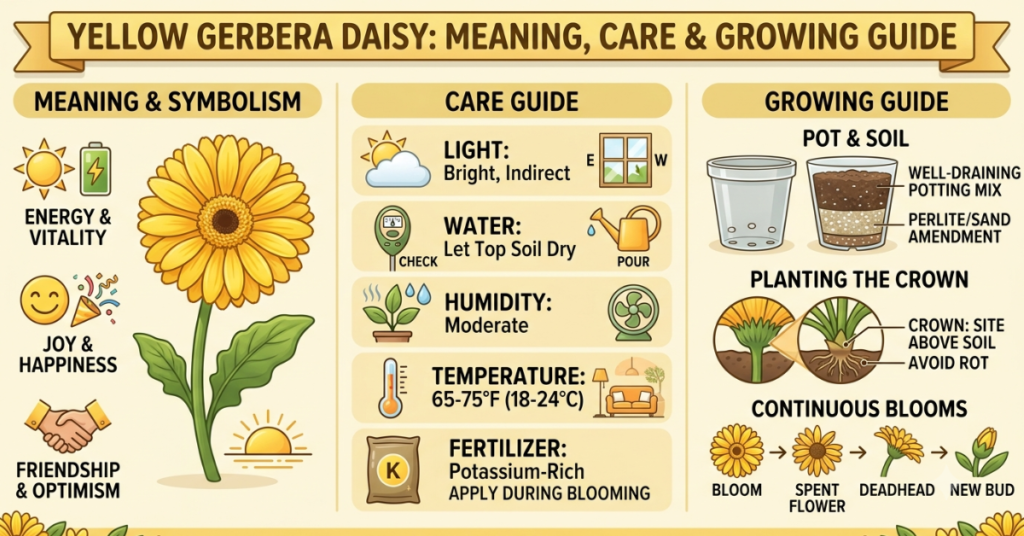
Yellow gerberas are commonly associated with happiness, friendship, cheerfulness, optimism, and warmth. Their symbolism can vary slightly depending on cultural and personal context, but the overall message tends to be positive.
Because yellow is strongly associated with sunshine and joy, these flowers are often suitable when you want to brighten someone’s day rather than communicate a deeply romantic message.
What Does a Yellow Gerbera Daisy Symbolize?
A yellow gerbera can represent:
- Happiness – a natural choice for celebrations.
- Friendship – especially appropriate for a friend or colleague.
- Optimism – useful when wishing someone well.
- Cheerfulness – its bright color naturally creates an uplifting impression.
- Warmth – a lovely way to make a gift feel welcoming.
- Positive energy – ideal for birthdays, congratulations, and celebrations.
This makes a yellow gerbera bouquet particularly versatile. It can feel personal without necessarily carrying the romantic message that red roses often convey.
Yellow Gerbera Daisy Varieties and Shades
Not every yellow gerbera looks the same. One of the fun things about these flowers is the variety of shades and forms available.
Light Yellow Gerbera Daisy
A light yellow gerbera daisy has a softer appearance than a saturated golden variety. Its pale petals work particularly well with white, cream, blush pink, and soft green flowers.
This shade is a good choice for:
- Spring arrangements
- Baby showers
- Brunch tables
- Soft interior styling
- Pastel wedding flowers
Pale Yellow Gerbera Daisy
A pale yellow gerbera daisy can almost appear cream-colored under certain lighting. It has a subtle, sophisticated quality and is useful when you want yellow without making the arrangement look overly bright.
Pair pale yellow gerberas with white roses and greenery for a simple, elegant arrangement.
Orange Yellow Gerbera Daisy
An orange yellow gerbera daisy combines golden yellow with warmer orange tones. These flowers have a stronger autumnal and tropical feel than pale yellow varieties.
They look especially attractive alongside:
- Orange flowers
- Coral roses
- Burgundy foliage
- Warm-toned chrysanthemums
- Dark green leaves
Gerbera cultivars also differ in flower size, petal arrangement, stem length, and center color, so two yellow varieties can look surprisingly different even when both are technically yellow.
Yellow Gerbera Daisy Plant: Growing Basics
If you love cut flowers, growing a yellow gerbera daisy plant can be a rewarding way to enjoy blooms at home.
Gerberas generally prefer bright conditions, well-draining soil, and careful watering. They don’t enjoy sitting in constantly wet soil, and poor drainage can cause serious problems around the roots and crown.
Light Requirements
Gerberas need plenty of light to flower well.
Outdoor plants generally perform best with strong sunlight, although in very hot climates they may appreciate some protection from intense afternoon sun. Indoor plants should be placed near a bright window where they receive plenty of indirect or filtered light.
If a plant receives too little light, you may notice:
- Fewer flowers
- Weak or stretched growth
- Smaller blooms
- Slower development
Soil and Drainage
Good drainage is one of the most important parts of yellow gerbera daisy care.
Use a loose, well-draining potting mix rather than heavy soil that stays wet for long periods. A container must also have drainage holes.
When planting a gerbera, avoid burying the crown too deeply. Keeping the crown slightly above or level with the soil surface helps reduce the risk of crown and root problems.
Watering Yellow Gerberas
Gerberas prefer consistent moisture but don’t like waterlogged soil.
A useful approach is to check the top layer of soil before watering. If it has begun to dry, water thoroughly and allow excess water to drain away.
Avoid repeatedly giving the plant tiny amounts of water while keeping the soil constantly wet.
Yellow Gerbera Daisy Care: A Simple Routine
Good care doesn’t have to be complicated. Focus on the basics.
1. Provide Plenty of Light
Give the plant a bright location. Indoor plants usually benefit from a sunny or very bright window.
2. Water When Needed
Check the soil rather than following a rigid daily watering schedule. Environmental conditions, pot size, temperature, and season all affect how quickly the soil dries.
3. Improve Air Circulation
Good airflow around the foliage helps create a healthier growing environment and reduces conditions that encourage fungal problems.
4. Remove Faded Flowers
Cut spent flower stems down toward the base when blooms finish. This keeps the plant looking tidy and can encourage it to produce more flowers.
5. Avoid Wet Foliage Overnight
When possible, water the soil rather than regularly soaking the leaves and flowers.
6. Feed During Active Growth
A balanced flowering-plant fertilizer can be used according to its label during periods of active growth. Avoid excessive fertilizer, as more is not necessarily better.
Yellow Gerbera Daisy Potted Plant: Indoor Growing Tips
A yellow gerbera daisy potted plant can make a wonderful addition to a bright kitchen, balcony, patio, windowsill, or sunroom.
When purchasing one, look for a plant with:
- Healthy green leaves
- Firm stems
- No obvious mold
- No widespread yellowing or wilting
- Several unopened flower buds
- A container with drainage holes
Place the pot somewhere bright but avoid locations where the plant is constantly exposed to extreme heat from a window or heater.
One important point is that indoor gerberas can sometimes struggle when their light levels are significantly lower than those available outdoors. If your plant stops flowering after the initial blooms fade, insufficient light may be one reason.
How to Keep Yellow Gerbera Daisies Blooming
Gerberas naturally have periods of active flowering and rest, so don’t panic if blooming slows.
For the best chance of continued flowering:
- Give the plant adequate light.
- Keep the soil well drained.
- Water consistently without overwatering.
- Remove old flowers promptly.
- Feed appropriately during active growth.
- Watch for pests and signs of disease.
Healthy foliage is just as important as flowers. If the leaves look weak or the crown remains constantly wet, changing the growing conditions may be more important than adding fertilizer.
Yellow Gerbera Daisy Bouquet Ideas
A yellow gerbera daisy bouquet can be surprisingly versatile.
For a cheerful summer arrangement, combine yellow gerberas with white daisies, baby’s breath, and fresh green foliage.
For something more sophisticated, pair them with cream roses, eucalyptus, and soft greenery.
Popular Color Combinations
Try yellow gerberas with:
- White: clean and timeless
- Pink: soft and cheerful
- Orange: warm and energetic
- Purple: striking contrast
- Blue: fresh and unusual
- Green: natural and calming
- Red: dramatic and festive
The size of the gerbera also matters. Large blooms can become the focal point of an arrangement, while smaller varieties can be used to create texture and movement.
Yellow Gerbera Daisy Arrangement Ideas
A yellow gerbera daisy arrangement doesn’t have to be complicated.
For a simple table arrangement, place three to five yellow gerberas at slightly different heights in a small glass vase. Add a few stems of greenery and keep the design relatively loose.
For a fuller arrangement, combine:
- Yellow gerberas
- White roses
- Small filler flowers
- Eucalyptus
- Green foliage
The strong geometric shape of gerbera flowers makes them particularly useful in contemporary arrangements where clean lines and bold color are important.
Yellow Gerbera Daisy Wedding Bouquet
A yellow gerbera daisy wedding bouquet can work beautifully for couples who want something bright, relaxed, and cheerful rather than extremely traditional.
Yellow gerberas are especially suitable for:
- Outdoor weddings
- Garden weddings
- Spring ceremonies
- Summer celebrations
- Rustic weddings
- Tropical-inspired weddings
- Casual daytime ceremonies
For a softer bridal bouquet, choose pale yellow gerberas with ivory roses and delicate greenery.
For a more vibrant look, combine golden yellow gerberas with orange, coral, and peach flowers.
If you’re aiming for a modern wedding aesthetic, keep the color palette limited to two or three complementary shades rather than adding too many competing colors.
Yellow Gerbera Daisy Close Up: What to Look For
A yellow gerbera daisy close up reveals details that are easy to miss from a distance.
Look closely at the center of the flower. You’ll see numerous tiny florets packed together in the central disc. Surrounding them are rows of ray florets that create the familiar daisy-like appearance.
The petals themselves can vary considerably. Some cultivars have broad, rounded ray florets, while others have narrower or more pointed ones.
This detailed structure is one reason gerberas are popular subjects for photography, botanical illustrations, and floral artwork.
Yellow Gerbera Daisy Bouquet Close Up Photography
If you’re photographing a yellow gerbera daisy bouquet close up, natural light can bring out the texture and subtle differences between the petals.
For a more interesting photograph:
- Photograph near a window or outdoors in soft light.
- Focus on the center of one flower.
- Use a simple background.
- Avoid harsh midday sunlight.
- Try photographing one flower rather than the entire bouquet.
- Capture the transition between yellow petals and the darker center.
A close-up can make the flower look almost abstract, especially when the petals fill most of the frame.
Yellow Gerbera Daisy Drawing and Creative Inspiration
The simple structure of the gerbera makes it a good subject for a yellow gerbera daisy drawing.
Start with a circular guide for the flower’s center, then build the petals around it. Don’t worry about making every petal identical. Natural flowers have small variations in shape, length, and direction.
For colored artwork, several shades of yellow can create more depth than using a single flat color. Add a touch of orange or ochre around the base of the petals and use a darker tone for the center.
Yellow Gerbera Daisy Wallpaper Ideas
Floral designs featuring yellow gerberas can bring a sunny feel to interiors.
A yellow gerbera daisy wallpaper can work particularly well in spaces that need a cheerful accent, such as:
- Home offices
- Bedrooms
- Reading corners
- Entryways
- Creative studios
- Children’s spaces
If the wallpaper has large flowers, use it as an accent wall rather than covering every surface. Smaller floral patterns can be easier to use throughout a room.
For interior design, yellow gerbera imagery pairs nicely with white, warm beige, natural wood, sage green, and soft gray.
Artificial Yellow Gerbera Daisy vs Fresh Flowers
An artificial yellow gerbera daisy can be a practical option when you want the look of fresh flowers without regular maintenance.
High-quality artificial flowers can be used in:
- Permanent home arrangements
- Event décor
- Retail displays
- Office spaces
- Photography props
- Seasonal decorations
Fresh gerberas, however, offer natural variation, texture, and a living quality that artificial flowers can’t completely reproduce.
If you’re choosing artificial flowers, look for petals with slight color variation and realistic centers rather than perfectly uniform plastic-looking surfaces.
Yellow Gerbera Daisy vs Sunflower
The comparison of yellow gerbera daisy vs sunflower comes up often because both flowers have bright yellow petals and dark centers.
However, they have very different appearances.
| Feature | Yellow Gerbera Daisy | Sunflower |
| Flower shape | Compact and daisy-like | Large and bold |
| Typical appearance | Refined and colorful | Rustic and dramatic |
| Petal colors | Many shades available | Usually yellow to golden |
| Size | Generally smaller | Often much larger |
| Arrangement style | Modern, romantic, playful | Rustic, cheerful, statement-making |
| Common use | Bouquets, weddings, décor | Bouquets, gardens, events |
If you want a flower that feels delicate and polished, a yellow gerbera may be the better choice. If you want a large statement bloom with a strong rustic character, sunflowers have the advantage.
Common Problems With Yellow Gerberas
Even a well-cared-for plant can occasionally develop problems.
Yellowing Leaves
Yellow leaves can have several causes, including overwatering, poor drainage, aging foliage, inadequate light, or environmental stress.
Don’t assume that adding fertilizer will solve the problem. First check the plant’s watering and light conditions.
Wilting
Wilting can happen when the plant needs water, but overwatering can also cause a stressed root system that produces similar symptoms.
Check the soil before watering again.
Fungal Problems
Poor air circulation and consistently wet conditions can encourage fungal diseases. Keeping foliage reasonably dry and providing good airflow can help reduce the risk.
Pests
Gerberas may occasionally attract common garden pests such as aphids, whiteflies, spider mites, or thrips. Regularly inspect the underside of leaves and new growth so problems can be caught early.
How Long Do Cut Yellow Gerberas Last?
With proper care, cut gerberas can provide several days of color and sometimes last considerably longer under favorable conditions.
To help extend their vase life:
- Start with a clean vase.
- Use fresh water.
- Trim the stems with a clean, sharp tool.
- Remove foliage that would sit below the water.
- Keep the flowers away from extreme heat and direct sunlight.
- Change the water regularly.
- Remove individual flowers as they deteriorate.
Gerbera stems can sometimes bend because of their relatively soft structure. A clean vase and appropriate support can help keep the flowers upright.
Where to Use Yellow Gerberas
One of the biggest advantages of yellow gerberas is their flexibility.
They can be used for:
- Birthday bouquets
- Graduation flowers
- Congratulations gifts
- Wedding décor
- Anniversary arrangements
- Baby showers
- Garden displays
- Home décor
- Office arrangements
- Photography
- Floral crafts
They are also a good choice when you want a flower that feels joyful without being overly formal.
Frequently Asked Questions About Yellow Gerbera Daisies
What does a yellow gerbera daisy mean?
A yellow gerbera daisy commonly symbolizes happiness, friendship, cheerfulness, optimism, and warmth. It is often given as a positive, uplifting gift.
Are yellow gerbera daisies easy to grow?
They can be relatively easy to grow when their basic needs are met. The most important factors are good light, well-draining soil, appropriate watering, and good airflow.
Can yellow gerbera daisies grow indoors?
Yes. A yellow gerbera can be grown indoors in a suitable pot, provided it receives plenty of bright light and has good drainage. Indoor plants may struggle to flower if light levels are too low.
How often should I water a yellow gerbera daisy?
There isn’t one universal watering schedule. Check the soil regularly and water when the upper layer has started to dry, then allow excess water to drain away.
Can yellow gerberas be used in weddings?
Absolutely. Yellow gerberas can work beautifully in wedding bouquets, centerpieces, arches, and other floral décor. Pale yellow varieties create a softer look, while golden and orange-yellow flowers create a more vibrant design.
What flowers go well with yellow gerberas?
Yellow gerberas pair well with white roses, pink flowers, orange blooms, baby’s breath, eucalyptus, chrysanthemums, and various types of green foliage.
Are yellow gerberas the same as sunflowers?
No. They are different plants, although both belong to the Asteraceae family and can have yellow petals with darker centers. Gerberas are generally more compact and available in a much wider range of flower colors.
Can I grow a yellow gerbera daisy in a pot?
Yes. A yellow gerbera daisy potted plant can thrive when planted in a container with drainage holes and a well-draining growing medium. Give it plenty of light and avoid keeping the soil constantly wet.
Why are my gerbera leaves turning yellow?
Yellowing can result from several factors, including overwatering, poor drainage, insufficient light, aging leaves, or other environmental stress. Check the plant’s growing conditions before changing its feeding routine.
How can I make cut yellow gerberas last longer?
Use a clean vase, fresh water, properly trimmed stems, and keep the arrangement away from excessive heat and direct sunlight. Regularly changing the water can also help maintain flower quality.
Final Thoughts on Yellow Gerbera Daisies
The yellow gerbera daisy is one of those flowers that doesn’t need much explanation to make an impression. Its sunny color, distinctive shape, and wide range of uses make it equally at home in a garden, vase, wedding bouquet, or carefully styled interior.
From the soft beauty of a pale yellow gerbera daisy to the warmth of an orange-yellow variety, there is a shade for almost every style. With the right light, drainage, watering routine, and basic maintenance, a yellow gerbera daisy plant can also become a rewarding addition to your home or garden.
Whether you’re choosing flowers for a special occasion, planning a yellow gerbera daisy bouquet, growing a potted plant, or simply looking for floral inspiration, this cheerful bloom is an easy way to bring a little more sunshine into the space.