
Have you ever seen a flower that looks like a tiny inflated balloon just before it blooms? That unusual shape is what makes the balloon flower so memorable—and its symbolism is just as interesting. The balloon flower meaning is commonly associated with enduring love, honesty, devotion, and feelings that remain strong over time.
Known scientifically as Platycodon grandiflorus, the balloon flower is a perennial plant native to parts of East Asia. It is especially recognizable for its rounded flower buds, which gradually open into attractive, star-shaped blooms.
Beyond its appearance, balloon flowers have cultural and symbolic associations that vary depending on their color and cultural context. White, blue, and purple flowers, for example, can each convey a slightly different message.
What Is a Balloon Flower?
The balloon flower is a flowering perennial belonging to the bellflower family, Campanulaceae. Its botanical name, Platycodon grandiflorus, comes from Greek roots relating to its broad, bell-like shape.
The plant gets its common name from its distinctive buds. Before opening, the buds swell into round, balloon-like shapes. Once they bloom, they reveal five-pointed petals that often resemble a star.
Balloon flowers are commonly found in shades of:
- Blue
- White
- Purple
- Pink or pale lavender
They are popular in ornamental gardens because they are relatively easy to grow and can provide color during summer.
Balloon Flower Meaning and Symbolism
So, what does a balloon flower symbolize?
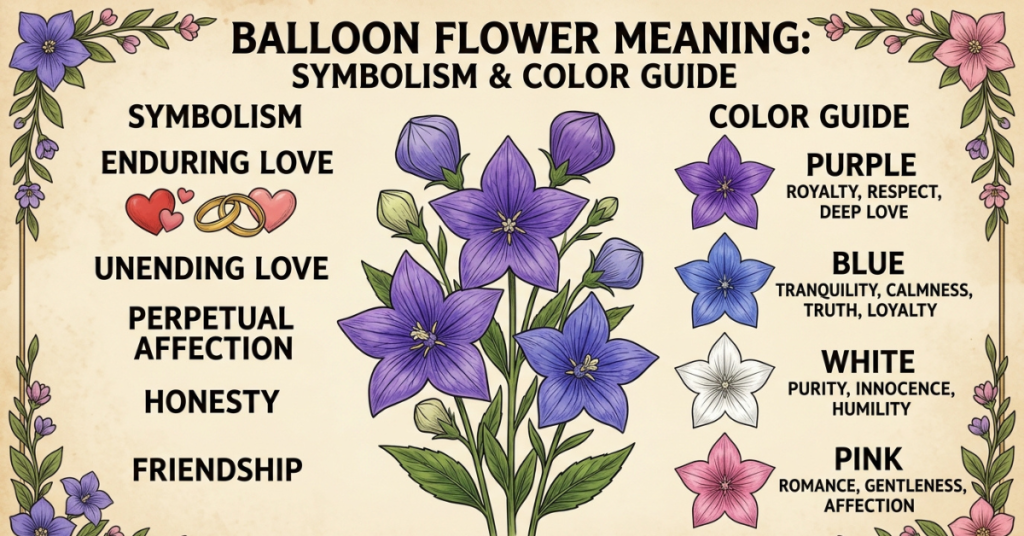
The balloon flower meaning is often connected with lasting love, devotion, sincerity, and constancy. In floral symbolism, the flower can represent emotions that do not disappear easily, making it particularly meaningful when given to someone close to you.
Some of its commonly associated meanings include:
- Enduring love: Feelings that remain strong over time.
- Devotion: A deep sense of loyalty toward someone.
- Honesty: Sincere and genuine emotions.
- Constancy: Remaining faithful despite changing circumstances.
- Hope: The flower’s gradual opening can be viewed as a symbol of positive change and possibility.
Because the exact symbolism of flowers can differ between cultures and traditions, these meanings should be understood as common associations rather than universal rules.
White Balloon Flower Meaning
The white balloon flower meaning is generally associated with purity, sincerity, innocence, peace, and honest affection.
White flowers often carry a clean and understated appearance, and the white balloon flower fits naturally into that symbolism. It can represent feelings that are genuine rather than dramatic or overwhelming.
A white balloon flower may be suitable for expressing:
- Pure affection
- Sincere friendship
- Peace and calm
- New beginnings
- Respect
- Gentle remembrance
Because white is traditionally associated with purity and simplicity, white balloon flowers can also work beautifully in elegant floral arrangements.
Blue Balloon Flower Meaning
The blue balloon flower meaning is often connected with trust, loyalty, calmness, and lasting affection.
Blue flowers tend to evoke feelings of peace and stability. When combined with the balloon flower’s associations with constancy and devotion, the blue variety can symbolize a relationship built on trust and emotional steadiness.
A blue balloon flower can therefore represent:
- Loyalty
- Trust
- Emotional stability
- Peace
- Faithfulness
- Lasting friendship
Its soft blue color also makes it a popular choice when the goal is to create a calm, peaceful floral arrangement.
Purple Balloon Flower Meaning
The purple balloon flower meaning is commonly associated with admiration, elegance, dignity, and deep affection.
Purple has long been linked with qualities such as sophistication and nobility. In floral symbolism, it can also communicate admiration for someone’s character or accomplishments.
Purple balloon flowers may symbolize:
- Admiration
- Respect
- Elegance
- Deep affection
- Appreciation
- Grace
Because of its rich color, purple balloon flower symbolism can feel slightly more expressive and romantic than the softer symbolism often associated with white varieties.
Balloon Flower Meaning in Japanese Culture
The balloon flower meaning Japanese traditions are particularly interesting because the plant has a long history of cultural and medicinal use in East Asia.
In Japan, the balloon flower is known as kikyo (桔梗). It is a well-known traditional flower and is recognized for its distinctive five-pointed shape.
The kikyo has been associated with meanings such as honesty, sincerity, and unchanging love. These ideas fit closely with the broader symbolism of the balloon flower, particularly its association with constancy and enduring feelings.
The flower also has an important place in Japanese visual culture. Its five-petaled shape has been used in traditional decorative motifs, family crests, and other artistic contexts.
It is worth noting that Japanese flower symbolism can vary according to historical period, source, and context. Therefore, it is better to treat these meanings as cultural associations rather than a single fixed definition.
Why Is the Balloon Flower Associated With Lasting Love?
The connection between balloon flowers and lasting emotions is one of the reasons the plant has become symbolically meaningful.
Its unopened bud begins as a small, rounded form before gradually expanding and revealing its full flower. That transformation can naturally evoke ideas of growth, patience, and feelings developing over time.
Once open, the flower has a strong, defined shape and can remain attractive for an extended period under suitable growing conditions. These characteristics have helped reinforce associations with steadiness and enduring affection.
Balloon Flower Symbolism by Color
If you’re choosing a balloon flower based on its symbolism, color can help communicate a more specific message.
| Color | Common Symbolism |
| White | Purity, sincerity, peace, innocence |
| Blue | Loyalty, trust, calmness, constancy |
| Purple | Admiration, dignity, elegance, affection |
| Pink | Gentleness, affection, tenderness |
Keep in mind that flower meanings aren’t universal codes. Personal preferences, cultural traditions, and the occasion can all influence what a particular color communicates.
When Should You Give Balloon Flowers?
Balloon flowers can be appropriate for several occasions because their symbolism is generally positive and versatile.
Romantic occasions
Blue, purple, or pink balloon flowers can express affection, devotion, and appreciation in a relationship.
Friendship
A blue or white arrangement can communicate loyalty, sincerity, and appreciation without necessarily carrying a strongly romantic message.
Celebrations
Their cheerful star-shaped blooms make balloon flowers suitable for birthdays, congratulations, and other happy occasions.
Thoughtful gestures
You don’t always need a major occasion to give flowers. A small arrangement can simply be a way of saying that you care about someone.
What Does a Balloon Flower Represent Spiritually?
From a symbolic perspective, balloon flowers can be interpreted as representing patience, emotional growth, resilience, and enduring connection.
The transformation from a rounded bud into an open flower provides an easy metaphor for personal development. Something that begins quietly and privately eventually unfolds into something visible and beautiful.
For this reason, some people associate balloon flowers with:
- Personal growth
- Patience
- Emotional strength
- Hope
- Faithfulness
- Lasting relationships
These spiritual interpretations are personal rather than scientifically established meanings, but they can add another layer of significance when the flower is used as a gift or decorative symbol.
Balloon Flower vs. Bellflower: Are They the Same?
Balloon flowers and other bellflowers can look similar because they belong to the same plant family, but they are not all the same plant.
The balloon flower is specifically Platycodon grandiflorus. It is sometimes called the Japanese bellflower, Chinese bellflower, or Korean bellflower.
Its swollen, balloon-like buds are one of the easiest ways to distinguish it from many other bellflower species.
Frequently Asked Questions About Balloon Flower Meaning
What is the main balloon flower meaning?
The balloon flower is commonly associated with enduring love, devotion, sincerity, loyalty, and constancy. Its exact meaning can vary according to culture and flower color.
What is the white balloon flower meaning?
The white balloon flower meaning is generally connected with purity, sincerity, peace, innocence, and genuine affection.
What is the blue balloon flower meaning?
The blue balloon flower meaning is often associated with loyalty, trust, calmness, faithfulness, and lasting friendship or affection.
What is the purple balloon flower meaning?
The purple balloon flower meaning commonly represents admiration, elegance, dignity, appreciation, and deep affection.
What is the balloon flower meaning in Japanese culture?
In Japan, the balloon flower is called kikyo and has traditional associations with sincerity, honesty, and unchanging or lasting love. Its distinctive five-petaled form has also appeared in Japanese decorative and heraldic traditions.
Is a balloon flower a symbol of love?
Yes. Balloon flowers are commonly associated with lasting or enduring love, particularly because of their connection with constancy and devotion.
What does a balloon flower symbolize in friendship?
A balloon flower can represent loyalty, sincerity, trust, and appreciation in friendship. Blue and white varieties are especially fitting when you want the message to feel warm but not strongly romantic.
Why is it called a balloon flower?
The name comes from the flower’s unusual unopened buds. Before blooming, the buds swell into rounded, balloon-like shapes and then open into star-shaped flowers.
Final Thoughts on Balloon Flower Meaning
The balloon flower meaning goes beyond its unusual appearance. With associations of lasting love, devotion, sincerity, loyalty, and constancy, it can carry a thoughtful message whether you’re giving flowers to a romantic partner, friend, or someone you simply appreciate.
Color adds another layer of meaning: white balloon flowers suggest purity and sincerity, blue balloon flowers evoke loyalty and trust, while purple balloon flowers can express admiration and elegance. In Japanese culture, the flower’s identity as kikyo gives it an especially rich history of symbolism.
If you’re choosing flowers for a gift, garden, or meaningful arrangement, consider both the flower’s color and the message you want to convey. Sometimes, a simple bloom can say more than a long message ever could.