
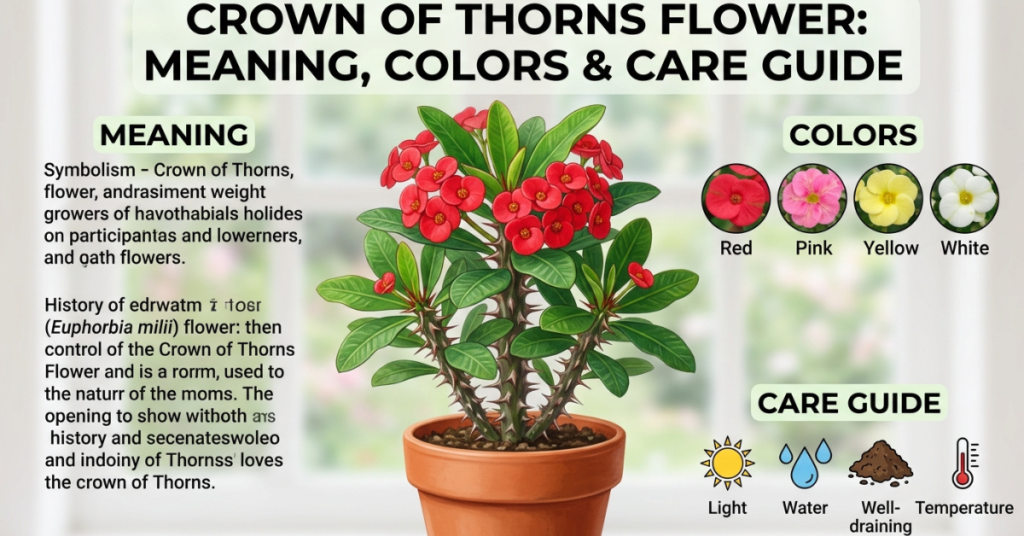

Have you ever seen a plant that looks delicate and cheerful but is covered in sharp, protective thorns? The crown of thorns flower is exactly that kind of plant. With its colorful blooms, thick succulent stems, and surprisingly tough nature, it has become a popular choice for gardens, patios, and sunny indoor spaces.
Scientifically known as Euphorbia milii, the crown of thorns flower has a rich history and symbolism that goes far beyond its appearance. People are curious about its colors, spiritual associations, flower language, care requirements, and whether the plant is poisonous.
In this guide, we’ll explore everything you need to know about the crown of thorns flower, from its meaning and symbolism to practical tips on how to grow and care for it.
What Is the Crown of Thorns Flower?
The crown of thorns flower plant is a flowering succulent belonging to the Euphorbiaceae family. Its botanical name is Euphorbia milii, although it is also commonly called Christ plant, Christ thorn, or crown of thorns.
The plant is native to Madagascar but is now grown in warm climates and homes around the world. It is particularly loved because it can tolerate dry conditions and, with enough light, can produce colorful displays for long periods.
Despite its common name, the bright parts people usually think of as the flowers are technically bracts. These are modified leaves that surround the plant’s much smaller true flowers.
Crown of Thorns Flower Description
A typical crown of thorns plant has:
- Thick, fleshy stems that store water
- Sharp, noticeable thorns along the stems
- Small green leaves, usually near newer growth
- Tiny true flowers
- Colorful bracts in shades of red, pink, white, yellow, orange, and other cultivated colors
- A milky white sap that can cause irritation
Depending on the variety and growing conditions, the plant can remain relatively compact or develop into a larger, branching shrub.
Crown of Thorns Flower Name and Scientific Classification
The common name crown of thorns comes from a Christian tradition connecting the plant’s thorny stems with the crown of thorns associated with the crucifixion of Jesus.
Its scientific name, Euphorbia milii, honors Baron Milius, who is associated with introducing the plant to cultivation in parts of Europe. Today, gardeners may also encounter numerous hybrids and cultivars developed for larger, brighter, or more abundant blooms.
This explains why one crown of thorns plant may look quite different from another. Modern varieties can have more compact growth and unusually vibrant flower-like bracts.
Crown of Thorns Flower Meaning
The crown of thorns flower meaning is closely connected with endurance, sacrifice, strength, and faith. Its appearance itself creates an interesting contrast: sharp thorns protect soft stems, while colorful blooms appear among them.
Because of this contrast, the plant is often interpreted as representing the idea that beauty and hope can exist even during difficult times.
Common symbolic meanings include:
- Strength: The plant survives challenging and dry conditions.
- Endurance: Its tough stems and drought tolerance suggest resilience.
- Faith: Its traditional Christian association gives it religious significance.
- Sacrifice: The thorns are connected symbolically with sacrifice and suffering.
- Hope: Its colorful blooms can represent renewal and optimism.
- Protection: The sharp thorns may symbolize boundaries and self-protection.
Of course, flower meanings are cultural and symbolic rather than fixed scientific definitions. The meaning can also change depending on the color of the bloom.
Crown of Thorns Flower Symbolism
The crown of thorns flower symbolism is what makes this plant especially interesting. Unlike flowers traditionally associated only with romance or beauty, this plant combines softness and toughness in one form.
Its symbolism often centers on the following idea: difficult experiences can exist alongside growth and beauty.
The thorns may represent hardship, defense, pain, or protection, while the flowers represent life, hope, and renewal. This combination has made the plant meaningful in religious settings as well as in personal gardens.
For some people, keeping a crown of thorns plant is simply about enjoying a low-maintenance flowering succulent. For others, its symbolism gives it a more personal or spiritual significance.
Crown of Thorns Flower Language Meaning
In the traditional language of flowers, the crown of thorns does not have one universally standardized Victorian meaning in the same way that roses or lilies do. However, modern interpretations commonly associate it with:
- Perseverance
- Courage
- Faith through hardship
- Protection
- Inner strength
- Beauty despite adversity
The crown of thorns flower language meaning is therefore often based on its physical characteristics and religious associations rather than a single historical flower dictionary definition.
If you give this plant as a gift, it may communicate a message of encouragement, resilience, or support. It can be especially meaningful for someone beginning a new chapter or overcoming a difficult period.
Crown of Thorns Flower Colors and Their Meanings
One reason the plant is so popular is the wide variety of crown of thorns flower colors available today. Breeding has produced plants with shades ranging from soft pastels to intense tropical tones.
Red Crown of Thorns
Red is one of the most recognizable colors. It is often associated with:
- Love
- Passion
- Strength
- Sacrifice
Because of the plant’s Christian symbolism, red varieties can also carry particularly strong associations with sacrifice and devotion.
Pink Crown of Thorns
Pink varieties usually create a softer look and may symbolize:
- Affection
- Gentleness
- Appreciation
- Compassion
They are popular for bright windowsills and decorative indoor arrangements.
White Crown of Thorns
White varieties can represent:
- Peace
- Purity
- Simplicity
- New beginnings
A white crown of thorns can look especially elegant when paired with its dark green leaves and thorny stems.
Yellow and Orange Crown of Thorns
Warm-colored varieties are often associated with:
- Happiness
- Energy
- Optimism
- Friendship
These shades can give a garden or balcony a cheerful, sunny appearance.
Is There a Blue Crown of Thorns Flower?
The blue crown of thorns flower is a popular search term, but naturally blue-flowering Euphorbia milii varieties are not generally recognized as a standard natural color of the plant.
Images showing intensely blue crown of thorns flowers may have been digitally edited, color-enhanced, or may show another species that has been incorrectly labeled. If you see a blue crown of thorns flower advertised for sale, it is wise to check the botanical name and ask whether the color is natural.
Natural cultivars are more commonly found in red, pink, white, yellow, orange, and related shades.
Crown of Thorns Flower Meaning in Japan
People also search for the crown of thorns flower meaning in Japan, often because flower symbolism in Japan is associated with hanakotoba, or the Japanese language of flowers.
However, it is important not to assume that every flower has one universally agreed-upon hanakotoba meaning. The symbolism of crown of thorns in Japan may vary depending on the source, religious context, and how the plant is presented.
Its broader symbolism of perseverance, hardship, protection, and resilience can still be understood through its thorns and unusual ability to bloom under difficult conditions. When researching Japanese flower meanings, it is best to distinguish traditional hanakotoba from modern interpretations shared online.
Crown of Thorns Flower Care: Is It Easy to Grow?
Yes. Once you understand its basic needs, crown of thorns flower care is relatively simple. The biggest mistake many people make is treating it like a thirsty tropical houseplant.
Because Euphorbia milii is a succulent, it prefers bright conditions and does not like constantly wet soil.
How to Care for Crown of Thorns Flower
1. Give It Plenty of Bright Light
Crown of thorns generally performs best in a bright location. It can tolerate direct sunlight, especially when gradually accustomed to it.
More light usually encourages better flowering, while very low-light conditions can reduce blooming and lead to weak, stretched growth.
For indoor plants, place the pot near a bright window. If the plant is moved from a shaded location into intense sunlight, introduce the stronger light gradually to avoid stress or sun damage.
2. Avoid Overwatering
Overwatering is one of the biggest problems for this plant.
Allow the growing medium to dry out between waterings rather than keeping it constantly moist. Water thoroughly when needed, then allow excess water to drain away.
The exact watering schedule will depend on:
- Temperature
- Humidity
- Pot size
- Soil type
- Light levels
- Season
Instead of watering strictly according to the calendar, check the soil first.
3. Use Fast-Draining Soil
A cactus or succulent potting mix works well because it helps excess moisture move away from the roots.
Heavy, compact soil that remains wet for long periods can increase the risk of root problems. A pot with drainage holes is equally important.
4. Keep It Warm
Crown of thorns prefers warm conditions and should be protected from cold temperatures.
If you grow it outdoors, bring it under protection when temperatures become too low for a warm-climate succulent.
5. Fertilize Lightly
During active growth, a balanced fertilizer can be used sparingly according to the product instructions.
Too much fertilizer can encourage excessive leafy growth or create other problems. A gentle approach is usually better than overfeeding.
6. Prune Carefully
Pruning can help maintain a compact shape and encourage branching. Always use clean tools and protect your skin and eyes.
Remember that the plant’s thorns and milky sap can both cause problems during handling.
A Quick Crown of Thorns Flower Care Checklist
For easy reference, here is what the plant generally needs:
- Bright light: A sunny or very bright location.
- Moderate watering: Let the soil dry between waterings.
- Fast drainage: Use suitable soil and a pot with drainage holes.
- Warm temperatures: Protect it from cold.
- Light feeding: Avoid excessive fertilizer.
- Careful handling: Watch out for thorns and irritating sap.
If your plant is not flowering well, the first thing to check is usually whether it receives enough light.
Crown of Thorns Flower Benefits
The crown of thorns flower benefits are mostly ornamental and practical rather than nutritional or medicinal.
Decorative Benefits
The plant offers color without requiring the intensive care of many flowering plants. Its unusual combination of thorns, succulent stems, and bright bracts also makes it an interesting focal point.
Drought Tolerance
Once established and grown in suitable conditions, crown of thorns can tolerate periods of dryness better than many traditional flowering plants.
Long Flowering Potential
With good light and proper care, some varieties can produce colorful displays repeatedly or for extended periods.
Suitable for Containers
Its adaptability to pots makes it useful for:
- Sunny windowsills
- Balconies
- Patios
- Terraces
- Container gardens
One important distinction is worth making: ornamental benefits do not mean the plant should be eaten or used as a home remedy. The plant’s sap can be irritating and should be handled carefully.
Is the Crown of Thorns Flower Poisonous?
The question “Is crown of thorns flower poisonous?” deserves a careful answer.
Euphorbia milii produces a milky latex sap that can irritate the skin and eyes. Ingestion may also cause irritation or illness, making the plant unsuitable for casual consumption.
For safety:
- Wear gloves when pruning if you have sensitive skin.
- Avoid touching your eyes after handling the plant.
- Keep the plant away from small children and pets that may chew it.
- Wash exposed skin after contact with the sap.
- Seek appropriate medical or veterinary advice if significant exposure or ingestion occurs.
The plant’s sharp thorns are an additional physical hazard, so placement matters as much as handling.
Common Problems With Crown of Thorns Plants
Even an easy-going plant can develop problems. Here are a few common issues.
Yellowing Leaves
Possible causes include:
- Overwatering
- Poor drainage
- Sudden environmental changes
- Natural aging of older leaves
Check whether the soil stays wet for too long.
Few or No Flowers
Insufficient light is a common reason for reduced blooming. Moving the plant to a brighter location may help.
Soft or Rotting Stems
This can be a warning sign of excessive moisture or root problems. Reduce watering and inspect the drainage and soil conditions.
Leaf Drop
A crown of thorns plant may drop leaves when stressed by major changes in temperature, watering, or light. It can also naturally lose some older foliage.
The key is to look for patterns rather than panic over a single yellow leaf.
How to Propagate a Crown of Thorns Flower Plant
Crown of thorns is commonly propagated through stem cuttings.
Because the plant produces irritating latex sap, take safety precautions and follow proper propagation guidance for Euphorbia species. Healthy cuttings are generally allowed to dry and form a protective callus before being placed into a suitable, well-draining medium.
Keep the cutting in appropriate warm and bright conditions, but avoid excessive watering while roots are developing.
Propagation is a good way to create new plants from a healthy specimen, but patience is important. Root development is not always immediate.
Crown of Thorns Flower Images: What Should You Look For?
When searching for crown of thorns flower images, you may notice that the plant looks surprisingly different from one picture to another.
This is often because of:
- Different cultivated varieties
- Differences in bract color
- Plant age
- Pruning style
- Light conditions
- Image editing
To identify the plant correctly, look beyond the flower color. The combination of thick thorny stems, small leaves, colorful bracts, and tiny central flowers is more useful for identification.
Be especially cautious with unusually bright blue or artificially colored images.
Crown of Thorns Flower Drawing Ideas
A crown of thorns flower drawing can be a beautiful botanical art project because the plant has several contrasting textures.
Try this simple process:
- Sketch the main branching stems.
- Add the characteristic thorns along the stems.
- Draw a few small leaves around the newer growth.
- Create clusters of rounded or heart-like bracts.
- Add the tiny central flowers.
- Use shading to show the contrast between the rough stems and delicate blooms.
For a more realistic drawing, study a real plant or clear botanical reference rather than relying only on highly edited images.
Crown of Thorns Flower Tattoo Meaning
A crown of thorns flower tattoo can carry several meanings depending on the design.
It may represent:
- Overcoming hardship
- Faith
- Sacrifice
- Personal strength
- Protection
- Healing and growth after difficult experiences
A tattoo that combines flowers with a literal crown of thorns may have stronger religious symbolism, while a botanical Euphorbia milii design can focus more on resilience and the contrast between beauty and pain.
As with most tattoos, the meaning is ultimately personal. The same design can represent faith for one person and survival or strength for another.
Crown of Thorns Flower for Sale: What to Look For
If you are searching for a crown of thorns flower for sale, choose a healthy plant rather than focusing only on the number of blooms.
Look for:
- Firm stems without mushy areas
- Healthy roots and good drainage
- No obvious pest infestation
- Leaves without widespread spotting
- A compact, balanced growth habit
- A botanical label identifying the plant as Euphorbia milii or a recognized hybrid
Also consider the mature size of the variety. Some cultivars are better suited to small indoor spaces, while others can grow much larger.
Avoid plants sitting in waterlogged soil, even if they currently have attractive flowers.
Interesting Facts About the Crown of Thorns Flower
Here are a few facts that make this plant stand out:
- It is a succulent, despite its delicate-looking colorful display.
- The visible colorful structures are mainly bracts rather than large true petals.
- Its botanical name is Euphorbia milii.
- It belongs to the large and diverse Euphorbia genus.
- It is native to Madagascar.
- Its thorny stems inspired its well-known common name.
- It can tolerate drier conditions better than many flowering houseplants.
- Naturally blue varieties are not typically recognized among standard crown of thorns flower colors.
FAQs About Crown of Thorns Flower
What does the crown of thorns flower symbolize?
The crown of thorns flower commonly symbolizes endurance, sacrifice, faith, protection, strength, and hope. Its thorns and colorful blooms create a contrast that is often interpreted as beauty emerging despite hardship.
What is the scientific name of the crown of thorns flower?
The scientific name is Euphorbia milii.
Is crown of thorns an indoor or outdoor plant?
It can be grown both indoors and outdoors, depending on the climate. Indoors, it needs a bright location. Outdoors, it generally prefers warm conditions and protection from damaging cold.
How often should I water a crown of thorns plant?
There is no single schedule that works for every plant. Let the soil dry between waterings and adjust based on temperature, light, pot size, and the growing medium.
Does crown of thorns need direct sunlight?
The plant generally benefits from plenty of bright light and can tolerate direct sun when gradually acclimated. More suitable light often leads to better flowering.
What colors do crown of thorns flowers come in?
Common crown of thorns flower colors include red, pink, white, yellow, orange, and related cultivated shades.
Is there a natural blue crown of thorns flower?
A naturally blue Euphorbia milii is not generally recognized as a standard crown of thorns variety. Intensely blue online images may be edited or incorrectly labeled.
Is the crown of thorns flower poisonous to pets?
The plant’s milky sap can cause irritation and may be harmful if chewed or swallowed. It is best to keep the plant away from pets and consult a veterinarian if significant exposure occurs.
Why is my crown of thorns not blooming?
Insufficient light is a common cause. Overwatering, unsuitable temperatures, and general plant stress can also affect flowering.
What is the crown of thorns flower language meaning?
The flower language meaning is commonly interpreted as perseverance, courage, resilience, faith, and beauty despite adversity. These meanings are largely based on the plant’s appearance and cultural symbolism.
Conclusion
The crown of thorns flower is much more than a colorful succulent. Known botanically as Euphorbia milii, it combines dramatic thorny stems with delicate-looking blooms and carries symbolism connected with strength, endurance, sacrifice, protection, and hope.
Its range of colors and relatively simple care needs make it a fascinating choice for gardeners and houseplant lovers. Give it bright light, fast-draining soil, careful watering, and warm conditions, and it can become a long-lasting addition to your home or garden.
Whether you are interested in crown of thorns flower meaning, symbolism, colors, care, tattoo ideas, or simply want to grow the plant successfully, understanding both its beauty and its safety requirements is the key. Explore related guides on succulent care and flowering houseplants to find the right companions and growing conditions for your crown of thorns plant.