
Few flowers have a name as dramatic as the black hellebore flower. Despite what its name suggests, this fascinating plant is not usually truly black—and it is not even a true rose. Yet its elegant, cup-shaped blooms and remarkable ability to flower during the coldest part of the year have made it one of the most intriguing plants in gardening and folklore.
The black hellebore flower, scientifically known as Helleborus niger, is often called the Christmas rose. It is admired for its white flowers, dark roots, rich symbolism, and long history in European gardens. Whether you are searching for the black hellebore flower meaning, looking for a black hellebore flower close up, or simply want to learn more about this unusual winter plant, there is much more to discover beneath its mysterious name.
What Is a Black Hellebore Flower?
The black hellebore flower is a perennial flowering plant belonging to the buttercup family, Ranunculaceae. Its botanical name, Helleborus niger, includes the Latin word niger, meaning “black.”
The name refers mainly to the plant’s dark or blackish roots rather than the color of its flowers. In fact, the blooms are typically white when they first open and may gradually develop pink, greenish, or deeper tones as they age.
The plant is native to parts of central and southern Europe, particularly mountainous regions. It has been grown in gardens for centuries because it brings flowers to the landscape when many other plants are dormant.
Common Names for Black Hellebore
The black hellebore is known by several names, including:
- Christmas rose
- Black hellebore
- Christmas flower
- Winter rose
Although “Christmas rose” is a popular name, the plant is not botanically related to roses. The name comes from its rose-like flowers and its association with the winter holiday season.
What Does the Black Hellebore Flower Look Like?
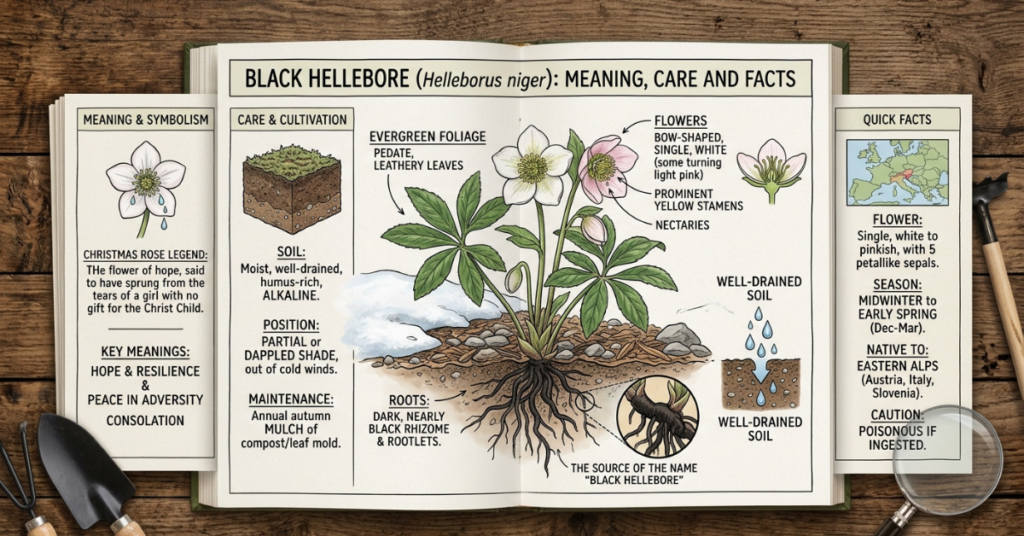
A black hellebore flower close up reveals why this plant is so admired by gardeners and flower lovers. Its blooms have a simple but elegant shape, usually with five broad, petal-like structures surrounding a cluster of yellow stamens.
Interestingly, the structures that look like petals are actually sepals. These sepals tend to remain attractive for a long time, which helps give the plant a long-lasting display.
The appearance of the plant generally includes:
- White, bowl-shaped flowers
- Yellow stamens in the center
- Dark green, leathery leaves
- A compact, clump-forming growth habit
- Dark underground roots and rhizomes
- Blooms that may age into pinkish or greenish shades
A mature black hellebore can create a striking contrast against dark soil, evergreen foliage, frost, or snow. That contrast is one reason black hellebore flower images are especially popular in winter garden photography.
Why Is It Called the Black Hellebore?
This is one of the most common sources of confusion about the plant. People often expect a black hellebore flower to produce dramatic black petals.
However, Helleborus niger is generally named for its dark roots rather than its blooms. The species name niger refers to black or dark coloration.
Some other hellebore varieties and hybrids can produce flowers in much darker shades, including deep purple and almost black. These plants are sometimes informally described as black hellebores, but they are not necessarily the same as the traditional Helleborus niger.
So, if you see a black hellebore flower image online, it is worth checking the botanical name. A nearly black bloom may belong to a different hellebore species or hybrid.
Black Hellebore Flower Meaning and Symbolism
The black hellebore flower meaning is closely connected with winter, resilience, transformation, and hope. Because the plant can bloom during cold weather, it has become a symbol of finding beauty and strength during difficult seasons.
Hope and New Beginnings
One of the strongest meanings associated with the black hellebore flower is hope. Its ability to bloom when much of the garden appears lifeless makes it a natural symbol of renewal.
The flower reminds us that difficult or quiet periods do not last forever. Even in the middle of winter, something new can begin.
Resilience and Strength
The black hellebore’s winter-flowering habit also represents resilience. It survives cold conditions and continues growing when many other flowering plants have stopped for the season.
For this reason, the flower can symbolize:
- Inner strength
- Endurance
- Perseverance
- Quiet courage
Mystery and Transformation
The word “black” in its common name gives the plant an air of mystery, even though its flowers are often white. Hellebores also have a long connection with ancient stories, traditional beliefs, and folklore.
This history has contributed to symbolic associations with mystery, change, and transformation.
Peace and Serenity
The soft white flowers of Helleborus niger can also represent peace and calm. Their understated beauty feels especially striking in a winter landscape, where bright and delicate blooms are unexpected.
The Christmas Rose Legend
The black hellebore is strongly associated with Christmas traditions, which is why it is commonly called the Christmas rose.
According to a well-known Christian legend, a young girl was saddened because she had no gift to offer the baby Jesus. As she cried, flowers appeared in the snow, and she offered them instead. These flowers were said to be Christmas roses.
While this is a traditional legend rather than a botanical origin story, it helped strengthen the plant’s connection with Christmas, hope, and unexpected beauty.
Black Hellebore Flower Close Up: What Makes It Unique?
Looking at a black hellebore flower close up allows you to notice details that are easy to miss from a distance.
At the center of the bloom is a cluster of prominent stamens, usually yellow or yellow-green. Surrounding them are broad sepals that create the familiar flower shape.
As the flower matures, its color may change gradually. A fresh white bloom can develop soft pink or green tones, giving the plant a slightly different appearance over time.
This changing color makes close-up photography particularly interesting. Two black hellebore flower images taken at different stages of flowering may look surprisingly different even when they show the same plant.
When Does Black Hellebore Bloom?
The flowering period depends on the climate and growing conditions, but black hellebore is generally associated with late winter and early spring blooming.
In milder regions, flowers may appear around the winter season. In colder climates, flowering may be delayed until temperatures become more suitable.
The plant’s ability to flower during a relatively quiet period of the gardening year is one of its greatest attractions. It can provide color when many traditional spring and summer flowers are still dormant.
How to Grow a Black Hellebore Flower
Growing a black hellebore can be rewarding, especially for gardeners who want interest outside the usual spring and summer flowering seasons.
Choose a Partly Shaded Location
Black hellebores generally grow best in partial shade. A location with gentle morning sun and protection from intense afternoon sunlight can work well.
They can also be planted beneath deciduous trees, where they receive more sunlight during winter and spring before the tree canopy becomes dense.
Use Well-Drained Soil
Good drainage is important. The plant does not enjoy constantly waterlogged conditions, which can contribute to root problems.
A fertile soil enriched with organic matter is generally beneficial. Depending on local soil conditions, a neutral to slightly alkaline environment may also be suitable for Helleborus niger.
Water Carefully
Young plants usually benefit from regular watering while becoming established. Once established, avoid keeping the soil constantly saturated.
The goal is consistent moisture without creating soggy conditions around the roots.
Give the Plant Time to Settle
Hellebores can take time to establish. Once planted, they generally prefer not to be moved frequently.
Choose the planting location carefully and allow the plant to develop naturally over time.
Basic Black Hellebore Care Tips
For healthy growth, remember these simple care guidelines:
- Plant in partial shade for protection from harsh heat.
- Use well-drained soil to prevent excessive moisture around the roots.
- Add organic matter to support healthy soil structure.
- Water during dry periods, especially while young plants are becoming established.
- Remove damaged foliage when appropriate to keep the plant looking tidy.
- Avoid frequent transplanting once the plant has settled into its location.
Is the Black Hellebore Flower Poisonous?
Yes. This is an important point for anyone considering growing hellebores.
Black hellebore contains compounds that can be harmful if parts of the plant are eaten. The plant should not be consumed by people or pets, and care should be taken when handling it.
If you are pruning or dividing hellebores, wearing gardening gloves is a sensible precaution. The plant’s sap may also irritate sensitive skin.
Because of its toxicity, the black hellebore should be treated as an ornamental plant rather than an edible or medicinal herb.
Black Hellebore in History and Folklore
Hellebores have a long and complicated history. Different species have appeared in ancient writings, traditional remedies, and folklore, although historical references do not always clearly distinguish between one hellebore species and another.
In the past, hellebores were associated with powerful medicinal uses. However, historical use does not mean the plant is safe for modern self-treatment. Hellebores contain toxic substances, and using them medicinally without qualified medical guidance can be dangerous.
Today, black hellebore is valued mainly as an ornamental garden plant and for its cultural and symbolic significance.
Black Hellebore Flower Image: Tips for Better Photography
If you want to capture a beautiful black hellebore flower image, timing and angle can make a major difference.
Because hellebore flowers often face downward, photographing them can be more challenging than photographing upward-facing blooms.
Try these ideas:
- Photograph the flower at its natural eye level.
- Use soft daylight rather than harsh midday sun.
- Capture the yellow center in sharp focus.
- Take close-up shots to highlight the texture of the sepals.
- Photograph the bloom against dark soil or green leaves for contrast.
- Capture different stages as the flower changes color.
A black hellebore flower close up can reveal delicate veins, pollen-covered stamens, and subtle shifts in color that are not obvious from a distance.
Black Hellebore vs Other Hellebores
The word “hellebore” covers a wider group of plants, so not every hellebore looks exactly like Helleborus niger.
Some species and hybrids bloom in shades of:
- White
- Cream
- Green
- Pink
- Burgundy
- Purple
- Nearly black
This variety is one reason hellebores are so popular in ornamental gardening. If you specifically want the traditional black hellebore flower, look for the botanical name Helleborus niger rather than relying only on a common name.
Interesting Facts About the Black Hellebore Flower
Here are a few fascinating facts about this unusual plant:
- The black hellebore is often called the Christmas rose.
- It is not a true member of the rose family.
- Its scientific name is Helleborus niger.
- The word “niger” refers to black or dark coloration, particularly associated with the roots.
- The flowers are commonly white rather than black.
- Its petal-like structures are technically sepals.
- The plant is known for flowering during the colder part of the year.
- Hellebores have a long history in European folklore and traditional gardening.
- The plant is toxic if eaten.
FAQs About the Black Hellebore Flower
What is the black hellebore flower?
The black hellebore flower usually refers to Helleborus niger, a perennial plant commonly known as the Christmas rose. It produces elegant, mostly white flowers and is valued for blooming during the colder months.
Is the black hellebore flower actually black?
Usually, no. The flowers of Helleborus niger are typically white when they open and may develop pinkish or greenish tones as they age. The “black” name is associated mainly with the plant’s dark roots.
What is the black hellebore flower meaning?
The black hellebore flower meaning is commonly linked with hope, resilience, strength, renewal, peace, and transformation. Its winter flowering habit makes it especially symbolic of finding beauty during difficult times.
Why is black hellebore called the Christmas rose?
It is called the Christmas rose because of its rose-like flower shape and its traditional association with winter and Christmas. However, it is not actually related to true roses.
When does the black hellebore flower bloom?
The exact flowering time depends on the climate. It generally blooms from winter into early spring, although the season may vary depending on local temperatures and growing conditions.
Is black hellebore poisonous?
Yes. Parts of the plant contain toxic compounds and should not be eaten. Keep it away from children and pets who may chew or consume plants, and consider wearing gloves when handling it.
Can black hellebore grow in shade?
Yes. Partial shade is generally ideal. The plant can benefit from gentle sunlight while being protected from intense heat and harsh afternoon sun.
How can I take a good black hellebore flower close up?
Use soft natural light and focus on the flower’s center and texture. Since many hellebore blooms naturally face downward, try photographing from a low angle or gently position yourself so the center of the flower is visible without damaging the plant.
Where can I find a black hellebore flower image?
You can find images through reputable botanical gardens, plant nurseries, gardening publications, and plant databases. Checking the scientific name, Helleborus niger, can help ensure that the image shows the correct species.
Conclusion
The black hellebore flower is proof that a plant does not need bright colors or dramatic size to make an impression. With its elegant winter blooms, dark-rooted history, and powerful symbolism, Helleborus niger has remained a fascinating garden plant for centuries.
Its connection with hope, resilience, and renewal gives the black hellebore flower meaning an emotional depth that goes beyond its appearance. Whether you are studying a black hellebore flower close up, searching for a beautiful black hellebore flower image, or considering adding this winter bloomer to your garden, understanding its true identity makes the plant even more interesting.
If you enjoy learning about flower symbolism and unusual plants, explore related articles on winter flowers, Christmas plants, hellebore varieties, and flower meanings to discover more blooms with equally fascinating stories.