
Few plants create a tropical feeling as instantly as a palm tree. Long, graceful leaves moving in the breeze immediately bring beaches, resorts, and warm landscapes to mind. Those distinctive leaves are known as palm fronds.
So, what are palm fronds, exactly? Simply put, palm fronds are the large leaves of palm trees and related palm-like plants. Depending on the species, they can be fan-shaped, feather-like, stiff and spiky, or broad and arching. In addition to supporting the plant’s growth, they have become popular in landscaping, religious traditions, floral arrangements, home décor, and artificial greenery.
This guide explores palm fronds meaning, the different types of palm fronds, their common uses, care concerns, and the differences between fresh, dried, faux, and artificial options.
Palm Fronds Meaning and Definition
The simplest palm fronds definition is the large leaves or foliage of a palm tree.
A single palm frond usually grows from the crown or upper part of the tree. Compared with the smaller leaves on many garden plants, a mature frond can grow quite large and may contain numerous leaflets or segments.
People sometimes search for “What is palm fronds?”, although fronds is plural. The singular form is palm frond, whereas palm fronds refers to more than one leaf.
A typical palm frond includes several main parts:
- Leaf base: The section near the trunk or stem.
- Petiole: The stalk that supports the leaf.
- Rachis: The central stem running through feather-shaped fronds.
- Leaflets or segments: The sections that create the recognizable shape of the leaf.
However, the exact structure varies considerably from one palm species to another.
What Are Palm Fronds?
Palm fronds are specialized leaves that suit the growing conditions of different palm species. As a result, their shape, size, texture, and flexibility can vary dramatically.
For example, some fronds grow soft and arching, creating the classic tropical silhouette seen in gardens and resorts. Others remain stiff and fan-like, which makes them particularly striking in ornamental landscapes.
These leaves perform several important functions:
- They capture sunlight for photosynthesis.
- They help the plant produce energy for growth.
- They create the palm’s distinctive appearance.
- They can provide shade and shelter in natural environments.
- They supply useful material for cultural, decorative, and practical purposes.
Therefore, healthy green fronds play an important role in a palm’s overall growth. Removing too many living leaves can weaken certain palm trees and affect their appearance.
Types of Palm Fronds
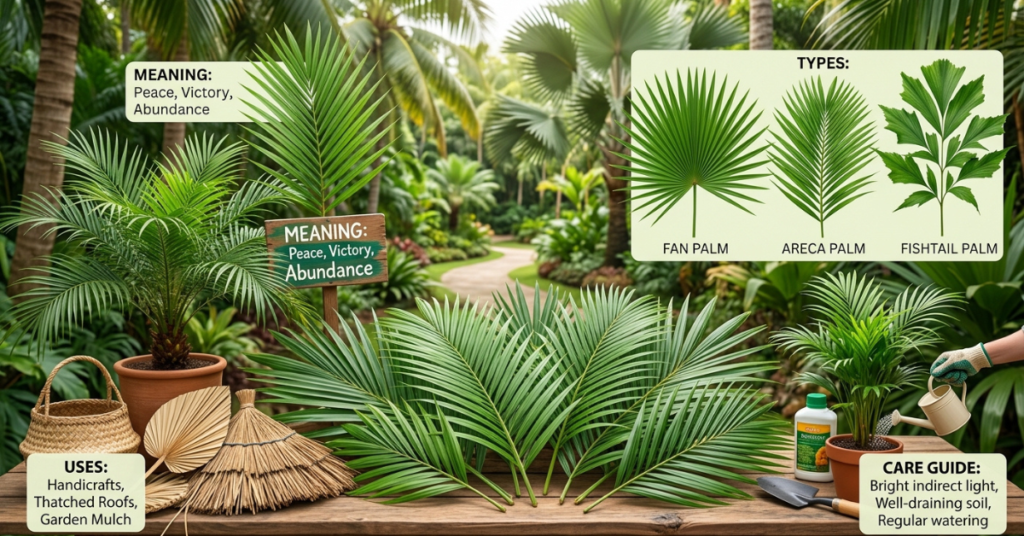
One of the easiest ways to understand different palms is to look closely at the shape of their foliage. Generally, botanists and gardeners group the main types of palm fronds according to their overall leaf structure.
Pinnate Palm Fronds
Pinnate fronds have a feather-like appearance. Numerous narrow leaflets grow along both sides of a central stalk, giving the entire leaf a soft, flowing shape.
This familiar style appears on many tropical palms, including coconut palms and date palms. Because of their elegant appearance, pinnate leaves are also popular in floral design and artificial greenery.
Common characteristics include:
- Arching growth from the crown.
- Numerous individual leaflets.
- A soft and flowing appearance.
- A classic tropical look.
Palmate Palm Fronds
Palmate fronds have a fan-shaped form. Their segments spread outward from a central point, much like the fingers of an open hand or the ribs of a folding fan.
Consequently, fan palms often stand out in warm and dry landscapes. Their leaves may appear rigid, rounded, deeply divided, or slightly folded.
These fronds work particularly well for:
- Landscape focal points.
- Tropical and Mediterranean gardens.
- Dried botanical décor.
- Large decorative arrangements.
Costapalmate Fronds
Costapalmate leaves fall somewhere between strongly fan-shaped and more curved foliage. Part of the leaf blade extends along a central midrib, which creates a folded or gently curved appearance.
Because of this structure, costapalmate fronds often look more three-dimensional than flat fan leaves. They can also add dramatic texture and movement to a landscape.
Palm Fronds vs. Palm Leaves
In everyday conversation, people often use palm leaves and palm fronds interchangeably. In most situations, both terms communicate the general idea.
However, frond provides a more specific botanical description for the large, often divided leaves associated with palms and certain other plants, such as ferns. Within a palm tree, the term usually describes the complete leaf structure rather than one individual leaflet or segment.
Therefore, calling them palm leaves is not necessarily incorrect. Still, palm fronds often gives a clearer and more specific description.
Common Uses of Palm Fronds
For centuries, people have used palm foliage in practical, cultural, religious, and decorative ways. Depending on the species, the leaves may be woven, displayed, dried, carried during ceremonies, or incorporated into creative designs.
Landscaping and Garden Design
Living palms can bring height, movement, texture, and shade to suitable landscapes. Their dramatic fronds often become one of the main visual features of the entire plant.
For instance, garden designers may use palms to create:
- Tropical-style landscapes.
- Resort-inspired outdoor spaces.
- Poolside planting schemes.
- Mediterranean garden designs.
- Dramatic architectural focal points.
Before choosing a palm, consider the mature size and spread of its foliage. This matters especially in smaller gardens where oversized fronds can quickly dominate the space.
Dried Palm Fronds for Home Décor
Dried palm fronds have become popular in natural, bohemian, coastal, and minimalist interiors. Their earthy texture and sculptural shape make them ideal for large vases, wall arrangements, and event styling.
For example, dried fronds can enhance:
- Living room floor vases.
- Entryway arrangements.
- Wedding décor.
- Café and restaurant interiors.
- Boho or coastal photo shoots.
To help them last longer, keep dried foliage away from moisture and excessive handling. Otherwise, older plant material can become brittle and break more easily.
Palm Fronds for Palm Sunday
Palm fronds for Palm Sunday play an important role in Christian traditions. Palm branches are associated with the biblical account of Jesus entering Jerusalem, where crowds greeted him with branches.
Today, churches and religious communities may distribute palm leaves, carry them in processions, or weave them into crosses. However, the exact type of palm material can vary according to the region and local tradition.
Floral and Event Arrangements
Fresh and dried palm foliage can add instant drama to an arrangement. In particular, large leaves work well when a bold, architectural appearance is the goal.
Designers often combine palm fronds with:
- Tropical flowers.
- Pampas grass.
- Dried grasses.
- Monstera leaves.
- Orchids.
- Neutral-toned dried flowers.
Sometimes, one oversized frond creates more visual impact than several smaller pieces of greenery. As a result, palm foliage can work especially well in minimal arrangements.
Dead Palm Fronds: Should You Remove Them?
Seeing dead palm fronds around the lower part of a palm tree is often completely normal. As older leaves age, they gradually lose their green color, turn brown, and eventually die while newer growth develops above them.
However, you should not remove every brown frond immediately. Healthy green leaves still help the plant produce energy, so excessive pruning can stress the palm.
Consider removing fronds when they are:
- Completely brown and dead.
- Broken or severely damaged.
- Affected by a problem that requires removal.
- Creating a genuine safety hazard.
Large palms require extra caution. Falling fronds and working at height can create serious risks, so professional assistance may be the safest choice for tall trees.
Why Are Palm Fronds Turning Brown?
Palm fronds turning brown is a common concern, although the cause depends on which leaves are affected and how the discoloration develops.
When only the oldest lower fronds gradually turn brown, natural aging may explain the change. On the other hand, brown tips, edges, or widespread damage can point to environmental stress or another growing problem.
Possible causes include:
- Underwatering.
- Inconsistent watering.
- Poor drainage or root problems.
- Salt buildup.
- Cold damage.
- Nutrient deficiencies.
- Wind or sun stress.
- Natural aging of older fronds.
The pattern of browning can provide useful clues. For example, brown tips may suggest a different issue from an entire crown of fronds turning brown.
Therefore, inspect the watering conditions, soil, recent weather, and overall growth before pruning or applying a treatment.
Palm Fronds Turning Yellow: What Does It Mean?
Palm fronds turning yellow can sometimes be part of the natural aging process. Older leaves may gradually yellow before they dry out and eventually die.
Nevertheless, widespread yellowing can signal that the palm is under stress. Several factors may contribute to the problem, including:
- Nutrient deficiencies.
- Overwatering.
- Underwatering.
- Poor soil drainage.
- Root damage.
- Low light for indoor palms.
- Pest or disease problems.
Different nutrient deficiencies can affect older and newer leaves in different ways. Therefore, identifying the palm species and examining the pattern of discoloration can help before choosing fertilizer or another treatment.
Do not assume that every yellow leaf needs more fertilizer. In fact, treating the wrong problem may create additional stress for the plant.
Are Palm Fronds Dangerous?
The answer to “Are palm fronds dangerous?” depends on the palm species and the situation. In many cases, the leaves cause no problem; however, large, heavy, sharp, or falling fronds can create physical hazards.
Some palm species also produce sharp spines near the leaf base or petiole. Because of that, handling and pruning require care.
Potential risks include:
- Cuts from sharp leaf edges or spines.
- Injuries from falling dead fronds.
- Eye injuries during pruning.
- Falls while trimming tall palms.
- Skin irritation from certain plant materials.
Large dead fronds hanging above walkways, patios, or parked vehicles deserve attention. Instead of attempting difficult pruning yourself, consider asking a qualified professional to inspect tall or hard-to-reach palms.
Sago Palm Fronds: Are They Actually Palm Fronds?
Despite its common name, a sago palm is not a true palm. Instead, it belongs to an ancient group of seed plants known as cycads.
Even so, sago palm fronds have a feather-like appearance, which explains why people commonly use the word frond to describe them.
A sago palm typically features:
- Stiff, glossy, pinnate leaves.
- Narrow leaflets.
- A symmetrical crown.
- A thick central trunk or stem as it matures.
Although they resemble true palms, cycads have different botanical characteristics. In addition, their plant material requires careful handling and should be kept away from pets and children.
Faux Palm Fronds and Artificial Options
Not everyone wants the maintenance that comes with real foliage. For that reason, faux palm fronds, fake palm fronds, and artificial palm fronds offer practical alternatives for interiors, events, and commercial spaces.
In general, these terms describe manufactured foliage designed to imitate real palm leaves. The word faux simply tends to sound more decorative or design-focused.
Artificial foliage comes in many styles, including:
- Large fan palm leaves.
- Feather-style tropical fronds.
- Small tabletop stems.
- Oversized statement leaves.
- UV-rated outdoor artificial foliage.
Benefits of Artificial Palm Fronds
Artificial greenery makes sense when you want a tropical appearance without regular watering, pruning, or frequent replacement.
Its main advantages include:
- Long-lasting decorative use.
- No regular watering.
- Easy event styling.
- A useful option for low-light interiors.
- Reusable seasonal displays.
Furthermore, artificial foliage can provide a consistent appearance throughout the year. This makes it particularly useful for commercial interiors and permanent decorative installations.
Choosing Realistic Fake Palm Fronds
The most convincing palm fronds artificial options usually include natural variation in shape, subtle texture, and flexible stems. Small imperfections can actually make fake foliage look more realistic.
By contrast, very glossy plastic or perfectly identical leaves may appear less natural. For a more polished result, consider the scale of the foliage in relation to the room and container.
For example, a large artificial frond inside a tiny vase can look awkward. A tall floor vase, meanwhile, may need fuller stems or several leaves to create better balance.
Palm Fronds Wallpaper and Interior Trends
Palm fronds wallpaper offers an easy way to bring botanical character into a room without adding numerous real plants. Depending on the design, it can create either a subtle natural backdrop or a bold tropical statement.
Palm-leaf patterns range from delicate line drawings to oversized, colorful prints. Therefore, the right choice depends largely on the atmosphere you want to create.
Palm-inspired wallpaper can work well in:
- Powder rooms.
- Bedrooms.
- Feature walls.
- Boutique cafés.
- Hotel-inspired interiors.
- Sunrooms and lounges.
If you choose a dramatic pattern, balance becomes especially important. Pairing oversized leaves with simpler furniture and accessories can prevent the room from feeling visually crowded.
Conversely, smaller-scale palm patterns usually create a softer botanical effect and may suit spaces that need a calmer appearance.
Palm Fronds Images and Botanical Inspiration
Searching for palm fronds images can help when you want to identify a palm species or gather ideas for a landscaping or décor project.
Pay attention to details such as:
- Fan-shaped or feather-shaped leaves.
- Leaf color.
- Leaflet size and arrangement.
- Frond stiffness.
- The presence of spines.
- Overall growth habit.
Together, these characteristics can help distinguish one type of palm from another. Meanwhile, interior designers and decorators can use visual references to compare styles ranging from lush tropical arrangements to simple dried palm displays.
Palm Fronds for Sale: What to Consider Before Buying
If you are searching for palm fronds for sale, first decide whether you need fresh, dried, preserved, or artificial foliage. Each option serves a different purpose and offers a different lifespan.
Fresh Palm Fronds
Fresh fronds suit short-term events, floral arrangements, and displays where a natural appearance matters most.
Dried or Preserved Fronds
Dried or preserved options work better for longer-lasting home décor. Additionally, they can add warm texture without requiring regular plant care.
Artificial Palm Fronds
Artificial fronds suit repeated use, permanent displays, and locations where maintaining real foliage would be difficult.
Before making a purchase, consider the following:
- Size: Make sure the frond fits your vase, room, or display.
- Condition: Check fresh and dried foliage for visible damage.
- Purpose: Event styling and permanent décor require different materials.
- Quantity: One large frond may be enough for a minimal arrangement.
- Placement: Think about sunlight, moisture, and foot traffic.
- Safety: Keep sharp or fragile foliage away from areas where people may brush against it.
How to Care for Palm Fronds
Care requirements depend on whether the foliage remains attached to a living palm or serves as cut or dried décor. Therefore, the first step is to identify how you plan to use the fronds.
Caring for Living Palm Fronds
For palms growing in the ground or containers, follow these general practices:
- Provide conditions that suit the specific species.
- Water consistently while avoiding poor drainage.
- Limit unnecessary pruning.
- Remove completely dead or badly damaged leaves when appropriate.
- Watch for pests and unusual discoloration.
- Use palm-specific nutrition only when it suits the plant’s actual needs.
Since different palms have very different requirements, species identification can make care decisions much easier.
Caring for Dried Palm Fronds
Dried fronds require far less maintenance than living foliage. However, they can become fragile, so gentle handling is important.
Keep them:
- Away from water and humidity.
- Out of frequently bumped areas.
- Protected from excessive dust buildup.
- Away from open flames and high heat.
A gentle duster or other low-intensity cleaning method can help maintain their appearance. In addition, placing them in a stable location reduces the risk of breakage.
Caring for Faux Palm Fronds
Artificial leaves can collect dust over time. To keep them looking fresh, wipe them gently with a soft cloth and follow the manufacturer’s cleaning instructions.
Pay particular attention to delicate materials, painted surfaces, and fabric foliage. Regular light cleaning usually works better than allowing heavy dust to build up.
Frequently Asked Questions About Palm Fronds
What are palm fronds?
Palm fronds are the large leaves of palm trees. Depending on the species, they may be feather-shaped, fan-shaped, or another distinctive form.
What is the meaning of palm fronds?
The palm fronds meaning refers to the leaves or foliage of a palm tree. One leaf is called a palm frond, whereas multiple leaves are called palm fronds.
Why are my palm fronds turning brown?
Older fronds naturally turn brown as they age. However, watering problems, poor drainage, nutrient issues, cold damage, salt buildup, and environmental stress can also cause browning.
Should I cut off dead palm fronds?
You can often remove completely dead and brown fronds. However, avoid cutting healthy green fronds unnecessarily because they still support the palm’s growth. For large or high fronds, professional help is usually safer.
Why are my palm fronds turning yellow?
Older leaves may yellow naturally, but widespread discoloration can relate to watering, drainage, nutrient problems, low light, pests, or other stress.
Are palm fronds dangerous?
They can be, particularly when they are large, heavy, sharp, or hanging high above the ground. Falling fronds, sharp spines, and unsafe pruning can all create risks.
Are sago palm fronds from a real palm?
No. Sago palms are cycads rather than true palms. Nevertheless, their feather-like leaves are commonly described as fronds.
Can I use dried palm fronds for home décor?
Yes. Dried palm fronds work particularly well in boho, coastal, rustic, and minimalist interiors. You can display them individually or group several together in a large vase.
What is the difference between faux and artificial palm fronds?
Usually, there is no major difference. Both terms describe manufactured palm foliage that imitates the appearance of real leaves.
Where can I find palm fronds for Palm Sunday?
Many churches distribute palms for Palm Sunday. Depending on your area, florists, religious supply businesses, and specialty plant suppliers may also provide suitable palm leaves.
Conclusion
Palm fronds are far more than decorative tropical leaves. They play an important role in palm growth, come in several distinctive shapes, and serve practical, cultural, religious, and decorative purposes. From living palms and palm fronds for Palm Sunday to dried palm fronds, faux palm fronds, and bold palm fronds wallpaper, these recognizable leaves continue to influence both outdoor landscapes and interior spaces.
If you are dealing with dead palm fronds, browning leaves, or palm fronds turning yellow, examine the plant’s overall condition before cutting anything back. Likewise, if you simply want a decorative tropical look, compare fresh, dried, and artificial options before choosing the best material for your space.
Ultimately, understanding the different types, uses, and care needs of palm fronds helps you make better decisions. Whether you are identifying a plant, planning a tropical garden, styling an interior, or choosing botanical décor, palm fronds offer plenty of practical and creative possibilities.