
Have you ever seen a tree covered in delicate white bells that seem to hang like tiny lanterns from its branches? That is the charm of the silverbell flower, one of those spring blooms that can easily be overlooked until you see a tree in full flower.
Silverbell generally refers to flowering trees and shrubs in the genus Halesia. Among the best-known is the Carolina silverbell, a deciduous tree native to the southeastern United States. Its pendulous, bell-shaped flowers, attractive foliage, and relatively modest size have made it a popular ornamental tree.
This guide explains what the silverbell flower is, what it means, where it grows, how to care for it, and one question that often comes up: is the silverbell flower edible?
What Is a Silverbell Flower?
The silverbell flower is the blossom of a Halesia species, a group of woody plants in the storax family, Styracaceae. The flowers are typically white, bell-shaped, and pendulous, appearing in small clusters along the branches.
The name “silverbell” comes from the flowers’ distinctive appearance. When the tree blooms, the pale bells hang beneath the branches and can look almost like small silver-white bells.
The most familiar species is the Carolina silverbell (Halesia carolina), although botanical references also recognize other Halesia species, including two-wing silverbell (Halesia diptera).
Quick Facts About the Silverbell Flower
- Genus: Halesia
- Family: Styracaceae
- Common name: Silverbell
- Best-known species: Carolina silverbell
- Flower color: Usually white, with some forms producing pink flowers
- Flower shape: Bell-shaped and pendulous
- Blooming period: Generally spring
- Growth habit: Deciduous shrub or small to medium-sized tree
- Main use: Ornamental landscaping
- Wildlife value: Flowers attract bees, while the seeds are eaten by squirrels
Carolina Silverbell Flower: What Does It Look Like?
The Carolina silverbell flower is particularly attractive because the blooms are not held upright like many familiar garden flowers. Instead, they dangle from the branches in clusters, creating a soft, almost cascading effect.
The flowers are generally white and bell-shaped, although some trees can produce pinkish blooms. USDA sources report that Carolina silverbell flowers occur in clusters of one to five and generally appear from March through May within its native range.
The tree itself usually has dark green, toothed leaves. After flowering, it develops distinctive four-winged fruits that can remain on the tree into winter.
How Big Does Carolina Silverbell Get?
Carolina silverbell is usually a small to medium-sized tree, although its mature size can vary depending on the form and growing conditions.
A typical mature tree can reach roughly 30 to 40 feet tall, with a broad crown.
Its moderate size makes it useful in landscapes where a massive shade tree would be too much.
Silverbell Flower Meaning
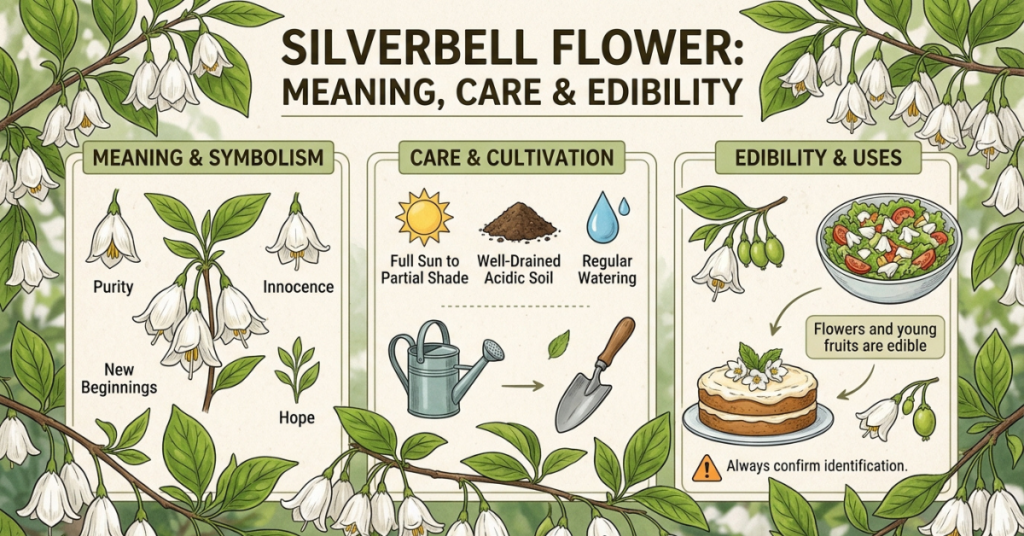
The silverbell flower meaning is not as firmly established in traditional flower-language dictionaries as the meanings of roses, lilies, or violets. Because silverbell is primarily known for its unusual bell-shaped flowers and graceful appearance, its symbolism is often interpreted through those visual qualities rather than through a long-established Victorian flower language.
The flower’s appearance can naturally suggest ideas such as:
- Grace and delicacy
- Beauty and elegance
- Gentleness
- Spring renewal
- Quiet charm
The bell shape can also evoke ideas of celebration, welcome, or something delicate calling attention to itself.
It is worth making a distinction, though: these are modern or interpretive associations, rather than a universally recognized historical definition of the silverbell flower.
Where Does Carolina Silverbell Grow?
Carolina silverbell is native primarily to the southeastern United States. Its natural range includes parts of the Carolinas, Tennessee, Georgia, Alabama, Virginia, West Virginia, Kentucky, and several other southeastern states.
In the wild, it commonly grows in moist woodland environments, particularly:
- Along streams
- In forest understories
- On ravine slopes
- In mountain coves
- On moist lower slopes
It generally prefers moist, well-drained, loamy soil and can perform particularly well in slightly acidic conditions.
Interestingly, the species has also been successfully cultivated outside its original range, including parts of New England, California, and Europe.
How to Grow a Silverbell Tree
If you’re considering a silverbell for your garden, recreating its preferred woodland conditions is a good starting point.
1. Choose the Right Light
Carolina silverbell can grow in full sun to partial shade, but it generally appreciates some protection from intense conditions. USDA information describes it as shade-tolerant and notes that moist, partially shaded sites can provide favorable conditions.
A location with morning sun and afternoon shade can be particularly attractive in warmer climates.
2. Provide Moist, Well-Drained Soil
Silverbell is not a plant that naturally prefers extremely dry ground. Its native habitats frequently include moist woodland soils and areas near streams.
Aim for soil that is:
- Moist but not permanently waterlogged
- Well drained
- Rich in organic matter
- Loamy where possible
- Slightly acidic to neutral
The USDA reports that Carolina silverbell commonly grows in rich, moist, well-drained loamy soils and generally favors somewhat acidic conditions.
3. Give It Enough Room
Although silverbell is smaller than many traditional shade trees, it still needs room for its canopy to develop.
Before planting, consider the mature height and spread rather than the size of the young nursery tree. This helps prevent future crowding around buildings, pathways, or other plants.
4. Water During Establishment
Young trees need consistent moisture while their root systems become established. Water deeply when the soil begins to dry rather than giving the tree frequent, shallow watering.
A layer of organic mulch around the root zone can also help conserve soil moisture. Keep mulch away from direct contact with the trunk.
When Does the Silverbell Flower Bloom?
The flowering period depends on climate and species, but Carolina silverbell generally blooms in spring.
USDA Forest Service information places its flowering period from approximately March through May in its native range.
The flowers are one of the tree’s main ornamental features. Because they hang beneath the branches, they are often easiest to appreciate when viewed from below. The USDA specifically notes that the blooms can be best seen from this angle.
Is the Silverbell Flower Edible?
If you’ve searched for silverbell flower edible, the safest answer is: do not treat silverbell flowers as an edible flower unless you have reliable, species-specific evidence and expert identification.
Although Carolina silverbell has ecological value, available authoritative sources emphasize its ornamental role and its value to wildlife rather than presenting the flowers as food for humans. The USDA notes that squirrels eat its seeds and that the flowers are attractive to bees.
That distinction matters. A flower being visited by bees or eaten by wildlife does not automatically mean it is safe for people to eat.
Therefore:
- Do not use silverbell flowers as a garnish simply because they look attractive.
- Do not assume that a flower is edible because another animal eats part of the plant.
- Avoid consuming unidentified Halesia flowers, leaves, fruits, or seeds.
- If you are specifically interested in edible flowers, choose species with established culinary safety information.
Are Silverbell Seeds Edible?
Carolina silverbell seeds are known to provide food for wildlife, including squirrels.
However, that should not be interpreted as evidence that the seeds are suitable for human consumption. There is insufficient reason to recommend eating them, so they are best left to wildlife.
Silverbell Flower and Wildlife
One of the nicest things about growing a silverbell is that its value extends beyond its appearance.
The flowers are attractive to bees, and USDA sources describe Carolina silverbell as an important honey plant in parts of its range. Its seeds are also consumed by squirrels.
This makes silverbell an appealing choice for gardeners who want ornamental plants that also contribute to a wildlife-friendly landscape.
Carolina Silverbell vs. Other Silverbells
The name “silverbell” can refer to more than one plant.
Carolina Silverbell
Halesia carolina is one of the best-known silverbells. It is native to the southeastern United States and is valued for its white hanging flowers and ornamental form.
Two-Wing Silverbell
Halesia diptera is another species in the genus. It is commonly called two-wing silverbell, reflecting the characteristic shape of its fruit.
Little Silverbell
Halesia parviflora is another species associated with the common name little silverbell or Florida silverbell.
Because common names can overlap, checking the scientific name is the best way to make sure you are researching the correct plant.
Why Gardeners Like the Silverbell Tree
Silverbell may not be the first tree that comes to mind when planning a garden, but it has several qualities that make it worth considering.
Its flowers are distinctive. The hanging bells give the tree a look that is very different from upright flowering trees.
It has ornamental value beyond the flowers. Its foliage, bark, and unusual winged fruits add seasonal interest.
It supports wildlife. Bees are attracted to the flowers, while squirrels use the seeds and may also use the tree for shelter.
It works well in smaller landscapes. Compared with very large shade trees, Carolina silverbell’s moderate mature size can make it easier to incorporate into residential landscapes.
Frequently Asked Questions About Silverbell Flowers
What is a silverbell flower?
A silverbell flower is the bell-shaped bloom produced by plants in the genus Halesia. The flowers are typically white and hang downward in clusters. Carolina silverbell is one of the best-known species.
What does the silverbell flower mean?
There is no single universally established traditional meaning for the silverbell flower. Its delicate, bell-shaped appearance is often associated symbolically with grace, gentleness, beauty, renewal, and quiet elegance.
Is Carolina silverbell the same as silverbell?
Carolina silverbell is one particular species commonly called silverbell. The broader name “silverbell” can refer to several species in the Halesia genus.
When does Carolina silverbell bloom?
Carolina silverbell generally flowers during spring. In its native range, flowering commonly occurs from March through May.
Is the silverbell flower edible?
Silverbell flowers should not be considered edible for humans without reliable, species-specific safety information. Authoritative plant references describe the species primarily as an ornamental tree and note its value to bees and wildlife rather than recommending the flowers as food.
Do bees like Carolina silverbell flowers?
Yes. Carolina silverbell flowers attract bees, and USDA Forest Service sources describe the species as a useful honey plant in parts of its range.
Is Carolina silverbell easy to grow?
It can perform well when planted in suitable conditions. It generally prefers moist, well-drained soil and can grow in full sun to partial shade.
How tall does Carolina silverbell get?
A mature Carolina silverbell commonly reaches around 30 to 40 feet, although size varies with the particular form and growing conditions.
Final Thoughts on the Silverbell Flower
The silverbell flower is a wonderful example of how a plant doesn’t need enormous blooms to make an impression. Its small, white bells hang gracefully beneath the branches, creating a soft spring display that feels especially natural in woodland-style gardens.
The Carolina silverbell flower is particularly notable for its ornamental beauty, wildlife value, and preference for moist woodland conditions. While its flowers may look tempting enough to use as decoration on a plate, the answer to silverbell flower edible is best approached cautiously: there is no good reason to consume the flowers when their human culinary safety has not been established.
If you’re choosing plants for a garden, silverbell is worth exploring for its spring flowers, graceful form, and ability to support pollinators. And if you’re researching other unusual flowering trees, comparing silverbell with dogwood, redbud, or snowdrop tree varieties can be a fascinating next step.