
Imagine a plant covered with delicate yellow, orange, and reddish flowers that look almost like pieces of Halloween candy. That unique beauty belongs to the candy corn plant, a tropical flowering shrub known for its colorful blooms and easy-growing nature.
Unlike its sweet-sounding name, this plant is not related to candy. It gets its nickname from its tubular flowers that develop warm yellow and orange shades, creating a pattern similar to the popular candy treat.
Whether you want to grow it in a garden bed, hanging basket, patio container, or as an indoor plant, this guide covers everything you need to know about candy corn plant care, growing conditions, popular varieties, and maintenance tips.
What Is a Candy Corn Plant?
The candy corn plant, scientifically known as Cuphea micropetala, is a flowering perennial shrub native to Mexico. It belongs to the Lythraceae family and is sometimes called a cigar plant because of its long, tube-shaped flowers.
The plant produces clusters of narrow blooms that gradually change color as they mature. Young flowers often appear yellow, then develop orange and reddish tones, creating the signature candy-like appearance.
Unlike many seasonal flowers, this tropical beauty can continue blooming for several months when grown in suitable conditions.
Quick Facts
- Botanical name: Cuphea micropetala
- Common names: Candy corn plant, cigar plant, large firecracker plant
- Plant type: Perennial flowering shrub
- Native habitat: Mexico
- Flower colors: Yellow, orange, and red shades
- Bloom period: Summer through fall
- Growing zones: USDA zones 8–11
Why Does It Have a Candy-Like Appearance?
The plant’s unusual name comes from the color combination of its flowers. Each bloom develops different shades as it ages, creating a display that resembles pieces of candy corn.
Gardeners love this plant because it provides:
- Bright tropical colors in outdoor spaces
- Long-lasting flowers
- A unique alternative to traditional flowering plants
- A food source for hummingbirds and butterflies
Candy Corn Plant Care: How to Grow Healthy Flowers
Learning proper is easy because this plant is naturally hardy. It mainly needs enough sunlight, suitable soil, regular watering, and occasional pruning.
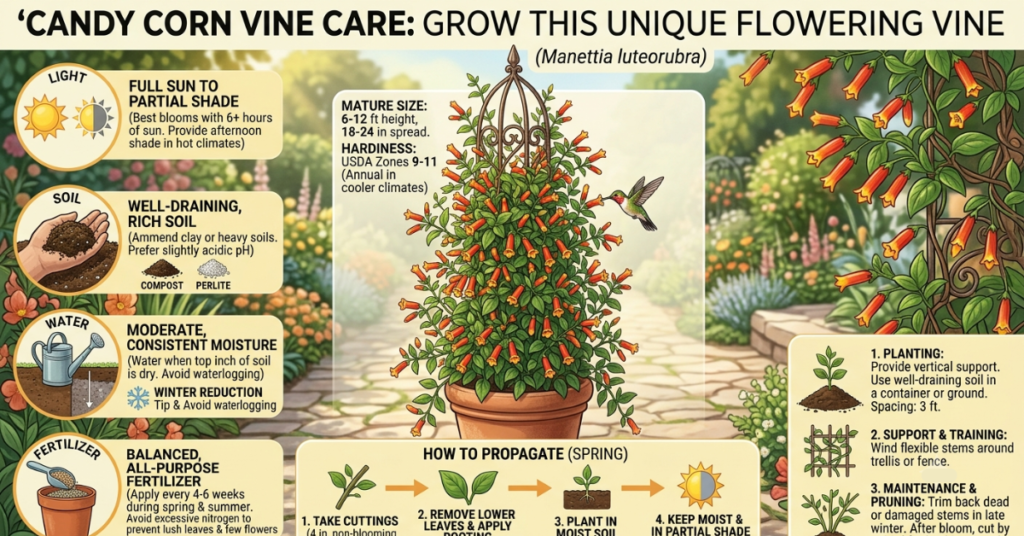
1. Light Requirements
This flowering shrub performs best when it receives plenty of sunlight.
Ideal lighting conditions:
- Full sun for the strongest flowering
- Partial shade in extremely hot climates
- Bright indirect light when grown indoors
If you are growing a candy corn plant indoor, place it near a bright window where it can receive several hours of sunlight each day.
Too little light may cause weak growth and fewer flowers.
2. Choosing the Right Soil
Good drainage is essential for healthy roots. The plant does not like soggy soil because excess moisture can lead to root problems.
A suitable potting mixture includes:
- Quality garden soil
- Organic compost
- Perlite or coarse sand for drainage
For container gardening, always select a pot with drainage holes.
3. Watering Requirements
This plant prefers consistently moist soil but does not tolerate standing water.
Follow these simple watering tips:
- Check the top layer of soil before watering.
- Water when the first inch feels dry.
- Reduce watering during cooler months.
- Avoid keeping the roots constantly wet.
Overwatering is one of the most common mistakes when caring for this flowering shrub.
4. Fertilizing for More Flowers
A balanced fertilizer can encourage stronger growth and better blooming.
For best results:
- Apply fertilizer every 4–6 weeks during spring and summer.
- Use a formula made for flowering plants.
- Avoid too much nitrogen, which may increase leaf growth but reduce flowers.
Double Play Candy Corn Plant: A Colorful Garden Favorite
It is a popular choice among gardeners searching for a more decorative and reliable variety.
This selection is appreciated for its attractive growth habit, colorful flowers, and ability to perform well in landscapes and containers.
Many gardeners look for options to shop Burpee double play candy corn plant because Burpee is a recognized gardening brand that offers many ornamental plants.
Before purchasing, consider:
- Your climate
- Available planting space
- Sunlight conditions
- Container or garden use
Candy Corn Plant Vine: Understanding Its Growth Habit
Many people search for a candy corn plant vine because the plant can develop long, spreading stems. However, it is not technically a climbing vine.
It is better described as a spreading perennial shrub with flexible branches that work beautifully in decorative displays.
Its trailing growth makes it suitable for:
- Hanging baskets
- Patio containers
- Balcony gardens
- Garden borders
Growing Candy Corn Plant Indoor
An indoor setup can be successful if you provide the right environment.
Indoor care tips include:
- Place it near a sunny window.
- Use well-draining potting soil.
- Maintain moderate humidity.
- Rotate the container for even growth.
- Trim stems to maintain shape.
Indoor plants may grow slower compared with outdoor plants, but they can still produce attractive flowers with proper care.
Hanging Candy Corn Plant: Perfect for Containers
It creates an eye-catching display because its branches naturally spill over the edges of baskets.
It works especially well in:
- Hanging planters
- Porch decorations
- Balconies
- Sunny patios
Combining it with plants that have contrasting leaves can create a beautiful mixed container arrangement.
Goldfish Candy Corn Plant: Are They the Same?
The term goldfish candy corn plant can create confusion because it combines two different plant names.
A goldfish plant belongs to the Columnea genus and is usually grown as a houseplant. It has orange flowers shaped like small fish.
The candy corn plant (Cuphea micropetala) is different and is usually grown outdoors.
| Feature | Candy Corn Plant | Goldfish Plant |
| Scientific group | Cuphea micropetala | Columnea species |
| Growing style | Outdoor flowering shrub | Indoor tropical plant |
| Flowers | Yellow-orange tubular blooms | Fish-shaped orange flowers |
| Light needs | More sunlight | Bright indirect light |
Pruning and Maintenance Tips
Regular trimming keeps the plant compact and encourages new growth.
Best times to prune:
- Early spring before new growth starts
- After flowering
- When branches become too long
Pruning helps:
- Create a fuller shape
- Encourage branching
- Improve flowering performance
Remove dead flowers and damaged leaves regularly to keep the plant healthy.
Common Problems and Solutions
Although this plant is easy to maintain, some problems may occur.
Yellow Leaves
Possible causes:
- Overwatering
- Poor soil drainage
- Nutrient deficiency
Lack of Flowers
Possible reasons:
- Not enough sunlight
- Too much fertilizer
- Incorrect pruning
Pest Issues
Common pests include:
- Aphids
- Spider mites
- Whiteflies
Mild infestations can often be controlled with insecticidal soap or neem oil.
Finding a Candy Corn Plant for Sale
If you are searching for sale, check:
- Local nurseries
- Garden centers
- Online plant stores
- Seasonal plant suppliers
Availability depends on your location and growing season.
Gardeners interested in specialty varieties often search for a shop Burpee double play candy corn plant option for reliable plant quality and growing information.
Benefits of Growing This Flowering Plant
Adding this colorful shrub to your garden offers many advantages:
- Unique flower colors
- Long blooming season
- Low maintenance needs
- Pollinator attraction
- Suitable for containers and landscapes
It is a great choice for anyone who wants a tropical-looking plant without complicated care requirements.
Frequently Asked Questions
Is the candy corn plant easy to grow?
Yes. With proper sunlight, watering, and well-draining soil, it is considered a beginner-friendly flowering plant.
Is this plant a vine or shrub?
Although commonly searched as a candy corn plant vine, it is actually a spreading shrub rather than a true climbing vine.
Can it grow indoors?
Yes. A candy corn plant indoor setup can work if the plant receives enough sunlight and proper drainage.
Does it return every year?
In warm climates, it can grow as a perennial. In colder areas, it may need protection from frost or indoor storage during winter.
Does it attract hummingbirds?
Yes. Its tubular flowers are attractive to hummingbirds and butterflies.
What is the scientific name?
The botanical name is Cuphea micropetala.
How large can it become?
Depending on growing conditions, it can reach around 3–4 feet tall and spread several feet wide.
Conclusion: Should You Grow a Candy Corn Plant?
It is a stunning choice for gardeners who want something unusual, colorful, and easy to maintain. Its warm-toned flowers, long blooming season, and flexible growing habits make it suitable for gardens, containers, and hanging displays.
Whether you choose a traditional variety, a double play candy corn plant, or a hanging basket arrangement, this tropical flowering shrub can add personality and charm to your space.
With proper light, watering, and occasional pruning, this unique plant can become one of the most attractive features in your garden collection.