
Have you ever come across a plant that looks so soft and charming that it reminds you of a puppy’s floppy ears? That adorable appearance is what makes the puppy ears plant a favorite among succulent enthusiasts. With its fuzzy leaves, compact shape, and unusual texture, this low-maintenance plant adds character to any indoor garden.
Known scientifically as Cotyledon tomentosa, this fuzzy succulent is loved for its easy-growing nature and unique appearance. Whether you are a beginner plant parent or an experienced gardener, learning proper puppy ears plant care will help you keep this beautiful succulent healthy and thriving.
In this guide, you will discover everything about its sunlight needs, watering schedule, soil requirements, propagation methods, common problems, and indoor growing tips.
What Is a Puppy Ears Plant?
The puppy ears plant is a popular name for Cotyledon tomentosa, a succulent known for its thick, rounded leaves covered with tiny hairs. These soft leaves resemble the ears of a young puppy, which is how the plant earned its adorable nickname.
Native to parts of southern Africa, this succulent naturally grows in dry environments. Like other drought-resistant plants, it stores water inside its leaves, allowing it to survive with less frequent watering.
Its unusual texture and cute appearance make it popular for:
- Indoor plant collections
- Succulent gardens
- Decorative pots
- Office and desk plants
Why Is This Succulent Called Puppy Ears?
The name comes from its distinctive appearance. The leaves have several features that make them look like tiny animal ears:
- Soft, fuzzy surfaces similar to velvet
- Rounded leaf tips with small “ear-like” shapes
- Green leaves with reddish-brown edges
- A compact and playful growth habit
This combination of texture and shape makes it stand out from many traditional houseplants.
Puppy Ears Plant Care: How to Grow It Successfully
Although it looks delicate, this succulent is quite resilient when given the right conditions. The most important factors for healthy growth are proper lighting, controlled watering, and well-draining soil.
1. Light Requirements for Healthy Growth
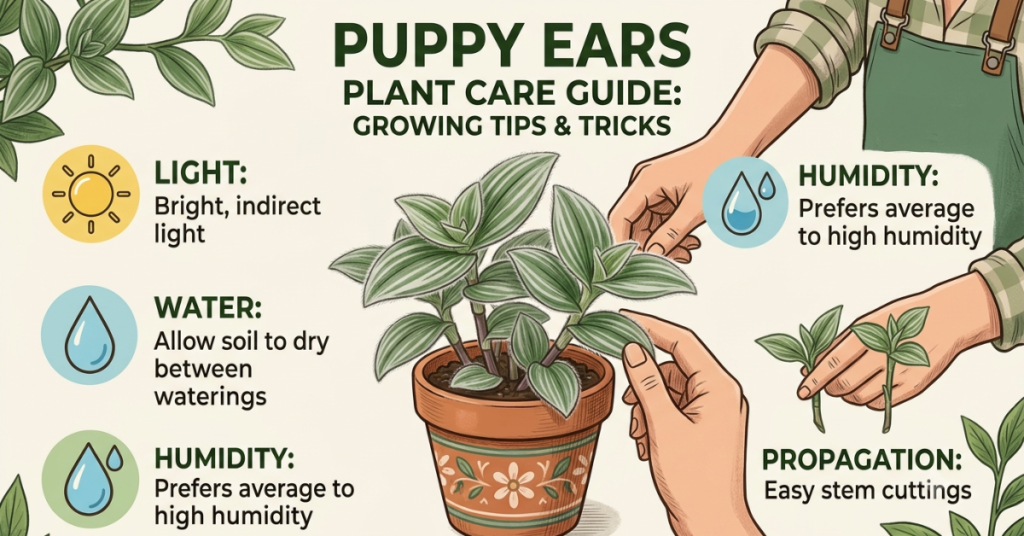
Bright light is essential for keeping this succulent compact and attractive. It grows best with plenty of indirect sunlight and some gentle morning sun.
Ideal lighting conditions:
- Place it near an east-facing or south-facing window
- Provide around 4–6 hours of bright light daily
- Protect it from intense afternoon sunlight in very hot climates
- Rotate the pot occasionally for balanced growth
If the plant does not receive enough light, it may become stretched and weak. This condition, called etiolation, happens when succulents grow taller while searching for more sunlight.
2. Watering Tips for Puppy Ears Plant Care
One of the biggest mistakes with succulents is giving them too much water. This plant prefers its soil to dry out completely between watering sessions.
A proper watering routine includes:
- Check that the soil is completely dry.
- Water deeply until excess water leaves the drainage hole.
- Remove standing water from the tray.
- Reduce watering during colder months.
Signs of overwatering include:
- Yellow leaves
- Soft or mushy stems
- Leaf dropping
- Root rot
When caring for succulents, underwatering is usually safer than overwatering.
3. Best Soil for This Fuzzy Succulent
Good drainage is essential because the roots do not like sitting in wet soil.
The ideal soil mix should be:
- Fast-draining
- Lightweight
- Sandy or gritty
- Suitable for cacti and succulents
A homemade mixture can include:
- 50% succulent or cactus soil
- 30% perlite or pumice
- 20% coarse sand
Avoid regular garden soil because it holds too much moisture and can damage the roots.
4. Choosing the Right Pot
The correct container helps prevent many common plant problems.
Choose a pot that has:
- Drainage holes at the bottom
- Good airflow around the roots
- A size slightly larger than the root system
Terracotta pots are especially useful because they allow moisture to evaporate more quickly.
A container that is too large may hold extra water and increase the chance of root problems.
How to Propagate Puppy Ears Plant
One of the best things about succulents is that they can often be propagated easily. New plants can be created through healthy stem cuttings.
Stem Cutting Method
Follow these steps:
- Cut a healthy stem using clean scissors.
- Leave the cutting for a few days until the cut area dries and forms a callus.
- Place it in a dry, well-draining succulent mix.
- Keep it in bright indirect light.
- Water lightly once roots begin forming.
With proper conditions, the new plant will gradually develop fresh growth.
Common Problems and How to Fix Them
Even easy-care plants can show signs of stress. Identifying problems early helps maintain healthy growth.
Yellow Leaves
Possible causes:
- Too much water
- Poor drainage
- Not enough sunlight
Solution:
Allow the soil to dry and check whether excess water can escape properly.
Soft or Mushy Leaves
This usually indicates overwatering or root damage.
What to do:
- Remove unhealthy leaves
- Let the soil dry completely
- Inspect the roots
- Repot using fresh succulent soil if needed
Leggy Growth
If the plant becomes tall and stretched, it is usually searching for more light.
Solution:
Move it closer to a bright window or improve its lighting conditions.
Pest Problems
Although generally hardy, this succulent may occasionally attract pests such as:
- Mealybugs
- Aphids
- Spider mites
You can manage small infestations by:
- Cleaning leaves with rubbing alcohol on a cotton swab
- Using mild insecticidal soap
- Checking the plant regularly
Indoor Care Tips for This Succulent
This plant is a great choice for indoor spaces because it does not require constant attention.
For better indoor growth:
- Place it near a sunny window
- Avoid humid areas like bathrooms
- Keep it away from cold air drafts
- Use pots with good drainage
- Clean dusty leaves gently
It looks beautiful in:
- Minimalist home décor
- Bedroom shelves
- Workspaces
- Kitchen windowsills
Is Puppy Ears Plant Safe for Pets?
Pet owners should be careful when placing this succulent around animals.
The plant (Cotyledon tomentosa) may be toxic if consumed by cats or dogs. Keep it in a location where pets cannot easily reach it, and seek veterinary advice if accidental ingestion occurs.
Benefits of Growing This Unique Succulent
Apart from its adorable appearance, this plant offers several advantages:
- Requires little maintenance
- Suitable for beginner gardeners
- Works well in small spaces
- Adds natural beauty to interiors
- Creates a calming green atmosphere
Its soft texture and unusual shape make it a standout addition to any plant collection.
Frequently Asked Questions
How often should I water a puppy ears plant?
Water only when the soil has completely dried out. Depending on your environment, this may be every two to three weeks.
Is the puppy ears plant a succulent?
Yes, it is a type of succulent that stores water in its thick leaves and prefers dry growing conditions.
Why are the leaves falling off?
Leaf loss can happen because of overwatering, poor lighting, or sudden environmental changes. Check the soil moisture and light levels first.
Can this plant grow indoors?
Yes, it grows well indoors when placed near a bright window and planted in well-draining soil.
How much sunlight does it need?
It prefers bright indirect light with around 4–6 hours of daily sunlight.
How can I encourage faster growth?
Provide enough light, avoid excessive watering, use suitable soil, and apply a diluted succulent fertilizer during the growing season.
Conclusion: Enjoy Growing Your Puppy Ears Plant
The puppy ears plant is a delightful succulent that combines beauty, texture, and easy maintenance. Its fuzzy leaves and unusual appearance make it a perfect choice for anyone looking to add a unique plant to their collection.
By following proper puppy ears plant care practices—especially providing bright light, careful watering, and well-draining soil—you can enjoy a healthy and attractive succulent for years. If you love rare-looking houseplants, this charming fuzzy succulent is definitely worth adding to your indoor garden.