
There is something captivating about blue flowers. Their cool, calming color can make a garden feel peaceful, a bouquet look elegant, and even a simple floral print feel more sophisticated. Yet, genuinely blue blooms are not as common in nature as pink, yellow, red, or white ones.
From delicate forget-me-nots and cornflowers to dramatic delphiniums and gentians, there are many shades and shapes to discover. Some lean toward sky blue, others look almost indigo, while a few have noticeable violet undertones.
If you’re searching for blue flowers names, planning a bouquet, choosing flowers for a garden, or simply curious about the different types of blue flowers, this guide explores popular varieties, their meanings, natural coloration, and creative ways to use them.
Why Are Blue Flowers So Unusual?
Blue is one of the less common colors found naturally in flowering plants. Producing a strong blue appearance requires more than simply having a particular pigment.
Anthocyanins are an important group of plant pigments involved in floral coloration. However, the final shade is also influenced by factors such as cellular pH, pigment concentration, molecular structure, and how light interacts with the petals.
This explains why a flower described as blue may actually appear violet, lavender, or blue-purple under different lighting conditions. It also explains why truly intense blue blooms can feel so distinctive.
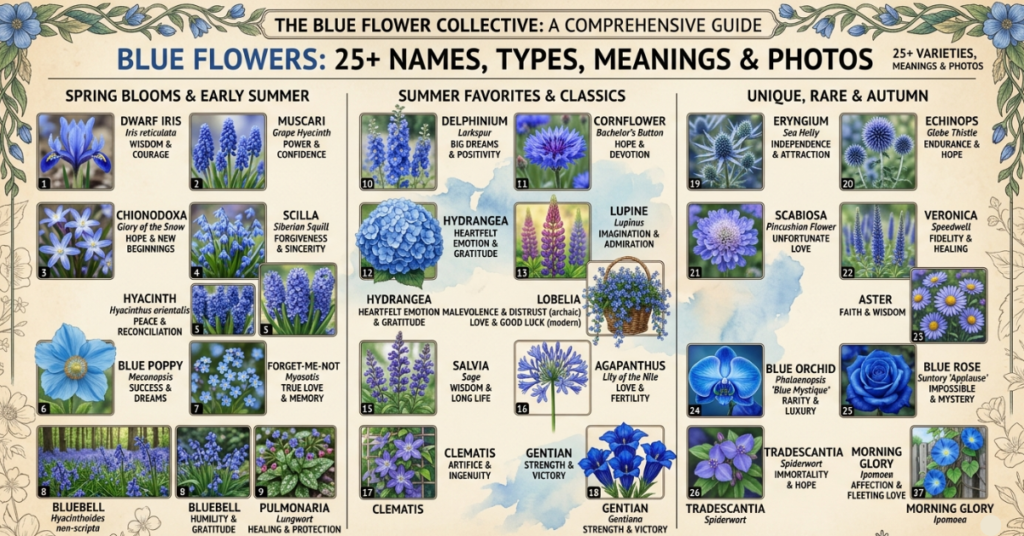
25+ Blue Flowers Names to Know
If you’re making a list of blue flowers names, these varieties are worth knowing. Their colors and growing requirements can differ considerably, so always check the specific species or cultivar before planting.
1. Blue Hydrangea
Hydrangeas are among the best-known blue-toned garden flowers. Certain cultivars can produce shades ranging from pale blue to much deeper blue, with flower color influenced partly by soil chemistry.
Their large, rounded flower heads make them especially popular for gardens, weddings, and floral arrangements.
2. Cornflower
Cornflower (Centaurea cyanus) is one of the classic examples of a naturally vivid blue bloom. Also known as bachelor’s button, it has narrow, fringed petals and a bright appearance.
It works beautifully in cottage gardens and informal arrangements.
3. Delphinium
Delphiniums are prized for their tall stems and numerous individual flowers. Depending on the cultivar, the blooms may be pale blue, medium blue, indigo, or blue-violet.
Their height makes them particularly useful when a garden or arrangement needs vertical interest.
4. Bluebell
Bluebells have graceful, bell-shaped blooms that hang from slender stems. English bluebells generally have a blue-violet appearance rather than a perfectly pure blue, but they remain a favorite spring flower.
5. Forget-Me-Not
Forget-me-nots are tiny flowers with five petals and a contrasting center. Their delicate appearance makes them excellent small blue flowers for cottage gardens, borders, and naturalistic planting.
They are traditionally associated with remembrance and enduring affection.
6. Morning Glory
Morning glory vines produce trumpet-shaped blooms in several colors, including blue. The flowers typically open during the morning and close later in the day.
They can create a striking display when allowed to climb over a trellis or fence.
7. Plumbago
Plumbago produces clusters of soft blue flowers and is especially popular in warm climates. Its relaxed appearance makes it a good choice for tropical and subtropical landscapes.
8. Gentian
Gentians are famous for exceptionally intense blue coloration. Some species have a deep, almost jewel-like appearance, making them a standout option for anyone looking for dramatic blooms.
9. Periwinkle
Periwinkle, particularly Vinca minor, produces small flowers that usually fall somewhere between blue and violet. Its low-growing habit makes it useful as ground cover.
10. Lobelia
Lobelia produces clusters of small flowers in shades that range from pale blue to deep blue-violet. It works well in containers, hanging baskets, borders, and cottage-style gardens.
11. Blue Iris
Several iris cultivars produce striking blue blooms. Their ruffled petals and intricate markings give them plenty of visual interest, while the exact shade varies by cultivar.
12. Himalayan Blue Poppy
The Himalayan blue poppy is famous for its unusual blue petals. It is often admired by gardeners because of its distinctive appearance, although it can be challenging to grow outside suitable conditions.
13. Blue Salvia
Some salvia cultivars have blue or blue-violet flower spikes. In addition to adding color and structure, salvias can attract pollinators such as bees and butterflies.
14. Brunnera
Brunnera produces tiny flowers reminiscent of forget-me-nots. It is also valued for its attractive foliage and ability to thrive in suitable shaded garden conditions.
15. Scabiosa
Certain scabiosa cultivars produce blue or lavender-blue pincushion-shaped blooms. Their unusual flower heads make them a favorite for informal floral arrangements.
16. Bachelor’s Button
Bachelor’s button is another common name for cornflower. Its naturally strong blue coloration makes it one of the most recognizable choices in this color family.
17. Blue Anemone
Some anemone varieties have blue or blue-violet petals surrounding a contrasting center. Their relatively simple shape gives them a graceful, natural appearance.
18. Grape Hyacinth
Grape hyacinths produce compact clusters of rounded flowers that resemble tiny bunches of grapes. They are popular spring bulbs and often appear in blue, violet, or blue-purple shades.
19. Blue Flax
Blue flax has delicate, five-petaled flowers carried on slender stems. The blooms have a light, airy appearance that works particularly well in naturalistic landscapes.
20. Tweedia
Tweedia is a lesser-known ornamental plant with small, star-shaped flowers. Its soft sky-blue blooms can be especially attractive in delicate bouquets.
21. Amsonia
Often called blue star, Amsonia produces clusters of star-shaped flowers. It also offers attractive foliage, making it useful beyond its flowering period.
22. Evolvulus
Evolvulus produces small, rounded blooms in a soft sky-blue shade. It is often grown as a low-growing ornamental and works well in containers and warm-climate gardens.
23. Blue Throatwort
Blue throatwort is a less familiar garden plant with blue-toned flowers. It can be an interesting option for gardeners who enjoy unusual ornamental varieties.
24. Commelina
Commelina, commonly called dayflower, can produce vivid blue blooms. Individual flowers are short-lived, but new ones can continue opening throughout the growing season.
25. African Blue Basil
African blue basil is primarily grown for its ornamental foliage and culinary interest, but its flowers can have attractive purple-blue tones. They can also provide a useful food source for pollinators.
Light Blue Flowers for a Soft Look
Light blue flowers have a gentle, airy quality that works beautifully in spring gardens, wedding decorations, and pastel arrangements.
Good choices include:
- Forget-me-nots
- Blue flax
- Tweedia
- Pale hydrangea cultivars
- Lobelia
- Evolvulus
- Brunnera
- Some delphiniums
These shades can range from powder and sky blue to blue-gray. Pairing them with white, cream, blush, or pale green creates a soft and sophisticated palette.
Dark Blue Flowers for a Dramatic Display
If you prefer stronger color, dark blue flowers can add depth and contrast. They look especially striking beside white blooms or bright green foliage.
Consider:
- Gentians
- Deep-blue delphiniums
- Some iris cultivars
- Cornflowers
- Dark hydrangea cultivars
- Certain salvias
True navy blue flowers are extremely uncommon. What appears navy is usually a very dark blue, indigo, or blue-violet shade.
Baby Blue Flowers for Delicate Arrangements
Soft baby blue flowers are ideal when you want a bouquet to feel light and understated. They work particularly well for spring celebrations, baby showers, weddings, and relaxed home décor.
Try combining pale blue blooms with:
- White roses
- Baby’s breath
- White carnations
- Cream flowers
- Eucalyptus
- Pale pink roses
The contrast is subtle without becoming boring.
Small Blue Flowers Worth Growing
Large blooms often grab attention, but tiny flowers can create just as much impact when planted in groups.
Some good options include:
- Forget-me-nots
- Lobelia
- Blue flax
- Brunnera
- Grape hyacinth
- Evolvulus
- Periwinkle
- Commelina
These plants can work well in borders, containers, rock gardens, woodland-style planting, and informal landscapes.
Which Flowers Are Naturally Blue?
The phrase naturally blue flowers can be slightly misleading because natural flower color exists on a spectrum. A bloom may look distinctly blue while containing violet undertones that become more obvious under certain lighting.
Examples of plants that naturally produce blue or strongly blue-toned flowers include:
- Cornflower
- Gentian
- Forget-me-not
- Blue flax
- Himalayan blue poppy
- Certain delphiniums
- Some morning glories
- Certain lobelia varieties
Hydrangeas deserve special mention because their flower color can be influenced by soil conditions. This means the same plant may produce different shades depending on its growing environment.
So, if you’re looking specifically for natural blue flowers, check the actual species and cultivar rather than relying solely on a product label.
Purple and Blue Flowers: Why Are They Confused?
Purple and blue flowers often look similar because the boundary between these colors can be subtle.
Bluebells, irises, periwinkles, and some hydrangeas are good examples. A flower may appear blue outdoors but more purple under warm indoor lighting.
If you’re creating a specific floral color scheme, examine photographs taken in natural daylight. This gives you a better idea of the actual petal color than heavily edited photographs or artificial lighting.
Blue Flowers of Forgiveness: What Do They Mean?
The expression blue flowers of forgiveness is sometimes used when discussing flowers associated with reconciliation and emotional healing. However, there isn’t one universally accepted flower that officially represents forgiveness.
Floral meanings vary between cultures, periods, and traditions. Blue as a color is commonly associated with qualities such as:
- Peace
- Trust
- Loyalty
- Calmness
- Sincerity
- Remembrance
- Hope
For this reason, a blue-toned arrangement can make a thoughtful gesture when you’re trying to communicate peace or a desire to rebuild trust.
What Do Blue Flowers Symbolize?
The symbolism depends on the individual species, but color itself often influences how a floral arrangement is interpreted.
Blue
Usually associated with calmness, trust, loyalty, peace, and reflection.
Light blue
Often suggests gentleness, serenity, openness, and tenderness.
Deep blue
Can feel more sophisticated and is commonly associated with depth, confidence, devotion, and stability.
Blue-purple
This combination can suggest creativity, elegance, mystery, or individuality.
These associations aren’t universal rules, but they can help when you’re choosing flowers for a particular occasion.
Blue Flowers Bouquet Ideas
A blue flowers bouquet doesn’t have to contain only blue blooms. In fact, mixing complementary shades can make an arrangement look more natural and interesting.
Blue and white
Pair hydrangeas or delphiniums with white roses and baby’s breath for a classic arrangement.
Blue and blush
Combine soft blue blooms with blush roses and cream flowers for a romantic palette.
Blue and green
Use hydrangeas, delphiniums, eucalyptus, and other foliage for a fresh botanical arrangement.
Blue and purple
Mix blue blooms with lavender and violet flowers for a richer, layered effect.
Red, white, and blue
For celebrations with a patriotic theme, combine red roses, white flowers, and blue-toned delphiniums or hydrangeas. This red white and blue flowers combination creates a strong visual contrast.
White Dress With Blue Flowers: A Classic Style Combination
A white dress with blue flowers is a timeless choice for spring and summer. The white background allows the floral pattern to stand out without looking too heavy.
This combination works well for:
- Garden parties
- Brunches
- Summer vacations
- Daytime events
- Casual celebrations
- Spring gatherings
Pale blue prints give a softer appearance, while cobalt, indigo, or navy-style patterns create stronger contrast.
Blue Flowers Wallpaper for Home Décor
Floral designs can bring the beauty of a garden indoors. Blue flowers wallpaper is particularly versatile because blue can feel both calming and sophisticated.
Depending on your interior style, consider:
- Blue botanical prints on white
- Watercolor floral designs
- Vintage blue-and-white patterns
- Dark backgrounds with small floral motifs
- Oversized botanical illustrations
- Blue and cream floral patterns
A botanical wallcovering can work especially well in bedrooms, reading areas, powder rooms, and feature walls.
Pretty and Beautiful Blue Flowers for Inspiration
If you’re simply looking for pretty blue flowers rather than a specific species, start with varieties that offer distinctive shapes and shades.
Some standout choices are:
- Cornflowers for vivid color
- Delphiniums for height
- Hydrangeas for large flower heads
- Forget-me-nots for tiny blooms
- Gentians for intense color
- Blue poppies for an unusual appearance
- Irises for detailed petals
- Morning glories for trumpet-shaped flowers
These beautiful blue flowers can inspire everything from garden designs and bouquets to artwork, fashion prints, and home décor.
Blue Flowers to Repost: Finding Floral Inspiration
If you’re searching for blue flowers to repost on social media, focus on photographs with interesting compositions rather than simply collecting similar images.
Ideas include:
- Macro shots showing petal details
- Flowers against a neutral background
- Blue-and-white arrangements
- Wildflower fields
- Close-ups of tiny blooms
- Botanical illustrations
- Floral arrangements with contrasting colors
- Minimalist flower photography
Always check the photographer’s or creator’s usage policy before reposting. Permission may be required, and simply adding a credit does not necessarily give you the right to reuse someone’s copyrighted photograph.
How to Choose the Right Variety
The best choice depends on what you want the flowers to do.
For a garden
Look at sunlight, soil, climate, watering needs, mature size, and flowering season. A beautiful plant isn’t necessarily a suitable plant for every location.
For a bouquet
Consider stem length, flower shape, vase life, availability, and how the color works with other blooms.
For a gift
Think about the message behind the arrangement. Forget-me-nots may suit a sentimental occasion, while a dramatic iris or delphinium arrangement can feel more elegant.
For home décor
Match the floral color with the room. Pale blue works nicely with neutral interiors, while deeper indigo shades can create a stronger statement.
Frequently Asked Questions
What is the most popular blue flower?
Hydrangeas, cornflowers, delphiniums, and forget-me-nots are among the most recognizable choices. Popularity varies depending on whether you’re looking for a garden plant, cut flower, or ornamental bloom.
What flowers are naturally blue?
Cornflowers, gentians, forget-me-nots, blue flax, Himalayan blue poppies, and certain delphiniums and morning glories naturally produce blue or strongly blue-toned blooms.
What is the rarest blue flower?
There isn’t one universally recognized “rarest” species. Some blue-flowering plants are uncommon in cultivation, while others are difficult to grow. The Himalayan blue poppy is particularly famous for its demanding growing conditions.
What flower symbolizes forgiveness?
No single flower has a universal meaning of forgiveness. However, blue blooms are sometimes associated with peace, sincerity, reconciliation, and trust, making them appropriate for a thoughtful gesture of reconciliation.
What are small blue flowers called?
There are many varieties, including forget-me-nots, lobelia, blue flax, brunnera, grape hyacinth, evolvulus, and periwinkle.
Are there navy blue flowers?
True navy coloration is extremely rare in plants. Flowers described as navy usually have deep blue, indigo, or blue-violet petals.
Which varieties are best for bouquets?
Hydrangeas, delphiniums, cornflowers, irises, and forget-me-nots can all work well. The best combination depends on season, availability, flower longevity, and the desired color palette.
Can flowers really be blue?
Yes. Several plants naturally produce blue petals. However, strong blue pigmentation is relatively uncommon compared with many other floral colors.
Why do some blue blooms look purple?
Color perception depends on pigments, cellular chemistry, lighting, and the way our eyes perceive different wavelengths. Consequently, the same bloom can appear more blue or more purple in different environments.
Where can I find blue flowers near me?
If you’re searching for blue flowers near me, local florists, garden centers, farmers’ markets, and seasonal flower farms are good places to start. Availability depends heavily on the season and your location.
Final Thoughts
From tiny forget-me-nots to tall delphiniums and intensely colored gentians, blue flowers offer an impressive range of shades, forms, and symbolism. Some are naturally vivid, while others shift between blue, violet, and purple depending on their genetics and growing conditions.
Whether you’re choosing flowers for a garden, searching for a meaningful bouquet, planning a floral outfit, or looking for botanical inspiration, there’s a variety to suit almost every style.
The key is to look beyond the word “blue” and consider the exact shade, flower shape, season, and growing requirements. Once you do, you’ll discover just how diverse this beautiful corner of the floral world really is.