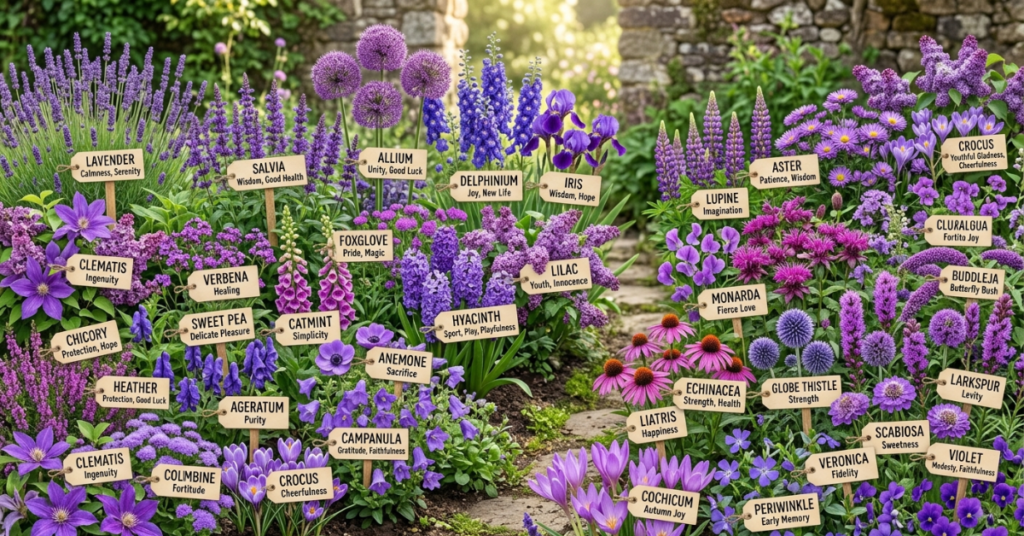

Few colors in a garden are as eye-catching as purple flowers. From delicate lavender blooms to rich violet blossoms, this color can make a landscape feel elegant, peaceful, romantic, or even a little mysterious.
If you’re searching for purple flowers names, trying to identify a small purple flower, looking for tall purple flowers, or wondering about the purple flowers meaning, there are dozens of varieties worth knowing. Some grow close to the ground, while others climb walls, form flowering shrubs, or grow into impressive trees.
This guide explores popular varieties, different shades, flower symbolism, garden combinations, flowering trees and shrubs, and the answer to the popular Stardew Valley question about Ginger Island.
Types of Purple Flowers
Violet and lavender shades appear across a surprisingly wide range of plants. Annuals, perennials, bulbs, vines, shrubs, and even trees can produce blooms in colors ranging from pale lilac to deep violet.
Here are some popular varieties to know:
- Lavender
- Violet
- Iris
- Purple coneflower
- Salvia
- Clematis
- Wisteria
- Lilac
- Hydrangea
- Allium
- Petunia
- Aster
- Verbena
- Delphinium
- Foxglove
- Pansy
- Morning glory
- Lisianthus
- Phlox
- Balloon flower
Keep in mind that many of these plants are available in several colors. A particular species may have white, pink, blue, red, or violet cultivars, so the exact appearance depends on the variety you choose.
Purple Flowers Names and Pictures
Looking for purple flowers names and pictures is a good way to narrow down an unfamiliar plant. While a photograph can help with identification, flower shape, foliage, growing habit, and blooming season are equally useful clues.
Here are ten recognizable choices.
1. Lavender
Lavender is probably one of the first plants that comes to mind when you picture a violet bloom. Its slender flower spikes and fragrant foliage make it popular in borders, containers, herb gardens, and dried arrangements.
The flower heads can range from pale lavender to deeper violet, depending on the species and cultivar.
2. Violet
Violets are charming, low-growing plants with delicate flowers and rounded or heart-shaped leaves. They are an excellent option if you are looking for little purple flowers that don’t overwhelm a planting area.
Many species prefer woodland-like conditions, although growing requirements vary.
3. Iris
Iris flowers have an instantly recognizable structure, with upright petals and graceful outer segments that curve downward.
Purple irises can be especially striking when planted in groups. Their height and distinctive shape also make them useful for adding structure to a flower border.
4. Purple Coneflower
Purple coneflower, or Echinacea, has daisy-like petals surrounding a raised central cone.
It is a popular perennial and is often included in pollinator-friendly gardens. Its upright stems also give flower beds a natural, slightly informal appearance.
5. Salvia
Salvia produces dense spikes covered with small blossoms. Several species and cultivars offer violet, blue-violet, or reddish-purple flowers.
Some varieties are particularly useful when you need tall purple flowers to add height and vertical interest.
6. Clematis
Clematis is a versatile flowering vine with varieties available in many colors.
Violet cultivars can grow over trellises, fences, arches, and pergolas. Large-flowered types can create a dramatic display, while smaller-flowered species often have a more delicate appearance.
7. Wisteria
Wisteria is known for its long, hanging clusters of fragrant flowers.
When grown over a strong pergola or suitable structure, it can create an impressive flowering canopy. Because it is vigorous, however, it requires adequate support and regular maintenance.
8. Lilac
Lilac is a woody shrub famous for its fragrant flower clusters. Although cultivars can produce different colors, lavender and violet shades are among its best-known forms.
Give it enough space to develop because mature shrubs can become considerably larger than young nursery plants suggest.
9. Hydrangea
Hydrangeas are fascinating because flower color can vary according to species, cultivar, and growing conditions.
Some bigleaf hydrangeas can produce blue, purple, or pink flowers, with soil chemistry playing a role in the color of certain cultivars. The large flower heads make them popular as garden focal points.
10. Allium
Alliums produce spherical flower heads made up of many tiny individual flowers.
Their globe-like shape is particularly useful in garden design because the blooms rise above the foliage and create a strong architectural effect.
Small Purple Flowers for Gardens
Not every garden needs large, dramatic blooms. Small purple flowers can be just as attractive, especially when planted along paths, borders, containers, or rock gardens.
Some options include:
- Violets
- Verbena
- Aubrieta
- Small-flowered phlox
- Campanula
- Lobelia
- Creeping thyme
- Some low-growing salvias
Before choosing one, look beyond the flower itself. Check its mature size, preferred light level, watering needs, soil requirements, and spreading habit.
A tiny plant can quickly become a ground-covering favorite—or an unwanted spreader—depending on the species.
Light Purple Flowers vs. Dark Purple Flowers
Not every violet bloom creates the same visual effect. Shade intensity can completely change the atmosphere of a garden.
Light Purple Flowers
Light purple flowers tend to have a softer and more relaxed appearance. Lavender, lilac, mauve, and pale violet can make a planting scheme feel airy and gentle.
Some good choices include:
- Lavender
- Pale iris
- Lilac
- Light clematis
- Certain hydrangeas
- Lavender-toned pansies
- Pale violet petunias
These softer shades pair especially well with white, cream, blush pink, and silver foliage.
Dark Purple Flowers
Dark purple flowers make a stronger visual statement. Deep violet or almost-black blooms can become focal points in a garden, especially when surrounded by lighter foliage or flowers.
Examples include:
- Deep violet petunias
- Dark iris cultivars
- Purple pansies
- Deep clematis varieties
- Dark salvia cultivars
- Certain dahlias
- Deep-colored lisianthus
For maximum contrast, place darker blooms beside white or pale yellow flowers.
Tall Purple Flowers for Extra Height
Vertical planting can make a garden feel fuller and more layered. If you’re specifically looking for tall purple flowers, consider plants such as:
- Delphinium
- Tall salvia
- Verbena bonariensis
- Allium
- Foxglove
- Tall phlox
- Climbing clematis
Always check the mature height before planting. Some varieties remain relatively compact, while others can become several feet tall.
Tall plants are often best positioned toward the back of a border so they don’t hide shorter flowers.
Tree With Purple Flowers: Which Trees Should You Know?
Searching for a tree with purple flowers often leads to one particularly famous example: the jacaranda.
Jacaranda
Jacaranda mimosifolia is known for its clusters of trumpet-shaped violet or lavender flowers. The tree also has attractive, fern-like foliage and a broad, spreading form.
In suitable warm climates, jacarandas can produce spectacular seasonal displays and are often planted along streets and in parks.
Other woody plants may also be described as trees with purple flowers, although some are technically shrubs or large woody climbers. For accurate identification, look at the leaves, bark, flower arrangement, and overall growth habit rather than color alone.
Bush With Purple Flowers
If you’re searching for a bush with purple flowers, several garden shrubs could fit the description.
Lilac
Lilac is a classic choice for spring. Its fragrant clusters can fill a garden with color and scent.
Butterfly Bush
Some butterfly bush cultivars produce violet or purple flower spikes. They can provide an extended flowering display during warm weather and are popular with pollinators.
Rhododendron and Azalea
Certain rhododendrons and azaleas have flowers in violet and purple shades. Their size and growing requirements vary significantly by species and cultivar.
Hydrangea
Some hydrangeas can also develop purple-toned flower heads. Color is influenced by genetics and, in certain types, soil chemistry.
When choosing a flowering shrub, make sure its mature size and climate requirements fit your garden.
Purple Flowers Meaning and Symbolism
So, what does this color represent?
The purple flowers meaning isn’t fixed. Symbolism differs between cultures, historical periods, flower varieties, and shades.
However, purple has traditionally been connected with:
- Royalty
- Luxury
- Elegance
- Creativity
- Mystery
- Spirituality
- Admiration
- Enchantment
Its association with royalty has historical roots, partly because some purple dyes were once rare and expensive.
Today, people often choose violet blooms because they look sophisticated, unusual, calming, or romantic rather than because of a specific symbolic message.
What Do Light Purple Flowers Mean?
Lavender and pale violet shades are commonly associated with grace, gentleness, calmness, and delicacy.
What Do Dark Purple Flowers Mean?
Deep violet shades can suggest dignity, admiration, luxury, mystery, and sophistication.
These interpretations are cultural traditions rather than scientific rules. The meaning of a flower can also change depending on the occasion and relationship between the giver and recipient.
Blue and Purple Flowers
For a cool-toned garden, blue and purple flowers make a particularly harmonious combination.
Try pairing:
- Iris with blue delphinium
- Lavender with blue salvia
- Violet petunias with blue lobelia
- Violet blooms with blue hydrangeas
Because blue and purple are visually close, they blend naturally without creating an overly busy effect.
Using several shades of each color can make the planting feel more layered and intentional.
Pink and Purple Flowers
For something warmer and more romantic, try pink and purple flowers together.
Some combinations include:
- Pink roses with purple salvia
- Pink cosmos with lavender
- Purple clematis with pink flowers
- Pink petunias with violet pansies
- Pink hydrangeas with violet-flowering plants
Pink softens the richness of violet, while purple gives pink a little more depth. The combination works particularly well in cottage-style gardens and romantic floral arrangements.
Beautiful Purple Flowers for Bouquets
Violet-toned blooms can be wonderful in bouquets because they complement both warm and cool colors.
Some attractive options include:
- Lisianthus
- Iris
- Lavender
- Clematis
- Purple roses
- Delphinium
- Statice
- Orchids
- Sweet peas
- Violets
For a more interesting arrangement, mix different flower forms. Combine rounded blooms with spikes, delicate fillers, and trailing elements rather than using flowers with identical shapes.
How to Choose the Right Flower for Your Garden
Color is important, but it shouldn’t be the only factor when selecting a plant.
1. Check sunlight
Determine whether your planting area receives full sun, partial shade, or mostly shade.
2. Consider mature size
Look at both height and width. A plant that looks tiny in a nursery pot may become surprisingly large.
3. Check flowering season
Combine early-, mid-, and late-season bloomers if you want continuous color.
4. Understand soil requirements
Some plants prefer sharply drained soil, while others tolerate more moisture. Certain hydrangeas can also respond to soil chemistry with changes in flower color.
5. Consider maintenance
Think about pruning, watering, deadheading, staking, winter protection, and pest management before committing to a plant.
How Many Purple Flowers Are on Ginger Island?
If you’re here because of Stardew Valley, here’s the quick answer.
There are 22 purple flowers on Ginger Island.
The number is part of the Island Field Office survey associated with Professor Snail. Players completing the survey need to provide the correct count.
For the common searches:
- How many purple flowers on Ginger Island? 22
- Number of purple flowers on Ginger Island? 22
- How many purple flowers are on Ginger Island? 22
- Purple flowers Stardew Valley answer: 22
Don’t confuse this question with the separate question about purple starfish. They are different entries in the Island Field Office.
Why Is This Color So Popular in Gardens?
Purple sits between blue and red on the traditional color wheel, which gives it an interesting visual character. Pale shades can feel cool and peaceful, while deeper tones have a richer and more dramatic presence.
That versatility makes violet useful in many garden styles.
For example:
- White and cream create an elegant combination.
- Pink creates a soft, romantic look.
- Blue produces a cool, peaceful palette.
- Yellow provides strong contrast.
- Green foliage keeps the planting natural.
- Silver foliage creates a muted, sophisticated effect.
Rather than filling an entire garden with one shade, try combining several tones and flower shapes.
Frequently Asked Questions
What are the most popular purple flowers?
Popular choices include lavender, violet, iris, salvia, clematis, wisteria, lilac, coneflower, allium, petunia, hydrangea, and verbena.
What is the name of a small purple flower?
Violet is one of the most recognizable small purple flowers. Other possibilities include certain varieties of verbena, lobelia, phlox, thyme, and campanula.
What is a common tree with purple flowers?
Jacaranda is one of the best-known flowering trees associated with violet blooms. Its flowers are usually lavender, violet, or purple.
What is the meaning of purple flowers?
They are traditionally associated with royalty, luxury, creativity, mystery, admiration, elegance, and spirituality. The symbolism can vary according to culture and flower type.
What are some light purple flowers?
Lavender, lilac, pale iris, certain clematis varieties, some hydrangeas, and pale petunias can produce soft lavender or violet shades.
What are some dark purple flowers?
Deep iris, petunias, pansies, clematis, salvia, and certain dahlia cultivars can produce rich, dark blooms.
What are the best tall purple flowers?
Delphinium, tall salvia, verbena bonariensis, allium, foxglove, and tall phlox are useful choices when you want vertical height.
What are the purple flowers in Stardew Valley?
If you’re referring to the Ginger Island Field Office survey, the answer to how many purple flowers are on Ginger Island is 22.
Can pink and purple flowers grow well together?
Yes. Pink and violet blooms create a soft, romantic combination. The two colors can work particularly well in cottage gardens and mixed borders.
Do all purple-flowering plants stay purple?
No. Many species have cultivars in several colors. Flower color may depend on genetics, cultivar, species, and, for certain plants, growing conditions.
Conclusion
From delicate violets and fragrant lavender to dramatic iris, climbing wisteria, and flowering jacaranda, the world of violet blooms is remarkably diverse.
Whether you’re researching purple flowers names and pictures, searching for small purple flowers, planning a border with tall purple flowers, or exploring the purple flowers meaning, the right choice depends on more than appearance. Sunlight, soil, climate, mature size, flowering season, and maintenance all matter.
And if your search brought you here because of Stardew Valley, there’s one number to remember: 22 purple flowers are on Ginger Island.
Once you know what conditions you have to work with, choosing a beautiful variety becomes much easier. Start with one or two that suit your space, then build your garden around their colors, heights, and flowering seasons.