
Valentine’s Day has a way of making even a simple bouquet feel special. Whether you’re celebrating a long-term relationship, a new romance, a friendship, or simply want to brighten someone’s day, the right flowers for Valentine’s Day can say a lot without needing a long message.
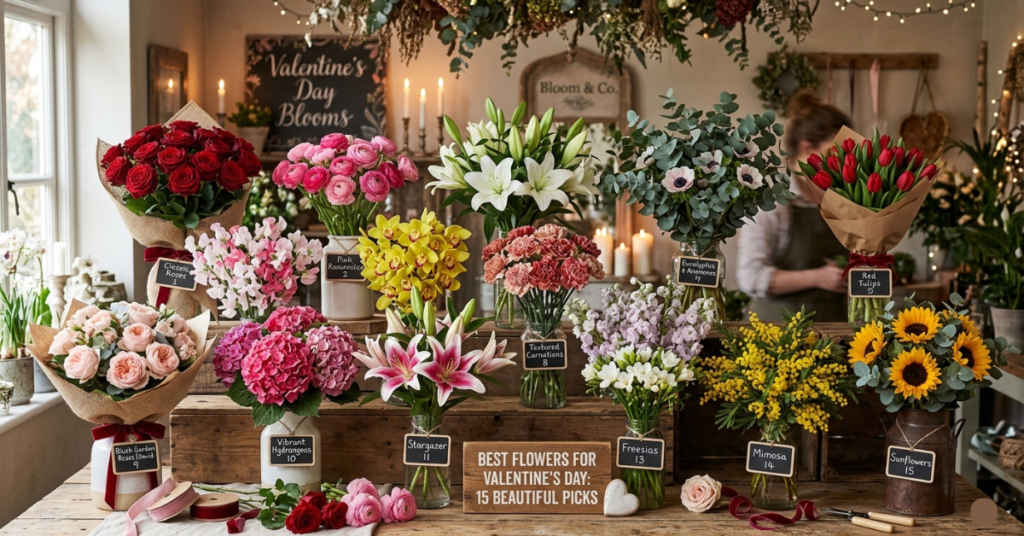
Red roses may be the traditional choice, but they are far from your only option. Tulips, lilies, orchids, carnations, peonies, daisies, and even sunflowers can make beautiful Valentine’s bouquets. The best choice depends on the person, the relationship, and the feeling you want your flowers to express.
Why Are Flowers So Popular on Valentine’s Day?
Flowers and romance have been connected for centuries. During the Victorian era, floriography, or the “language of flowers,” became a popular way of communicating emotions through specific blooms and colors. Roses eventually became especially associated with romantic love, while other flowers developed their own symbolism.
There is also a practical reason roses dominate February 14. They are widely available commercially and have become deeply established as a Valentine’s tradition. Many commercially grown roses are produced in South America, where the climate provides favorable growing conditions.
Still, tradition does not mean you have to choose the same bouquet every year.
Best Flowers for Valentine’s Day
If you’re wondering what flowers for Valentine’s Day make the best gift, start with the recipient’s personality. Here are some of the most meaningful choices.
1. Red Roses for Classic Romance
Red roses are probably the first flowers that come to mind when you think of Valentine’s Day—and for good reason. They have long represented love, passion, and romantic devotion.
Choose red roses when you want your bouquet to feel:
- Romantic
- Classic
- Passionate
- Elegant
- Traditionally Valentine’s-themed
A dozen red roses is a timeless option, but a smaller bouquet can feel just as thoughtful, especially when paired with a handwritten note.
2. Pink Roses for Affection and Admiration
Not every Valentine’s message needs to be intensely romantic. Pink roses offer a softer alternative and are commonly associated with appreciation, admiration, gratitude, and affection.
They work particularly well for someone you’re dating, a close friend, or anyone who appreciates a more delicate and understated bouquet.
3. Tulips for a Modern Romantic Bouquet
Tulips are one of the best flowers for Valentine’s Day other than roses. Their clean shape and vibrant colors give a bouquet a fresh, modern appearance.
Red tulips are especially associated with deep or perfect love, while pink tulips can create a softer expression of affection.
If your Valentine prefers simple, contemporary arrangements rather than traditional rose bouquets, tulips are an excellent choice.
4. Orchids for Something Elegant and Unique
Looking for unique flowers for Valentine’s Day? Consider orchids.
Orchids have an exotic appearance and are associated with love, luxury, beauty, and strength. Their sculptural shape also makes them stand out from conventional bouquets.
A potted orchid can be an especially thoughtful alternative to cut flowers because it can continue blooming with proper care.
5. Lilies for Love and Devotion
Lilies bring a graceful, sophisticated look to a Valentine’s bouquet. They have been associated with love and devotion across different cultures and traditions.
Their larger blooms also work beautifully as focal flowers when combined with roses, carnations, or greenery.
Tip: If you’re buying lilies for a home with cats, check the exact type of lily carefully. True lilies can be extremely dangerous to cats.
6. Carnations for Lasting Affection
Carnations are sometimes overlooked, but they deserve a place among the good flowers for Valentine’s Day. They have a long history of symbolism connected with love, fascination, and affection.
Dark red carnations can express deep love, while light red carnations are associated with admiration.
They also tend to have a ruffled, full appearance that adds volume to a bouquet without requiring a huge number of stems.
7. Peonies for a Romantic, Luxurious Look
Peonies are a favorite for anyone who loves lush, full flowers. Their layered petals create a soft and luxurious appearance that works beautifully in romantic arrangements.
Because peonies are highly seasonal, availability around Valentine’s Day can vary by location and supplier. If you specifically want peonies, check availability before placing your order.
8. Daisies for Something Sweet and Cheerful
Daisies are a lovely choice when you want your Valentine’s flowers to feel happy rather than intensely romantic.
They suit:
- New relationships
- Friendships
- Galentine’s celebrations
- Family members
- Cheerful personalities
Pair white daisies with pastel flowers for a light, playful arrangement.
9. Sunflowers for Bright, Happy Love
Sunflowers bring instant warmth to a room. Their bold yellow petals make them particularly suitable for someone who prefers cheerful, colorful gifts.
They can also be mixed with roses, daisies, or seasonal greenery to create a more relaxed Valentine’s bouquet.
10. Alstroemeria for Friendship and Devotion
Alstroemeria, sometimes called the Peruvian lily, is another beautiful alternative to roses. It is associated with devotion and friendship, making it particularly appropriate for celebrating relationships that are not strictly romantic.
Its delicate petals and multiple blooms per stem also give arrangements plenty of texture.
Flowers for Valentine’s Day Other Than Roses
If roses feel too predictable, you have plenty of alternatives.
Some of the most popular flowers for Valentine’s Day other than roses include:
- Tulips – modern and romantic
- Orchids – elegant and luxurious
- Lilies – graceful and meaningful
- Carnations – affectionate and long-lasting
- Peonies – lush and romantic
- Daisies – cheerful and sweet
- Sunflowers – bright and joyful
- Alstroemeria – friendship and devotion
- Hydrangeas – soft and abundant
- Ranunculus – delicate and sophisticated
You can also combine several flowers instead of choosing just one. Mixed bouquets often feel more personal because you can use different shapes, textures, and colors to create a distinctive arrangement.
What Color Flowers Should You Choose?
The flower itself matters, but color can change the mood of your gift.
| Flower Color | Common Valentine’s Meaning |
| Red | Love, passion, romance |
| Pink | Admiration, affection, appreciation |
| White | Innocence, sincerity, elegance |
| Yellow | Friendship, happiness, cheer |
| Orange | Enthusiasm, attraction, energy |
| Purple | Enchantment, admiration, mystery |
Flower symbolism is not a universal rule, and meanings can differ between cultures and traditions. Think of these associations as inspiration rather than strict instructions.
Beautiful Flowers for Valentine’s Day Based on Your Relationship
The “best” bouquet is not necessarily the biggest or most expensive one. It should feel appropriate for the relationship.
For a New Relationship
Keep it warm and thoughtful without going overboard.
Good choices: pink tulips, pink roses, mixed seasonal flowers, or a small pastel bouquet.
For a Long-Term Partner
This is where you can go more romantic and dramatic.
Good choices: red roses, red tulips, orchids, or a luxurious mixed bouquet.
For Your Best Friend
Valentine’s Day can celebrate friendship too.
Good choices: yellow roses, sunflowers, daisies, or colorful mixed flowers.
For Someone Who Loves Unique Gifts
Skip the conventional dozen roses.
Good choices: orchids, ranunculus, anemones, protea, or a designer-style mixed bouquet.
For Someone Who Loves Minimalism
A simple arrangement can be more beautiful than an oversized bouquet.
Good choices: tulips, white lilies, orchids, or a single-variety bouquet.
How to Choose Bouquet Flowers for Valentine’s Day
Before you order flowers for Valentine’s Day, think beyond appearance.
Ask yourself:
- What flowers does the recipient already love?
- What colors do they usually wear or decorate with?
- Do they prefer traditional or unusual gifts?
- Do they have pets that could be affected by certain flowers?
- Would they prefer cut flowers or a flowering plant?
- What size bouquet suits their home or workspace?
A florist can also help you build a bouquet around a specific budget, color palette, or message.
How to Send Flowers for Valentine’s Day
If you’re sending flowers for Valentine’s Day, timing matters. February 14 is one of the busiest periods for florists, and popular flowers and delivery slots can become limited.
A simple approach is:
- Choose the flower style and color.
- Check the recipient’s address carefully.
- Select a delivery date and time window.
- Add a personal message.
- Order early when possible.
- Confirm the delivery details before payment.
Ordering ahead gives you more choice, particularly if you want a specific flower, color, vase, or delivery time. Florists also recommend ordering ahead for Valentine’s Day because demand is exceptionally high.
Flowers for Valentine’s Day Delivery: What to Check
When arranging flowers for Valentine’s Day delivery, don’t look at the bouquet alone. Pay attention to the service behind it.
Look for:
- Delivery date and time options
- Same-day delivery availability
- Freshness guarantees
- Substitution policies
- Vase or wrapping options
- Customer reviews
- Delivery fees
- Clear recipient instructions
Same-day delivery can be useful for a last-minute surprise, but advance ordering is generally the safer option when the exact bouquet matters.
Flowers for Valentine’s Day Near Me
Searching for flowers for Valentine’s Day near me can be a good way to support a local florist and potentially arrange a more personalized bouquet.
When comparing nearby florists, look at their recent bouquet photos rather than relying only on stock images. A local florist may also be able to suggest seasonal flowers that look better and last longer than the exact variety you originally had in mind.
If you need delivery to an office, apartment, hotel, hospital, or other location, check the florist’s delivery rules before ordering.
Flowers for Valentine’s Day in Different Cities
Local availability can affect flower selection, delivery windows, and pricing. If you’re searching for flowers for Valentine’s Day in Jacksonville, flowers for Valentine’s Day in Charlotte, or flowers for Valentine’s Day in Redwood City, compare local florist options and delivery areas before placing your order.
The same applies to searches such as:
- Flowers for Valentine’s Day in New York
- Flowers for Valentine’s Day in Vancouver
Instead of choosing a bouquet purely because it ranks highly in search results, check whether the florist actually delivers to your recipient’s ZIP or postal code and whether your preferred flowers are available.
How Much Should a Valentine’s Day Bouquet Cost?
There isn’t one “correct” amount to spend on Valentine’s flowers.
A small bouquet of seasonal flowers can be just as meaningful as a large arrangement of premium roses. Your budget may depend on flower type, stem count, arrangement size, delivery charges, vase choice, and local availability.
Rather than focusing on price, consider whether the bouquet feels intentional.
A modest bouquet with the recipient’s favorite flowers can feel far more personal than an expensive arrangement chosen at random.
Unique Flowers for Valentine’s Day: Bouquet Ideas
Want something that doesn’t look like every other Valentine’s bouquet?
Try one of these combinations:
Romantic and Soft
Pink roses + white tulips + delicate greenery
Modern and Minimal
White orchids + eucalyptus-style foliage
Bright and Playful
Sunflowers + yellow roses + white daisies
Deep and Dramatic
Red roses + burgundy flowers + dark greenery
Elegant and Feminine
Pink tulips + ranunculus + soft greenery
Friendship Bouquet
Yellow roses + daisies + colorful seasonal flowers
The key is balance. Combining flowers with different shapes and textures can make a bouquet look professionally designed without making it feel overly complicated.
How to Make Your Valentine’s Flowers Last Longer
Once your bouquet of flowers for Valentine’s Day arrives, a little care can make a noticeable difference.
1. Trim the Stems
Cut the stems at an angle before placing them in clean water. This helps maximize the stem’s exposed surface area for water uptake.
2. Use a Clean Vase
Wash the vase before adding your flowers. Clean water is important for maintaining cut flowers.
3. Keep Flowers Away From Heat
Avoid placing your bouquet directly beside radiators, heaters, or in strong sunlight.
4. Change the Water Regularly
Fresh water helps keep the arrangement in better condition. Remove wilted flowers or leaves as needed.
5. Follow the Florist’s Care Instructions
Different flowers have different requirements, so the care instructions supplied with your arrangement should take priority.
Should You Send Flowers on Valentine’s Day?
Absolutely—but the reason you send them matters more than following tradition.
Flowers can be a way to say:
“I love you.”
But they can also say:
“I appreciate you.”
“I’m thinking about you.”
“I’m glad you’re in my life.”
That flexibility is what makes flowers such a timeless gift. You don’t need a perfect bouquet. You need one that feels right for the person receiving it.
FAQs About Flowers for Valentine’s Day
What are the best flowers for Valentine’s Day?
Red roses remain the classic choice because of their strong association with romantic love. However, tulips, orchids, lilies, carnations, peonies, and mixed seasonal flowers are also excellent choices.
What flowers are good for Valentine’s Day other than roses?
Tulips, orchids, lilies, carnations, peonies, daisies, sunflowers, and alstroemeria are all beautiful alternatives to roses. Your choice can depend on the recipient’s personality and the message you want to convey.
What color flowers should I give my Valentine?
Red is the traditional color for romantic love. Pink can express affection and admiration, white can feel elegant and sincere, while yellow is often associated with friendship and happiness.
Is it better to send roses or a mixed bouquet?
Neither is automatically better. Roses are ideal for someone who loves tradition, while a mixed bouquet can feel more personal and creative. Consider the recipient’s favorite flowers first.
When should I order flowers for Valentine’s Day?
Ordering several days or weeks ahead is generally a good idea if you want a particular flower, color, arrangement, or delivery window. Valentine’s Day is a high-demand period for florists.
Can I order flowers for Valentine’s Day at the last minute?
Sometimes. Some florists offer same-day Valentine’s Day delivery, depending on the location, inventory, and order time. However, last-minute orders may have fewer bouquet choices.
What is the most romantic flower for Valentine’s Day?
The red rose is the traditional answer because it has a long-established association with romantic love and passion.
What are some unique flowers for Valentine’s Day?
Orchids, ranunculus, anemones, protea, alstroemeria, and unusual mixed seasonal arrangements can make Valentine’s Day feel less predictable.
Can I send Valentine’s flowers to a friend?
Yes. Valentine’s Day is not limited to romantic partners. Yellow roses, daisies, sunflowers, and colorful mixed bouquets can be wonderful ways to celebrate friendship.
Final Thoughts
The best flowers for Valentine’s Day aren’t necessarily the most traditional ones—they’re the flowers that match the person and the message behind your gift. Red roses remain a beautiful classic, but tulips, orchids, lilies, carnations, peonies, daisies, and other blooms can make equally memorable choices.
Whether you’re planning to order flowers for Valentine’s Day, looking for flowers for Valentine’s Day near me, or searching for a bouquet of flowers for Valentine’s Day that feels genuinely personal, start with the recipient rather than the trend.
Choose their favorite color, think about the meaning behind the flowers, add a thoughtful note, and order early when possible. Sometimes a simple bouquet is all it takes to make February 14 feel a little more special.