
Flowers with large, dramatic blooms may steal the spotlight, but filler flowers are often the secret ingredient that makes a bouquet look complete. They add texture, movement, softness, and subtle pops of color while helping larger blooms blend naturally together.
Whether you’re planning a wedding bouquet, decorating your home, creating a gift arrangement, or simply exploring floral design, learning about the different types of filler flowers can make choosing the right blooms much easier. From classic white baby’s breath to colorful statice and delicate waxflower, there are options for almost every style and occasion.
What Are Filler Flowers?
Filler flowers are smaller blooms or branching flowers that are used to fill spaces between larger focal flowers in bouquets and floral arrangements. Instead of taking center stage, they complement statement blooms such as roses, lilies, peonies, dahlias, and sunflowers.
More importantly, filler flowers help create balance. They can soften bold flowers, add depth to a bouquet, and make an arrangement appear fuller without relying entirely on expensive focal blooms.
Depending on the variety, filler flowers can serve several purposes:
- Fill empty spaces between larger flowers
- Add texture and visual interest
- Create a fuller, more balanced appearance
- Introduce complementary colors
- Soften the overall look of an arrangement
- Add height, movement, or an airy effect
- Connect flowers with different shapes and sizes
Some varieties consist of clusters of tiny blooms growing along branching stems. Others have individual small flowers that work beautifully around larger focal blooms.
Why Are Filler Flowers Important in Floral Arrangements?
Imagine a bouquet made entirely of large roses or peonies. While it might look luxurious, the arrangement could also appear heavy or overly structured. Filler flowers break up those larger shapes and give the eye smaller details to explore.
In floral design, they act almost like the finishing touches in a room. Just as accessories can bring an interior together, delicate flowers and greenery can connect the main elements of a bouquet.
As a result, filler flowers are commonly used for:
- Bridal bouquets
- Wedding centerpieces
- Birthday bouquets
- Flower baskets
- Table arrangements
- Sympathy flowers
- Dried flower arrangements
- Home décor
- Floral arches
- Event installations
Their versatility is one of the main reasons florists keep a wide range of filler flowers available.
Popular Types of Filler Flowers
There are dozens of varieties that can be used as fillers, and each brings something different to an arrangement. Some are airy and delicate, while others provide stronger color or texture.
Here are some of the most popular filler flowers examples to know.
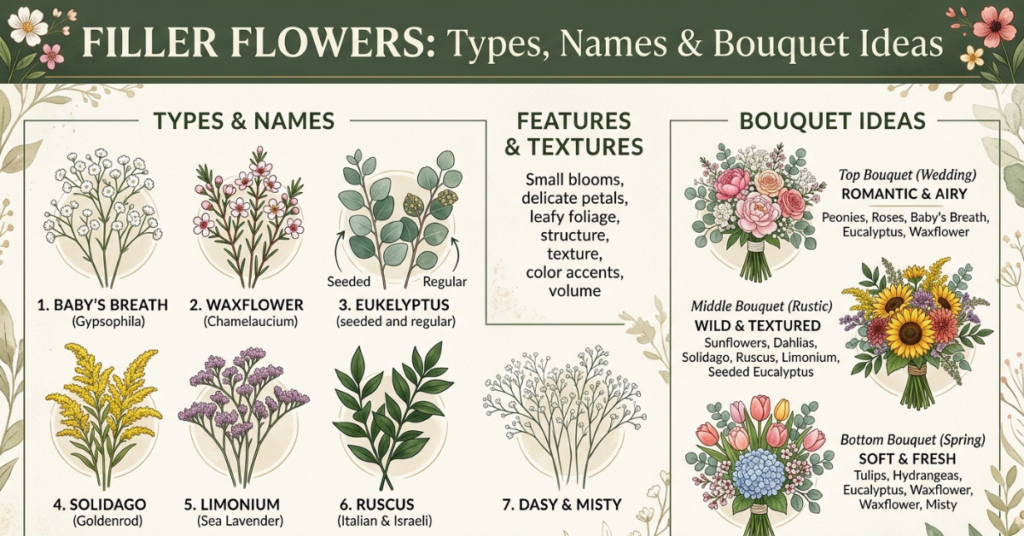
1. Baby’s Breath
Baby’s breath, botanically known as Gypsophila, is arguably one of the most recognizable filler flowers for bouquets. Its thin, branching stems carry clusters of tiny blooms, creating the soft, cloud-like appearance that has made it a wedding favorite.
White is the most familiar shade, although dyed baby’s breath is also available in colors such as pink, blue, and purple. Consequently, it can work with both traditional and more playful bouquet designs.
Best for: bridal bouquets, romantic arrangements, wedding centerpieces, dried flowers, and minimalist bouquets.
2. Waxflower
Waxflower (Chamelaucium) produces small, five-petaled blooms with a distinctive waxy appearance. Usually available in shades of white, pink, and purple, it brings a delicate but slightly structured texture to floral arrangements.
Because the stems are relatively sturdy, waxflower can also add longevity and movement to mixed bouquets. For that reason, it is particularly popular in wedding and romantic floral designs.
Best for: wedding bouquets, mixed arrangements, romantic designs, and dried arrangements.
3. Statice
Statice, particularly varieties of Limonium, is valued for its papery flowers and excellent drying qualities. Purple is one of its most recognizable colors, although white, pink, yellow, and other shades are also available.
Unlike very delicate fillers, statice provides a little more visual weight. Therefore, it works particularly well when you want an arrangement to have noticeable texture and color.
Best for: colorful bouquets, dried flowers, rustic arrangements, and long-lasting displays.
4. Queen Anne’s Lace
Queen Anne’s lace (Daucus carota) features delicate, flat clusters of tiny white flowers. Its intricate, lacy appearance gives bouquets a relaxed, meadow-inspired character.
For a natural-looking arrangement, it pairs especially well with wildflowers, roses, daisies, and soft greenery. As a result, it is often associated with rustic and cottage-style floral designs.
Best for: rustic bouquets, cottage-style arrangements, outdoor weddings, and wildflower designs.
5. Aster
Asters have small, daisy-like flowers that can introduce color without competing too strongly with the main blooms. Depending on the variety, they may appear in white, pink, purple, blue-violet, and other shades.
Because of their cheerful appearance, asters work especially well in garden-style and seasonal arrangements.
Best for: garden bouquets, colorful arrangements, seasonal designs, and informal floral displays.
6. Solidago
Solidago, commonly known as goldenrod, is a popular yellow filler flower. Its upright stems carry clusters of small yellow flowers, making it useful for adding warmth, height, and movement.
In particular, solidago looks attractive with white, blue, purple, orange, and green flowers. It is therefore a useful choice when you want a cheerful or autumn-inspired arrangement.
Best for: autumn arrangements, rustic bouquets, cheerful floral designs, and mixed bouquets.
7. Alstroemeria as a Supporting Flower
Alstroemeria is not usually classified as a traditional filler flower. Instead, it is generally considered a secondary or supporting flower because its blooms are larger and more prominent.
Nevertheless, its clustered flowers can play a similar supporting role in larger arrangements. Since alstroemeria comes in many colors, it can help add variety while still complementing the main focal blooms.
White Filler Flowers
White filler flowers are among the easiest choices for floral design because they complement almost any color palette. They can make a bouquet appear clean and elegant, while also adding softness without introducing a strong contrasting color.
Some popular white filler flowers names include:
- Baby’s breath (Gypsophila)
- White waxflower
- Queen Anne’s lace
- White statice
- White aster
- Sweet alyssum
Small White Filler Flowers for Bouquets
When you’re specifically searching for small white filler flowers, baby’s breath is the classic option. Its tiny blooms create an airy, cloud-like effect and can be used generously without making a bouquet feel visually heavy.
However, baby’s breath isn’t the only choice. White waxflower offers a slightly more structured appearance, while Queen Anne’s lace gives an arrangement a loose, natural look.
White Filler Flowers for Bouquets: Best Pairings
Because white is neutral, it works beautifully with almost every major flower color. For example:
- Red roses: creates a classic romantic bouquet
- Pink peonies: produces a soft, elegant combination
- Blue flowers: creates a fresh, contrasting palette
- Purple flowers: gives the arrangement a sophisticated appearance
- Sunflowers: adds a cheerful, rustic touch
Pink Filler Flowers
Pink filler flowers are a lovely choice when you want an arrangement to feel romantic, gentle, and feminine. Instead of relying entirely on large pink blooms, smaller flowers can introduce the same color in a more subtle way.
Popular choices include pink waxflower, pink statice, pink asters, and pink baby’s breath. Meanwhile, these fillers pair particularly well with white roses, blush peonies, carnations, tulips, and other pastel flowers.
Purple Filler Flowers
Purple filler flowers can give a bouquet more depth while introducing a rich, elegant accent. Statice and asters are among the most useful options when you’re looking for smaller purple blooms.
Purple also combines naturally with several other colors, including:
- White
- Pink
- Lavender
- Blue
- Cream
- Green
For instance, purple statice combined with white roses and eucalyptus creates a sophisticated bouquet with plenty of contrast.
Blue Filler Flowers
Naturally blue flowers are less common than white, pink, or yellow varieties. Consequently, blue or blue-violet filler flowers can make an arrangement feel distinctive.
Depending on the species and variety, options may include certain types of statice, asters, and forget-me-nots. These cool-toned flowers are especially attractive when combined with white, lavender, blush, or soft greenery.
For a wedding bouquet, for example, a small amount of blue filler can introduce color without overpowering an otherwise neutral design.
Green Filler Flowers
Strictly speaking, many green materials used in bouquets are foliage or greenery rather than flowers. Even so, they often perform the same supporting function as traditional filler flowers.
Some commonly used green filler flowers names and greenery options include:
- Bells of Ireland
- Bupleurum
- Green trick dianthus
- Eucalyptus
- Ferns
- Hypericum berries
- Amaranthus
Beyond simply filling empty areas, greenery can provide a natural background for colorful flowers. It can also add height, structure, and movement to the overall arrangement.
Yellow Filler Flowers
If a bouquet needs a cheerful pop of color, yellow filler flowers can brighten the arrangement without requiring a large number of yellow focal blooms.
Solidago is one of the most familiar choices. Depending on the season and what’s available locally, other small yellow flowers can also be incorporated as supporting blooms.
For a balanced color palette, yellow fillers work especially well with:
- White flowers
- Blue flowers
- Purple flowers
- Orange blooms
- Green foliage
Filler Flowers Names: A Quick Reference
If you’re looking for filler flowers names to show your florist or use while planning a bouquet, the following list is a helpful starting point:
- Baby’s breath
- Waxflower
- Statice
- Queen Anne’s lace
- Aster
- Solidago
- Bupleurum
- Bells of Ireland
- Sweet alyssum
- Feverfew
- Ammi
- Scabiosa pods
- Hypericum berries
- Limonium
It’s worth remembering that not everything on this list is a filler flower in the strict botanical sense. In professional floral design, “filler” is often used more broadly for flowers and botanical materials that provide supporting texture, volume, or visual transitions.
Filler Flowers for Bouquets: How to Choose the Right Ones
Choosing filler flowers for bouquet designs isn’t simply a matter of selecting whichever small flowers are available. Instead, consider the bouquet as a whole and think about its color, style, texture, size, and overall mood.
1. Match the Color Palette
First, choose fillers that complement the focal flowers rather than competing with them.
For example, white baby’s breath can soften a brightly colored bouquet, whereas purple statice can provide contrast against pale pink, cream, or white blooms.
2. Consider the Bouquet Style
Different fillers naturally suit different aesthetics:
- Romantic: baby’s breath, waxflower, and delicate asters
- Rustic: Queen Anne’s lace, solidago, and statice
- Modern: restrained filler flowers and minimal greenery
- Wildflower: asters, Queen Anne’s lace, and ammi
- Elegant: white fillers combined with roses or lilies
Therefore, choosing a filler based on the style of the arrangement can make the finished bouquet feel much more intentional.
3. Think About Texture
Texture is one of the main reasons florists use filler flowers. Fine, airy blooms create softness, while clustered or papery flowers provide more visual weight.
For the best result, try combining contrasting textures rather than using several flowers that look almost identical.
4. Consider Fresh or Dried Flowers
If you want your arrangement to last, consider varieties known for drying well. Statice and baby’s breath are especially popular for dried arrangements, while certain types of waxflower can also retain their appeal after drying.
As a result, the right filler can allow you to enjoy a bouquet long after fresh focal flowers have faded.
How to Arrange Bouquet Filler Flowers
You don’t need professional floral-design experience to create an attractive bouquet. With a few basic steps, it’s possible to build a balanced arrangement at home.
- Prepare the stems: Remove unwanted leaves and trim the stems at an angle.
- Start with focal flowers: Position the largest or most important blooms first.
- Add supporting flowers: Use secondary blooms to bridge the spaces between focal flowers.
- Add filler flowers: Place smaller stems around and between the larger flowers.
- Add greenery: Use foliage to create structure and natural movement.
- Check the shape: Rotate the bouquet as you work to make sure it looks balanced from different angles.
- Trim and secure: Once you’re satisfied with the shape, tie the stems and trim them evenly.
Most importantly, avoid placing every filler stem at exactly the same height or distance. Slight variations make the bouquet feel more natural and less mechanical.
Filler Flowers for Arrangements Beyond Bouquets
Although bouquets are one of their most popular uses, filler flowers for arrangements can work beautifully in many other settings.
Wedding Centerpieces
White baby’s breath, waxflower, statice, and delicate greenery can add volume to table arrangements while allowing the main flowers to remain the focus.
Moreover, fillers can help connect separate floral elements across a long table or centerpiece.
Flower Baskets
In flower baskets, filler flowers can soften the edges and create a smoother transition between flowers of different sizes.
They are particularly useful when a basket contains several varieties that might otherwise look visually disconnected.
Home Décor
Small arrangements of baby’s breath, statice, or dried filler flowers can look beautiful in simple vases. For a calm, understated effect, try pairing them with neutral-colored interiors and ceramic or glass containers.
Dried Flower Arrangements
Some filler flowers retain their shape and color surprisingly well after drying. Statice and baby’s breath are popular examples, making them practical choices for long-lasting décor.
Bouquet Filler Flowers: What Works Best Together?
A well-designed bouquet usually combines flowers that perform different roles rather than using many varieties of the same size.
A simple floral formula is:
Focal flower + secondary flower + filler flower + greenery
For example:
White roses + blush carnations + pink waxflower + eucalyptus
Or:
Sunflowers + white daisies + solidago + greenery
This combination creates contrast in size, shape, color, and texture. At the same time, the filler flowers help the different elements feel connected rather than randomly placed.
Common Mistakes When Using Filler Flowers
Even beautiful flowers can look unbalanced when they’re used incorrectly. Fortunately, most common mistakes are easy to avoid.
Using Too Much Filler
Filler flowers should support the focal blooms rather than hide them. If the bouquet contains more filler than statement flowers, the arrangement can lose its visual hierarchy.
Choosing Clashing Colors
A filler may be beautiful on its own but still look out of place in a particular bouquet. Before adding it, consider whether its color complements the main flowers.
Making Every Stem the Same Height
Uniform heights can make an arrangement look stiff. Instead, allow some filler stems to sit higher or lower than others to create movement.
Using Only One Texture
A bouquet made from flowers with similar shapes can appear flat. Combining airy, clustered, papery, and leafy textures creates much more visual interest.
Forgetting Greenery
Greenery isn’t always necessary, but it can provide valuable structure and help separate flowers from one another.
Packing Flowers Too Tightly
Flowers need a little breathing room. Leaving small spaces between some stems allows the individual shapes and textures to remain visible.
Are Filler Flowers Expensive?
The cost of filler flowers varies depending on the variety, season, availability, location, and whether you’re buying fresh or dried stems.
Generally, some fillers can be an economical way to make a bouquet appear fuller without purchasing large quantities of expensive focal flowers. However, specialty varieties may cost considerably more.
If you’re working with a limited budget, consider combining one or two statement flowers with affordable filler flowers and greenery. This approach can create a generous-looking bouquet without requiring a large flower budget.
Frequently Asked Questions About Filler Flowers
What are examples of filler flowers?
Some common examples of filler flowers include baby’s breath, waxflower, statice, Queen Anne’s lace, asters, solidago, bupleurum, and sweet alyssum.
What is the most popular filler flower?
Baby’s breath is one of the most recognizable filler flowers, particularly for wedding bouquets and romantic floral arrangements. Its tiny white blooms create an airy appearance and complement a wide range of larger flowers.
What are the best white filler flowers?
Popular white filler flowers include baby’s breath, white waxflower, Queen Anne’s lace, white statice, white asters, and sweet alyssum.
What are small white filler flowers called?
Baby’s breath is the classic example of small white filler flowers. Its botanical name is Gypsophila, and it produces clusters of tiny flowers along branching stems.
What are good filler flowers for bouquets?
Baby’s breath, waxflower, statice, asters, and Queen Anne’s lace are all useful choices. Ultimately, the best option depends on the bouquet’s color palette, flower availability, season, and overall style.
What are some purple filler flowers?
Purple statice and purple asters are popular choices. They can add depth and contrast without overwhelming larger focal flowers.
What are green filler flowers?
Green filler materials can include bupleurum, Bells of Ireland, green trick dianthus, eucalyptus, ferns, and other foliage. Technically, some of these are greenery rather than flowers, but they serve a similar supporting role in floral design.
Can filler flowers be used alone?
Yes. Some varieties, including baby’s breath and statice, can create attractive minimalist bouquets on their own. In addition, dried filler flowers are popular for simple arrangements that can last for months or longer when properly cared for.
Do filler flowers work in wedding bouquets?
Absolutely. Filler flowers are widely used in wedding bouquets because they add volume, texture, softness, and movement. Baby’s breath, waxflower, statice, and Queen Anne’s lace can each suit different wedding styles.
How many filler flowers should I use in a bouquet?
There is no fixed number because it depends on the bouquet size, focal flowers, and desired style. In general, add filler gradually and step back frequently to see whether it is supporting or hiding the main blooms.
Conclusion
The right filler flowers can completely change the character of a bouquet. Rather than simply filling empty spaces, they add texture, movement, color, softness, and visual balance while allowing the focal flowers to remain the stars of the arrangement.
From classic white baby’s breath and delicate waxflower to colorful statice, asters, solidago, and green supporting foliage, there are plenty of choices for almost every floral style. Once you understand the different types of filler flowers and how they work with larger blooms, creating beautiful filler flowers for arrangements becomes much easier.
So, whether you’re preparing a wedding bouquet, decorating your home, choosing flowers for someone special, or experimenting with floral design for the first time, start with a few focal blooms and build around them with complementary fillers and greenery. With the right combination of color, texture, and shape, even a simple bouquet can feel thoughtfully designed and beautifully finished.