
Christmas has a special way of transforming an ordinary room into something warm and magical. With twinkling lights, a beautifully decorated tree, and the right Christmas arrangements flowers, even a simple space can instantly feel festive, welcoming, and full of life.
Whether you are preparing the dining table for Christmas dinner, decorating your living room, or choosing a thoughtful holiday gift, flowers can bring natural color, texture, and warmth to your décor. Fortunately, you do not need an elaborate display to make an impact. A simple combination of seasonal blooms, fresh greenery, berries, and a beautiful vase can be surprisingly effective.
In this guide, you will discover the best flowers for Christmas arrangements, popular holiday color palettes, centerpiece ideas, easy DIY tips, and practical ways to keep fresh flowers looking beautiful throughout the season.
Why Flowers Are Perfect for Christmas Arrangements
Christmas decorating often revolves around ornaments, ribbons, lights, and evergreen branches. However, flowers bring something extra to the mix: softness, movement, and natural texture.
What makes floral arrangements even more appealing is their versatility. For example, traditional interiors can benefit from rich red flowers and evergreen foliage, while minimalist spaces often look beautiful with white blooms, eucalyptus, and understated greenery.
You can use Christmas flowers in many different areas of your home, including:
- Christmas dinner table centerpieces
- Fireplace and mantel decorations
- Entryway arrangements
- Coffee table displays
- Christmas party decorations
- Holiday gift bouquets
- Church or event decorations
- Christmas window displays
Ultimately, the goal is to choose flowers and foliage that complement your existing Christmas décor instead of competing with it.
Best Flowers for Christmas Arrangements
There is no single flower that you must use in a Christmas bouquet. Instead, several seasonal flowers and plants can help create a festive look, depending on the style you want.
1. Poinsettias
Poinsettias are among the plants most closely associated with Christmas. Technically, their colorful red, white, pink, or cream parts are modified leaves called bracts, while the tiny true flowers appear in the center.
Because of their traditional appearance, red poinsettias are especially popular during the holidays. Nevertheless, newer varieties offer plenty of alternatives if you prefer something softer or more contemporary.
Poinsettias work particularly well for:
- Table centerpieces
- Potted Christmas displays
- Mantel arrangements
- Gift baskets
- Entryway decorations
For an elegant result, try combining red poinsettias with deep green foliage and subtle gold accents.
2. Amaryllis
Amaryllis, commonly sold as Hippeastrum around Christmas, is an excellent choice when you want a dramatic focal point. Its large, trumpet-shaped flowers naturally draw attention, so you can create an impressive arrangement without using dozens of blooms.
In particular, red and white amaryllis work beautifully with traditional Christmas colors. Their tall stems also add height, making them suitable for larger displays and carefully designed table arrangements.
According to the Royal Horticultural Society, Hippeastrum bulbs can be grown for Christmas flowering, while their flowers are also suitable for use as cut flowers.
3. Roses
Although roses are not specifically Christmas flowers, they are incredibly adaptable. Deep red roses can create a classic and romantic holiday arrangement, whereas white roses offer a softer winter-inspired appearance.
For instance, you could combine:
- Red roses with pine greenery
- White roses with eucalyptus
- Burgundy roses with berries
- Red and white roses with baby’s breath
As a result, roses are a great choice when you want something festive without making the arrangement look overly themed.
4. Carnations
Carnations are another practical choice, especially when you want to add fullness without spending too much. Their naturally dense blooms can help fill gaps between larger flowers while adding texture.
Red, white, and burgundy carnations work particularly well with traditional Christmas palettes. In addition, pairing them with roses or amaryllis can create a fuller arrangement at a more manageable cost.
5. Chrysanthemums
Chrysanthemums can add plenty of texture to a holiday bouquet. Their dense blooms are useful for filling empty spaces around larger focal flowers.
White chrysanthemums, for example, can create a snowy winter effect. On the other hand, red varieties can strengthen a traditional red-and-green Christmas theme.
6. Orchids
If your home has a modern, luxurious, or minimalist style, orchids can provide an elegant alternative to traditional Christmas flowers.
White orchids combined with fresh greenery create a clean winter-inspired look. Meanwhile, placing them in a simple ceramic or glass vase keeps the overall display sophisticated rather than overly decorative.
7. Tulips
Red and white tulips can give Christmas décor a fresh and contemporary feel. Their simple shape works especially well in modern interiors where an arrangement needs to look polished without feeling too busy.
For example, white tulips with eucalyptus and silver-toned accessories can create a subtle winter display. Red tulips, meanwhile, can bring more traditional holiday warmth.
Christmas Greenery That Makes Arrangements Look Fuller
Flowers may be the stars of a Christmas arrangement, but greenery provides the structure behind them. It also adds texture and gives a bouquet that unmistakable holiday character.
Popular greenery choices include:
- Pine branches
- Fir foliage
- Cedar
- Eucalyptus
- Holly
- Ivy
- Rosemary
- Magnolia leaves
Evergreen foliage is particularly useful because it creates a natural backdrop for colorful blooms. In addition, greenery can make a small number of flowers appear much fuller.
For example, a few red roses might look relatively simple on their own. However, adding pine, eucalyptus, and a handful of berries can quickly turn them into a substantial Christmas centerpiece.
Popular Christmas Flower Color Combinations
Color can completely change the mood of a floral arrangement. Therefore, choosing a thoughtful palette is one of the easiest ways to create a cohesive Christmas display.
Traditional Red, Green, and White
Red, green, and white remain the classic Christmas combination.
You can use:
- Red roses or carnations
- White flowers
- Evergreen foliage
- Red berries
- Natural pinecones
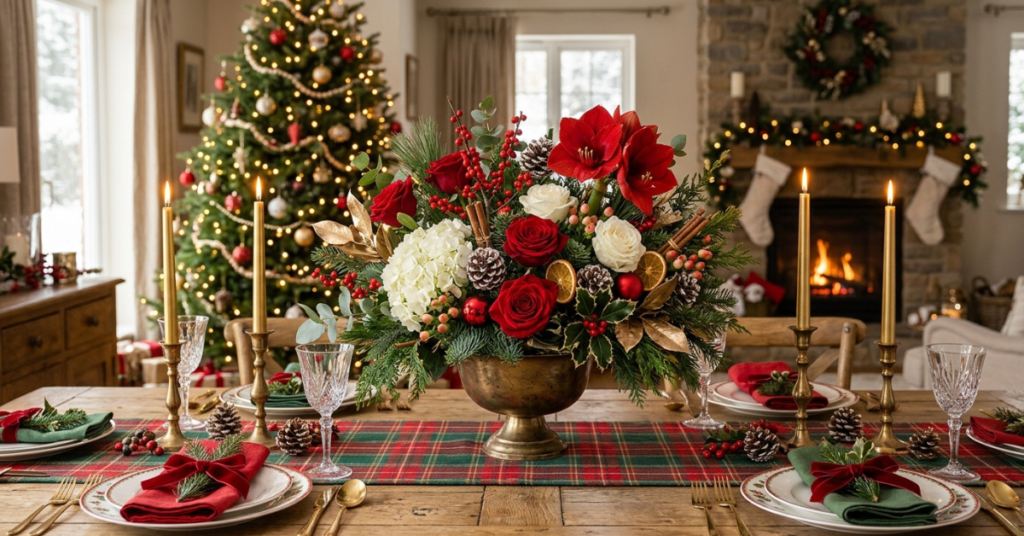
Together, these elements create a timeless look that works particularly well on traditional Christmas dining tables.
Elegant White and Green
For a calmer and more sophisticated appearance, consider leaving bright red out of the arrangement altogether.
Instead, combine:
- White roses
- White chrysanthemums
- Eucalyptus
- Pine or fir
- White berries
This palette works especially well in minimalist, contemporary, or Scandinavian-inspired interiors.
Burgundy and Gold
If you prefer a richer and more luxurious Christmas atmosphere, burgundy and gold are worth considering.
Pair burgundy or dark red blooms with:
- Gold ornaments
- Evergreen branches
- Pinecones
- Warm fairy lights
- Gold ribbon
As a result, the arrangement can feel especially elegant for formal Christmas dinners and evening celebrations.
Red and Pink
For a softer, more modern interpretation of Christmas décor, mix red flowers with blush or pale pink blooms.
This combination still feels festive, but the lighter tones give it a romantic and contemporary character.
Christmas Table Centerpiece Ideas
The dining table is one of the most natural places to showcase Christmas flowers. After all, guests spend considerable time there during holiday meals and celebrations.
Fortunately, there are several ways to create a beautiful centerpiece without making the table feel crowded.
1. Low Floral Centerpiece
Start with a low vase and arrange red and white flowers with greenery around the base.
Keeping the arrangement relatively low is important because guests should still be able to see each other comfortably across the table. Therefore, focus on width and texture rather than excessive height.
2. Long Christmas Table Runner
Instead of creating one large centerpiece, spread greenery and small floral clusters along the middle of the table.
You can add:
- Evergreen branches
- Small flower clusters
- Pinecones
- Berries
- Candles
This approach creates a relaxed, natural appearance. Moreover, it works particularly well for long dining tables.
3. Rustic Christmas Centerpiece
For a farmhouse or rustic interior, choose a wooden box, ceramic container, or vintage-style vase.
Fill it with greenery, red flowers, berries, and pinecones. Rather than making every stem perfectly symmetrical, allow some branches to sit at slightly different heights.
That natural variation can make the arrangement feel more relaxed and authentic.
4. Minimalist Christmas Centerpiece
Sometimes, a simple arrangement can make a stronger statement than an oversized one.
For example, place several white amaryllis or roses in a clear glass vase and add a few eucalyptus stems. The result is clean, modern, and elegant without overwhelming the table.
Christmas Flower Arrangement Ideas for the Living Room
Christmas flowers do not have to stay on the dining table. Instead, smaller arrangements can add festive touches throughout the living room.
A compact bouquet can look beautiful on a coffee table, console, bookshelf, or side table.
For a coffee table, consider:
White roses + eucalyptus + pine
For a console table, a taller arrangement can create more visual impact:
Amaryllis + evergreen branches + berries
However, if your Christmas tree already has plenty of ornaments and lights, it is better to keep nearby floral displays relatively simple. This helps prevent the room from feeling visually cluttered.
How to Make a Christmas Flower Arrangement
Creating your own Christmas arrangement is easier than it might seem. In fact, following a few basic design principles can help you achieve a polished result even if you have never arranged flowers before.
Step 1: Choose a Color Palette
First, decide on two or three main colors. Red, white, and green are an easy starting point, although burgundy and gold or white and green can also work beautifully.
Step 2: Select a Focal Flower
Next, choose one flower that will attract the most attention. Amaryllis, roses, poinsettias, and large chrysanthemums can all work as focal flowers.
Step 3: Add Greenery
After placing your main blooms, add evergreen branches, eucalyptus, or other foliage around them. This creates structure and gives the arrangement a fuller appearance.
Step 4: Add Supporting Flowers
Now fill the spaces between your focal blooms with smaller flowers. Varying the sizes and shapes of the flowers will make the arrangement feel more natural.
Step 5: Add Seasonal Details
Finally, introduce a few Christmas-inspired details, such as:
- Pinecones
- Berries
- Ribbon
- Small ornaments
- Dried orange slices
- Cinnamon sticks
However, resist the temptation to add too many decorations. The flowers should remain the main attraction.
How to Keep Christmas Flower Arrangements Fresh
Even a beautiful bouquet can quickly lose its appeal without proper care. Fortunately, a few simple habits can help fresh flowers stay attractive for longer.
Start by using a clean vase and fresh water. According to the Royal Horticultural Society, changing the water and recutting stems every two to four days can help maintain cut flowers, while removing fading blooms also keeps the arrangement looking fresh.
For better results:
- Clean the vase before adding flowers.
- Trim the stems before placing them in water.
- Remove leaves that would sit below the waterline.
- Change the water regularly.
- Keep the arrangement away from direct heat.
- Remove wilted blooms as they appear.
- Follow the instructions for any commercial flower food you use.
Additionally, keep your arrangement away from radiators, fireplaces, and other sources of heat, as excessive warmth can cause flowers to deteriorate more quickly.
For potted poinsettias, the RHS recommends a bright, warm position away from direct sunlight and keeping the compost just moist rather than waterlogged.
Christmas Flowers and Pet Safety
If you have cats or dogs at home, Christmas flower arrangements require a little extra thought.
Poinsettias are often described as highly poisonous, but their toxicity is generally less severe than popular claims suggest. The ASPCA lists them as toxic to dogs, cats, and horses, with the sap potentially causing mouth and stomach irritation and sometimes vomiting.
However, poinsettias are not the only holiday plants worth considering. Holly and mistletoe can also cause problems if pets eat them, while some lilies commonly found in floral arrangements can be extremely dangerous to cats.
Therefore, if you have pets:
- Keep floral arrangements out of reach.
- Prevent pets from chewing leaves or berries.
- Check every plant before bringing it indoors.
- Choose pet-safe alternatives when appropriate.
- Contact a veterinarian if you suspect your pet has eaten a potentially harmful plant.
How to Choose the Right Christmas Flower Arrangement
Before buying or creating an arrangement, consider where you plan to place it. The size, height, and style should all work with the surrounding space.
For a dining table: Choose a low arrangement that allows guests to see one another.
For an entryway: A taller arrangement can create a welcoming first impression.
For a coffee table: Choose something compact and well-balanced.
For a formal event: Roses, amaryllis, orchids, and elegant greenery can create a polished appearance.
For a rustic home: Combine seasonal foliage, berries, pinecones, and natural containers.
For a minimalist home: Stick to one or two flower varieties and a restrained color palette.
Most importantly, remember that the best arrangement is not necessarily the largest. Instead, it is the one that fits the room, complements the décor, and feels intentional.
Christmas Flower Arrangement Ideas on a Budget
Creating a beautiful holiday display does not have to mean spending a fortune. With a little creativity, inexpensive greenery can become the foundation of an impressive arrangement.
For example, several branches of greenery combined with five or six red roses can look considerably fuller than a bouquet made entirely of roses. Similarly, adding seasonal elements can increase visual interest without requiring expensive flowers.
You can also reuse Christmas decorations that you already have at home, including:
- Old Christmas ornaments
- Leftover ribbon
- Pinecones from previous decorations
- Small glass jars
- Mason jars
- Wooden containers
- Dried fruit
Furthermore, repurposing these items can give your arrangement a personal touch while keeping the overall cost down.
Frequently Asked Questions About Christmas Arrangements Flowers
What flowers are best for Christmas arrangements?
Poinsettias, amaryllis, roses, carnations, chrysanthemums, orchids, and tulips can all work beautifully. In addition, evergreen foliage, berries, and pinecones can make almost any bouquet feel more festive.
What is the traditional Christmas flower?
The poinsettia is widely associated with Christmas and remains one of the most recognizable holiday plants. Interestingly, its colorful bracts are often mistaken for flowers, while the tiny structures in the center are the plant’s actual flowers.
What flowers go well with poinsettias?
Poinsettias pair nicely with evergreen branches, eucalyptus, white flowers, red berries, pinecones, and understated gold or natural accents. Together, these elements create a traditional yet polished Christmas look.
Can I use roses in a Christmas flower arrangement?
Absolutely. Red roses can create a classic festive appearance, while white roses offer a softer winter-inspired look. Moreover, roses can easily be combined with greenery, berries, carnations, or other seasonal flowers.
How long do Christmas flower arrangements last?
The lifespan varies depending on the type of flower, its freshness, temperature, and care. Nevertheless, changing the water regularly, trimming stems, removing fading blooms, and keeping the arrangement away from heat can help extend its decorative life.
What are good Christmas flowers for a dining table?
Low arrangements featuring roses, carnations, chrysanthemums, or seasonal greenery are excellent choices. Amaryllis can also create a striking centerpiece; however, its height should be managed so that it does not obstruct guests’ views.
How can I make a Christmas bouquet look fuller?
Begin with greenery as your base, then add one or two focal flowers and smaller blooms around them. By combining different flower sizes, shapes, and textures, you can create a fuller appearance without needing a huge number of flowers.
Are Christmas flowers safe for pets?
Not every holiday plant is pet-safe. Poinsettias, holly, and mistletoe can cause problems if eaten, while certain lilies can be particularly dangerous to cats. Therefore, keep floral decorations away from pets and check plant safety before bringing anything into your home.
Final Thoughts
The beauty of Christmas arrangements flowers is that there are no strict rules. You can create a traditional display with red poinsettias and evergreen branches, an elegant arrangement with white roses and eucalyptus, or a dramatic centerpiece featuring amaryllis and seasonal greenery.
Ultimately, the most successful Christmas floral arrangements balance color, texture, proportion, and the character of the room. Choose flowers that complement your existing decorations, add greenery for structure, and make sure the arrangement is practical for its location.
Whether you are preparing a Christmas dinner centerpiece, decorating your living room, or putting together a festive gift, the right floral arrangement can make the entire space feel warmer and more welcoming. So, choose a simple color palette, bring together a few seasonal elements you love, and let your Christmas arrangements flowers become a beautiful part of your holiday décor.