
If you have ever seen a garden flower that looks like it was painted by hand, the coral charm peony is probably one of them. This beloved peony is famous for its glowing coral color, graceful shape, and the way its petals slowly shift as the bloom matures. It is one of those plants that feels special the moment you see it, whether it is growing in a border, styled in a bouquet, or listed for sale by a favorite nursery.
The coral charm peony plant is more than just pretty. It is an award-winning herbaceous hybrid that has earned a strong reputation among gardeners and florists for its reliable blooming, sturdy stems, and unforgettable color transition. If you are looking for a peony that feels elegant but still easy to love in the garden, Coral Charm deserves a spot on your list.
What Is Coral Charm Peony?
The coral charm peony flower is a herbaceous hybrid cultivar introduced by Samuel Wissing in 1964 in the United States. The American Peony Society lists it as a semi-double, free-blooming peony with strong stems and good foliage, and it received the APS Gold Medal in 1986. That award matters, because it places Coral Charm among the most respected peony cultivars in modern gardens.
What makes it stand out is the flower form. The blooms open with a brilliant coral tone, then soften as they age, which gives the plant a layered, almost glowing look. The American Peony Society describes the flower as a huge bowl-shaped bloom whose color lightens toward a pale cream near the center.
Coral Charm Peony Color Change: Why It Looks Different Every Day
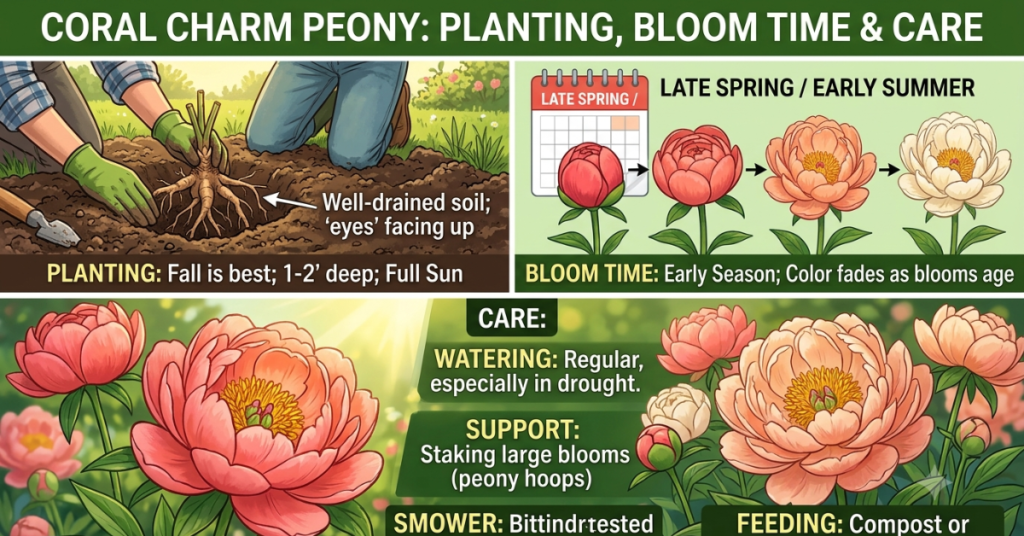
One of the biggest reasons gardeners fall in love with coral charm peony color change is that the bloom does not stay the same for long. Fresh flowers usually open in a deep coral-pink or coral-orange shade, then shift into peach, softer pink, and eventually pale ivory or cream tones as the bloom matures. American Meadows describes that transition clearly, and Gardenia notes the same fade from coral buds to coral-peach and then pale ivory.
That changing color is not a flaw. It is the feature that makes Coral Charm feel so alive in the garden. Instead of one flat shade, you get a moving color story across the bloom cycle, which is why it photographs so beautifully and often becomes the focal point of a peony garden.
Coral Charm Peony Bloom Time
The coral charm peony bloom time is usually in late spring to early summer, and it is considered an early-season peony by many growers. Gardenia says the flowers bloom heavily in late spring to early summer and typically last about 7–10 days per flower, while Missouri Botanical Garden notes that peonies in general bloom in mid to late May in St. Louis. Bloom time can shift slightly depending on your climate and weather.
In practical terms, Coral Charm often gives gardeners one of the first big peony moments of the season. That is part of its charm: it arrives early, puts on a dramatic show, and then leaves you wanting more.
How to Grow a Coral Charm Peony Plant
A healthy coral charm peony plant does best in full sun and well-drained soil. Missouri Botanical Garden recommends full sun, well-drained soil, and planting dormant roots in fall or very early spring. Gardenia adds that Coral Charm performs best in rich, fertile, medium-moisture soil and tolerates only light afternoon shade.
Here are the basics that matter most:
- Plant in a sunny spot.
- Keep the soil well drained.
- Set the peony roots shallowly, with the eyes facing up.
- Give each plant room to grow.
- Avoid moving it once established.
Missouri Botanical Garden is very clear about planting depth: the top of the root should not be more than about 1.5 inches below the soil surface, because planting too deeply can prevent blooming. They also recommend allowing about three feet of space for each plant. That spacing helps with airflow, which peonies appreciate.
Coral Charm Peony in the Garden
In the coral charm peony garden, this plant works beautifully as a specimen, in borders, along paths, or mixed with other classic perennials. Gardenia recommends it for beds, borders, city gardens, cottage gardens, and even informal hedges, and says it pairs especially well with roses, bearded irises, and other perennials.
Its strong stems make it especially useful where you want a flower that looks refined but does not collapse easily after the first rain. American Peony Society notes the rigid stems and good foliage, while Gardenia mentions that staking may still be helpful if the blooms become heavy or weather turns rough.
Coral Charm Peony Bouquet: Why Florists Love It
There is a reason the phrase coral charm peony bouquet shows up so often in floral searches. Coral Charm is considered an excellent cut flower because it has strong stems, a memorable color shift, and a long vase life when cut in bud. Gardenia says it can last over a week if cut before fully opening.
For bouquets, that changing color is a major advantage. A bouquet can move from coral to peach to ivory over several days, so the arrangement keeps evolving on the table. That makes Coral Charm especially appealing for weddings, romantic centerpieces, and spring-to-early-summer displays.
Coral Charm Peony for Sale: What to Look For
When searching for coral charm peony for sale, look for plants or roots sold as herbaceous peonies, ideally with clear notes about bloom season, USDA zone, and planting instructions. American Meadows currently describes Coral Charm as suitable for zones 3–8 and highlights its coral blooms, dark green foliage, and Gold Medal status.
A good listing should also mention whether you are buying a bare root or an established plant, because that affects planting time and how quickly you will see blooms. Coral Charm usually rewards patience, and many peonies may take one to two years to produce their best flowers after planting.
Best Care Tips for Long-Lasting Blooms
Coral Charm is a low-maintenance perennial once established, but a few habits make a big difference. The most important thing is to avoid disturbing the plant too often. Peonies dislike transplanting, and Gardenia notes that Coral Charm can remain in place for years and may live up to 50 years or more in the garden.
A simple care routine looks like this:
- Water regularly while the plant is getting established.
- Remove spent flowers after bloom.
- Cut the foliage back in fall after it dies down.
- Keep the plant in full sun for the best flowering.
That is really the beauty of peonies: they are glamorous flowers with surprisingly simple needs. Give them the right spot, and they will keep rewarding you year after year.
Coral Charm Peony in Modern Landscaping
The coral charm peony flower has become a favorite not just for gardeners but also for designers and florists because it feels timeless and fresh at the same time. Its color is bold enough to stand out, but soft enough to blend into cottage gardens, romantic borders, and classic planting schemes.
It also has strong seasonal value. Because peonies bloom in a short window, Coral Charm creates a sense of anticipation. When it opens, it feels like a true event in the garden rather than just another flower.
FAQs About Coral Charm Peony
How tall does Coral Charm peony grow?
Gardenia lists Coral Charm at roughly 24–36 inches tall and 24–30 inches wide, while the American Peony Society notes strong 36-inch stems in its registry description.
Is Coral Charm a good cut flower?
Yes. It is widely regarded as an excellent cut flower because of its strong stems and good vase life, especially when cut in bud.
When is the best time to plant Coral Charm peony?
Fall is generally the best time to plant peonies, according to Missouri Botanical Garden and Gardenia, because the roots can establish before winter.
Does Coral Charm peony need staking?
Not always, but staking can help in exposed spots or heavy rain. Gardenia notes that the blooms may arch downward and can be driven to the ground by hard rain.
Where can I find Coral Charm peony for sale?
You can find it through established plant retailers and specialty nurseries. Listings such as American Meadows currently describe it as a Gold Medal winner with coral blooms for zones 3–8.
Conclusion
The coral charm peony is popular for a reason. It has an award-winning heritage, a gorgeous color-changing bloom, dependable garden performance, and real value as a cut flower. Whether you are planning a coral charm peony garden, searching for a coral charm peony bouquet, or comparing coral charm peony for sale options, this is one flower that delivers beauty from every angle.
If you are looking for a peony that feels elegant, memorable, and easy to love, Coral Charm is a very strong choice. It is one of those plants that does not just fill space in the garden; it gives the whole space personality.