
Have you ever noticed how professional floral designers create perfectly balanced arrangements where every stem stays beautifully positioned? The secret behind many of these designs is a simple but clever tool known as a flower frog.
This small floral accessory helps hold stems in place while allowing designers to create natural, artistic arrangements. Unlike traditional floral foam, it supports flowers without blocking water flow, making it a favorite choice for both beginners and experienced florists.
Whether you love decorating your home with fresh flowers or want to improve your arranging skills, understanding what is a flower frog and how it works can completely transform your floral designs.
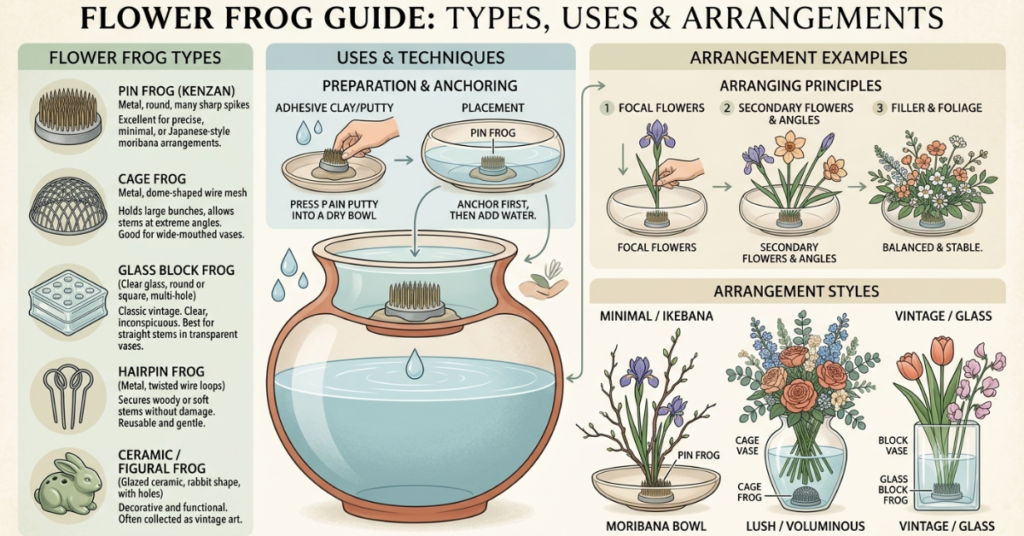
In this guide, we’ll explore different styles, including the glass flower frog, kenzan flower frog, ceramic flower frog, metal flower frog, and how to create beautiful arrangements using them.
What Is a Flower Frog?
A flower frog is a floral arranging tool designed to hold flower stems securely inside a vase, bowl, or container. It usually sits at the bottom of a vessel and contains small openings, holes, or sharp pins where stems can be placed.
Unlike floral foam, which grips stems by absorbing water, this traditional holder supports flowers mechanically while allowing water to circulate freely.
These tools are commonly used by:
- Professional florists
- Floral designers
- Home decorators
- Garden enthusiasts
- Ikebana practitioners
One of the reasons they remain popular is their ability to create a more natural appearance, making flowers look like they are growing freely rather than being tightly arranged.
How Does a Flower Frog Work?
The working method depends on the design, but the process is simple:
- Place the floral holder inside your vase or container.
- Add clean water.
- Insert flower stems into the openings or pins.
- Adjust the flowers until the arrangement looks balanced.
The holder keeps stems separated, allowing you to control height, direction, and spacing.
For example, tall flowers can create structure, while smaller blooms and greenery can fill empty spaces and add movement.
Types of Flower Frogs and Their Uses
Different styles are designed for different arranging techniques and aesthetics.
Glass Flower Frog: A Vintage Decorative Choice
It is one of the most popular collectible styles because it combines function with beauty.
Usually placed inside transparent vases, these holders allow the decorative piece itself to become part of the display.
Common features include:
- Multiple stem openings
- Clear glass designs
- Vintage-inspired shapes
- Decorative appeal
They work especially well with delicate flowers such as:
- Tulips
- Daisies
- Wildflowers
- Roses
A glass flower frog vase creates a charming vintage look that complements farmhouse, cottage, and traditional interiors.
Kenzan Flower Frog: The Japanese Floral Technique
A kenzan flower frog comes from Japanese Ikebana flower arranging traditions.
Instead of holes, it uses a heavy metal base covered with sharp pins. Flower stems are pressed onto these pins, allowing precise placement and artistic control.
Benefits include:
- Strong support for thicker stems
- Ability to create unique angles
- Reusable design
- Minimal waste compared with floral foam
This style is ideal for minimalist arrangements where every stem position contributes to the overall design.
Ceramic Flower Frog: Handmade Beauty and Function
A ceramic flower frog combines decorative design with practical use. Many ceramic versions are handmade, giving them a unique appearance.
They are popular because they:
- Add texture to floral displays
- Match rustic and handmade décor
- Provide stability
- Come in different colors and finishes
A ceramic holder works beautifully for seasonal arrangements and tabletop decorations.
Metal Flower Frog: Strong and Durable
A metal flower frog is a reliable choice for larger or heavier arrangements.
Common materials include:
- Brass
- Stainless steel
- Aluminum
Advantages include:
- Long-lasting durability
- Strong stem support
- Reusable construction
- Suitable for heavier flowers and branches
These are often preferred by professional designers who need extra stability.
Flower Frog Vase: Choosing the Right Combination
A vase refers to a vase paired with a floral holder to create a structured arrangement.
When choosing the right combination, consider:
Vase Size
Small containers work best for:
- Short flowers
- Minimal arrangements
- Small decorative displays
Larger vessels are better for:
- Tall flowers
- Branches
- Larger floral designs
Flower Type
Different flowers need different support:
- Soft stems → glass or ceramic holders
- Heavy stems → metal or kenzan styles
- Artistic designs → Japanese-inspired techniques
Interior Style
Match your floral accessory with your décor:
- Vintage style → glass designs
- Rustic style → ceramic pieces
- Modern style → metal holders
How to Create a Flower Frog Arrangement
Creating a beautiful floral display is easier than many people think.
1. Choose Your Flowers
Select flowers with different heights, shapes, and textures.
A balanced arrangement usually includes:
- Main flowers
- Smaller filler blooms
- Greenery
2. Prepare the Holder
Place it securely inside the vase. Some designs include rubber bases or adhesive options to prevent movement.
3. Cut the Stems
Trim stems diagonally to improve water absorption.
4. Arrange the Flowers
Start with larger flowers, then add smaller blooms around them.
Avoid placing everything in the same direction. Natural angles create a more professional appearance.
5. Maintain the Arrangement
To keep flowers fresh:
- Replace water regularly
- Remove wilted blooms
- Clean the holder after use
- Trim stems when necessary
Flower Frog Vintage Styles: Why They Are Popular
A vintage piece is not just a practical tool—it can also be a beautiful collectible décor item.
Many antique designs from the early and mid-1900s are valued for their craftsmanship and unique details.
Collectors often search for:
- Antique glass holders
- Decorative ceramic designs
- Brass floral accessories
- Handmade pieces
Their popularity has increased because many people are choosing reusable and timeless home décor instead of disposable products.
Flower Frog vs Floral Foam: Which Is Better?
| Floral Holder | Floral Foam |
| Reusable for years | Usually disposable |
| Allows natural movement | Holds flowers firmly |
| More environmentally friendly | Creates waste |
| Great for artistic designs | Common in traditional arrangements |
Many modern floral designers prefer reusable holders because they create a more natural and sustainable approach to flower arranging.
Benefits of Using a Floral Holder
Using this traditional arranging tool provides several advantages:
- Creates organized designs
- Allows creative stem placement
- Reduces floral foam waste
- Can be reused repeatedly
- Works with different vase styles
- Adds a professional finish
For anyone interested in floral design, this simple accessory can improve both creativity and technique.
Common Mistakes When Using a Flower Frog
Choosing the Wrong Size
A holder that is too small may not provide enough support.
Adding Too Many Flowers
Overcrowding can make the arrangement look messy and prevent proper water circulation.
Ignoring Balance
Good floral design requires variation in height, texture, and direction.
Not Cleaning Properly
Reusable holders should be cleaned regularly to prevent bacteria buildup.
FAQs About Flower Frogs
What is a flower frog used for?
It is used to hold stems in place inside a vase, helping create balanced and structured floral arrangements.
Can you use a flower frog in any vase?
Most styles work with different containers, but the size should match the vase opening for better stability.
Are flower frogs better than floral foam?
Many designers prefer them because they are reusable, sustainable, and allow flowers to move more naturally.
How do you clean a flower frog?
Wash it with warm water and mild soap. Use a small brush to clean between holes or pins.
Are vintage flower frogs valuable?
Some antique glass, ceramic, and metal designs can become collectible decorative pieces.
What flowers work best with a kenzan flower frog?
Strong-stemmed flowers such as roses, chrysanthemums, lilies, and branches usually work well with kenzan styles.
Conclusion: Why Try a Flower Frog?
It may be a small accessory, but it can completely change the way you arrange flowers. From a delicate glass flower frog to a traditional kenzan flower frog, each style offers a different way to create elegant and artistic displays.
Whether you prefer vintage décor, modern floral designs, or sustainable decorating methods, these reusable arranging tools provide creativity and flexibility.
If you enjoy fresh flowers at home, trying a vase setup can be the perfect next step toward creating beautiful, professional-looking arrangements.