
A small jade plant can bring a surprising amount of life to a room. With its thick, glossy leaves and tree-like shape, Crassula ovata has become one of the most popular houseplants for homes, offices, and workspaces. But beyond its attractive appearance, many people wonder about jade plant health benefits and whether keeping one indoors can actually improve well-being.
Jade plants are often associated with cleaner air, reduced stress, better indoor environments, and even traditional medicinal uses. Some of these ideas have a scientific basis, while others are based mainly on traditional beliefs or popular houseplant claims.
So, what can a jade plant really do for you? Let’s separate the established benefits from the myths and look at how this low-maintenance succulent may contribute to a healthier, more pleasant living space.
What Is a Jade Plant?
The jade plant (Crassula ovata) is a succulent native to parts of South Africa and Mozambique. It stores water in its thick, fleshy leaves, which is one reason it can tolerate periods of dry soil.
It is commonly grown as an indoor ornamental plant because it is relatively easy to maintain. Under suitable conditions, a jade plant can live for many years and develop a miniature tree-like appearance.
Its popularity also comes from its cultural associations. In some traditions, jade plants are considered symbols of prosperity, good fortune, friendship, and growth.
Jade Plant Health Benefits
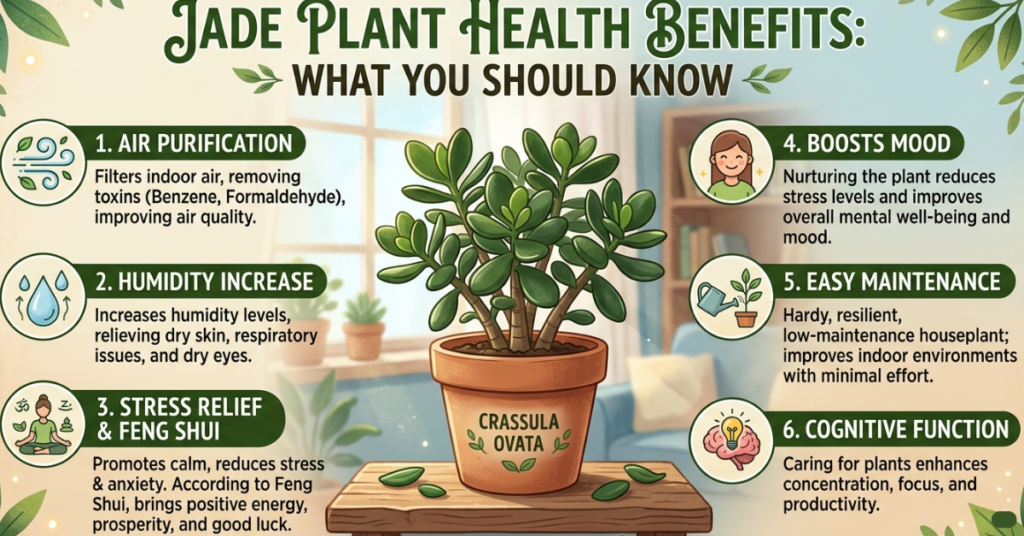
While a jade plant should not be considered a medical treatment, having plants indoors can offer several potential psychological and environmental benefits.
1. May Support a Calmer Indoor Environment
One of the most practical benefits of keeping plants indoors is their potential effect on how a space feels. Greenery can make a room appear more natural, comfortable, and inviting.
Research on indoor plants and well-being has suggested that interacting with or simply viewing greenery may help promote relaxation and reduce feelings of psychological stress.
A jade plant is particularly useful for this purpose because its compact size makes it easy to place on a desk, shelf, bedside table, or windowsill.
2. May Support Mental Well-Being
Houseplants can provide more than decoration. Caring for a living plant creates a small routine: checking the soil, watering when necessary, removing damaged leaves, and watching new growth develop.
For some people, these simple activities can provide a calming break from screens and daily responsibilities. The benefit is not unique to jade plants, but their easy-care nature makes them a convenient choice for beginners.
3. Can Add Natural Greenery to Indoor Spaces
A pleasant indoor environment can influence how comfortable you feel in your home or workspace. Jade plants add natural texture and color without requiring much room.
Their rounded leaves and branching growth also work well with minimalist, modern, rustic, and traditional interior styles.
If your goal is to make a room feel fresher and more connected to nature, a jade plant can be an easy starting point.
4. May Contribute to Indoor Air Quality
You may have heard that houseplants are natural air purifiers. There is some scientific evidence that plants can remove certain pollutants under controlled laboratory conditions.
However, it is important not to overstate this benefit.
The famous idea that a few houseplants can significantly clean the air in an ordinary home does not reflect the limitations of many laboratory studies. Real-world ventilation, room size, pollutant levels, and plant quantity all matter.
So, while a jade plant participates in normal plant processes such as photosynthesis, it should not replace ventilation, air filtration, or other proven methods of improving indoor air quality.
5. Produces Oxygen Through Photosynthesis
Like other green plants, jade plants use photosynthesis to convert light, water, and carbon dioxide into chemical energy while releasing oxygen.
This is a normal and important biological process. However, the amount of oxygen produced by a single indoor jade plant is not enough to create a meaningful change in the oxygen concentration of a typical room.
It is better to appreciate this as one of the natural functions of having a living plant indoors rather than viewing a jade plant as an oxygen-generating health device.
6. Can Encourage a Connection With Nature
Spending time around natural elements is often associated with improved psychological well-being. Even when you live in a city or spend most of your day indoors, adding greenery can create a small connection with the natural world.
A jade plant can be especially rewarding because its growth is easy to observe. New leaves, branching stems, and changes in shape provide visible reminders that the plant is developing over time.
Does a Jade Plant Really Purify the Air?
This is one of the most frequently searched questions about jade plant health benefits.
Plants can absorb certain airborne compounds, particularly under controlled experimental conditions. However, household conditions are very different from sealed laboratory environments.
For everyday indoor air quality, prioritize:
- Regular ventilation when outdoor air quality permits.
- Controlling indoor sources of pollution.
- Using an appropriately rated air purifier when needed.
- Keeping indoor humidity at a comfortable level.
- Preventing mold and excessive moisture.
A jade plant can be part of a pleasant indoor environment, but it should not be your primary air-cleaning strategy.
Jade Plant and Traditional Uses
Jade plants have been used in traditional practices in some cultures, and various parts of the plant have been associated with folk remedies.
However, traditional use does not automatically establish medical effectiveness or safety. There is not enough high-quality clinical evidence to recommend consuming jade plant leaves or using homemade jade plant preparations to treat illnesses.
This distinction is important because online articles sometimes describe traditional plant uses as proven medical treatments.
Can You Eat Jade Plant Leaves?
It is best not to consume jade plant leaves as a home remedy.
Jade plants are not generally grown as edible plants, and ingesting plant material can cause problems, particularly for pets. If you are interested in herbal medicine, use products that have established safety information and speak with a qualified healthcare professional rather than experimenting with ornamental houseplants.
Jade Plant Benefits for the Home
The benefits of a jade plant aren’t necessarily limited to health claims. It can also improve the visual and emotional character of an indoor space.
Why people love jade plants
- They have an attractive, sculptural appearance.
- They are relatively drought tolerant.
- They can live for many years with proper care.
- They work well in small spaces.
- They complement many interior design styles.
- Watching a plant grow can be satisfying and calming.
- They can make desks, shelves, and windowsills feel more lively.
For many homeowners, these everyday benefits are more realistic and useful than claims that a jade plant can dramatically transform indoor air quality.
How to Care for a Jade Plant
Good plant health starts with proper care. A stressed or overwatered jade plant will not provide the lush appearance most people want.
1. Give It Plenty of Light
Jade plants generally prefer bright light. A location near a sunny window can work well, although very intense direct sunlight can sometimes cause leaf damage if the plant has not been gradually acclimated.
2. Avoid Overwatering
Overwatering is one of the most common problems with jade plants.
Allow the soil to dry between waterings rather than following a strict daily watering schedule. The exact frequency depends on factors such as temperature, light, pot size, soil, and humidity.
3. Use Well-Draining Soil
Because jade plants are succulents, their roots do not appreciate sitting in constantly wet soil.
A well-draining succulent or cactus potting mix and a container with drainage holes can help reduce the risk of root problems.
4. Keep an Eye on the Leaves
Leaves can tell you a lot about a jade plant’s condition.
- Soft or mushy leaves: May indicate excess moisture.
- Wrinkled leaves: Can occur when the plant needs water.
- Yellowing leaves: May have several causes, including watering problems.
- Leaf drop: Can result from environmental stress, watering issues, or sudden changes in conditions.
Look at the overall pattern rather than diagnosing the plant from one symptom alone.
Are Jade Plants Safe Around Pets?
This is an important consideration if you have cats or dogs.
Jade plants are commonly listed as toxic to pets, and ingestion can cause gastrointestinal upset and other symptoms. Keep the plant somewhere pets cannot chew on it, particularly if they are known to nibble houseplants.
If you suspect that a pet has eaten part of a jade plant, contact a veterinarian or an appropriate animal poison service for guidance.
Jade Plant vs. Other Popular Houseplants
Jade plants are only one option for bringing greenery indoors. Different plants suit different lifestyles.
| Plant | Main Appeal | Care Level |
| Jade plant | Succulent appearance and longevity | Easy |
| Snake plant | Upright foliage and low maintenance | Easy |
| Pothos | Fast-growing trailing vines | Easy |
| Spider plant | Arching foliage and easy propagation | Easy |
| Peace lily | Attractive flowers and foliage | Moderate |
If you frequently forget to water plants, a jade plant may be a better choice than species that require consistently moist soil.
Common Myths About Jade Plant Health Benefits
There is plenty of misinformation online about houseplants, so it helps to keep expectations realistic.
Myth: A jade plant can cure diseases
There is no good evidence that keeping a jade plant in your home can cure diseases or replace medical treatment.
Myth: One jade plant will completely purify a room
Plants can interact with airborne compounds, but a single houseplant should not be expected to provide major air purification in a normal home.
Myth: Sleeping next to a jade plant gives you significantly more oxygen
Although jade plants perform photosynthesis, one plant does not produce enough oxygen to meaningfully change the oxygen level of a typical bedroom.
Myth: Jade plant leaves are a safe natural medicine
Traditional use and anecdotal claims should not be confused with established medical evidence. Avoid consuming ornamental jade plants.
How to Get the Most From a Jade Plant
If you want to enjoy the realistic benefits of having a jade plant indoors, focus on the experience rather than exaggerated health promises.
Place it somewhere you naturally spend time, such as a home office, living room, or bright windowsill. Keep it healthy with appropriate light and watering, and use its growth as a simple way to introduce more greenery into your surroundings.
You can also combine your jade plant with other indoor plants to create a small green corner that makes your space feel more welcoming.
Frequently Asked Questions
Is a jade plant good for your health?
A jade plant may contribute indirectly to well-being by adding greenery and creating a more pleasant indoor environment. However, it should not be considered a medical treatment or a substitute for healthy lifestyle habits and professional healthcare.
Does a jade plant clean indoor air?
Jade plants can participate in natural plant processes that interact with air, but evidence does not support treating a single jade plant as a powerful household air purifier. Good ventilation and appropriate filtration are more reliable approaches.
Is it good to keep a jade plant in the bedroom?
Yes, you can keep a jade plant in a bedroom if it receives enough light and has suitable growing conditions. The plant may add visual appeal and greenery, but claims that it significantly increases bedroom oxygen levels are overstated.
Can jade plants reduce stress?
Having plants around may support relaxation and psychological well-being for some people. The effect is associated with indoor greenery generally rather than being a unique medical property of jade plants.
Can humans eat jade plant leaves?
It is not recommended to eat jade plant leaves. They are ornamental rather than food plants, and homemade preparations should not be treated as proven remedies.
Are jade plants poisonous to cats and dogs?
Jade plants are considered toxic to cats and dogs. Keep them out of reach, and contact a veterinarian if a pet has ingested part of the plant.
Where should I put a jade plant in my house?
Choose a bright location, preferably near a window that provides plenty of light. Avoid placing it in a consistently dark corner or somewhere where the soil stays wet for long periods.
Conclusion
The most realistic jade plant health benefits come from what the plant contributes to your everyday environment rather than from dramatic medicinal claims. A healthy jade plant can add greenery, improve the visual atmosphere of a room, encourage plant care as a relaxing hobby, and provide a simple connection with nature.
At the same time, claims that jade plants can cure illness, dramatically purify household air, or substantially increase bedroom oxygen should be treated cautiously.
If you’re looking for an attractive, long-lasting and relatively low-maintenance houseplant, jade is a great option. Give it bright light, avoid overwatering, keep it away from pets, and enjoy the natural character it brings to your space.