
If you’re looking for an evergreen tree that adds privacy, beauty, and year-round greenery to your landscape, the junior giant arborvitae is a variety worth knowing about. This compact yet fast-growing evergreen combines the classic appeal of thuja arborvitae with a manageable size, making it a popular choice for homeowners who want a natural privacy screen without overwhelming their yard.
The junior giant arborvitae (Thuja standishii × plicata ‘Junior Giant’) is known for its dense foliage, upright growth habit, and excellent adaptability. Whether you’re creating a backyard hedge, lining a walkway, or adding structure to your garden, this evergreen can provide a beautiful, low-maintenance solution.
In this guide, we’ll explore everything you need to know, including junior giant arborvitae size, growth rate, spacing requirements, deer resistance, planting tips, and where to find junior giant arborvitae for sale.
What Is a Junior Giant Arborvitae?
The thuja junior giant arborvitae is a hybrid evergreen tree developed from two popular arborvitae species: Thuja standishii and Thuja plicata. It was created to offer the best qualities of both parent plants, including strong growth, rich green foliage, and better landscape performance.
Unlike some larger arborvitae varieties that can quickly become too tall for smaller properties, the Junior Giant provides a more controlled growth pattern while still creating a thick privacy barrier.
Key characteristics of Junior Giant Arborvitae:
- Evergreen foliage that stays green throughout the year
- Dense, naturally pyramidal shape
- Fast-growing compared to many other privacy trees
- Good resistance to common landscape challenges
- Suitable for hedges, borders, and screening
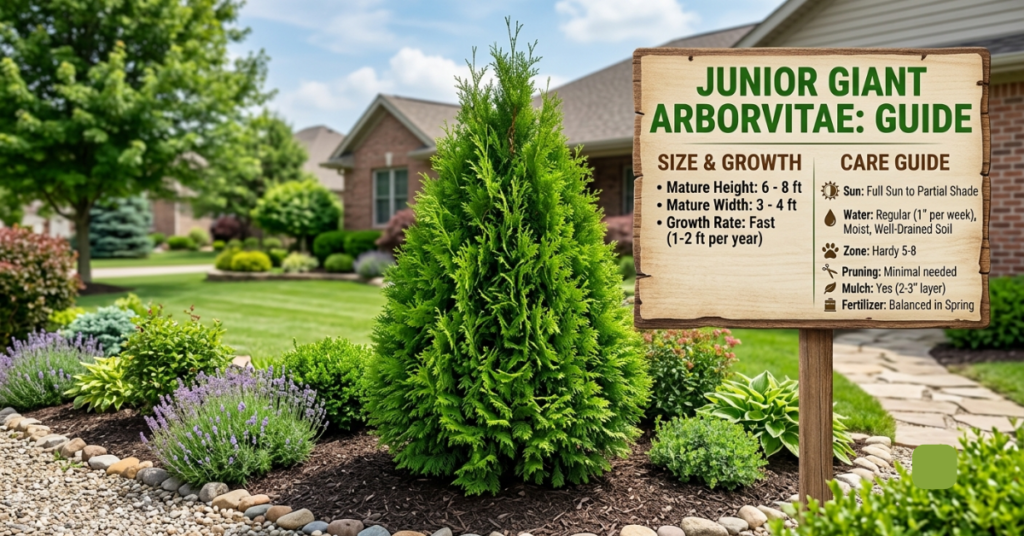
Junior Giant Arborvitae Size: How Big Does It Get?
One of the biggest questions homeowners ask is about the junior giant arborvitae size.
A mature Junior Giant arborvitae typically reaches:
- Height: Around 20–30 feet tall
- Width: Approximately 8–12 feet wide
The full grown junior giant arborvitae develops a tall, narrow shape, making it ideal for properties where you need privacy but don’t want a tree that spreads excessively.
Because it maintains a naturally columnar form, it works well along fences, property lines, and garden boundaries.
Junior Giant Arborvitae Growth Rate: How Fast Does It Grow?
The junior giant arborvitae growth rate is one of its most attractive features. Under ideal conditions, this evergreen can grow around 2–3 feet per year once established.
Growth depends on several factors, including:
- Amount of sunlight received
- Soil quality
- Water availability
- Climate conditions
- Proper planting and care
For the fastest growth, plant your arborvitae in an area with full sun and well-draining soil. Regular watering during the first few growing seasons helps establish a strong root system.
Ideal Growing Conditions for Thuja Junior Giant Arborvitae
The thuja junior giant arborvitae is relatively easy to grow, but providing the right environment will help it thrive.
Sunlight Requirements
Junior Giant arborvitae performs best in:
- Full sun (6+ hours of direct sunlight daily)
- Partial shade areas where necessary
More sunlight generally encourages thicker foliage and stronger growth.
Soil Preferences
This evergreen prefers:
- Moist but well-drained soil
- Slightly acidic to neutral soil
- Rich soil with organic matter
Avoid planting it in areas where water constantly collects, as overly wet roots can lead to problems.
Watering Needs
Young trees need consistent moisture while establishing. After becoming established, they are more drought-tolerant but still benefit from deep watering during dry periods.
Junior Giant Arborvitae Spacing: How Far Apart Should You Plant Them?
Proper junior giant arborvitae spacing is important for creating a healthy privacy screen.
For a dense hedge:
- Plant trees about 6–8 feet apart
For individual specimen trees:
- Allow 8–12 feet of space between plants
Planting too closely may create competition for sunlight, water, and nutrients. Giving trees enough room allows them to develop a healthier shape and stronger root system.
Is Junior Giant Arborvitae Deer Resistant?
Many homeowners searching for junior giant arborvitae deer resistant options want a privacy tree that can survive in areas with deer populations.
While no plant is completely deer-proof, Junior Giant arborvitae is considered more deer resistant than many other arborvitae varieties.
Its dense foliage and strong scent may make it less appealing to deer. However, hungry deer, especially during winter months, may still browse on it when food is limited.
To protect young plants:
- Use deer repellents
- Install temporary fencing
- Avoid heavy deer traffic areas when possible
Benefits of Planting Junior Giant Arborvitae
There are many reasons gardeners choose this evergreen for their landscapes.
1. Excellent Privacy Screen
Its dense branches create a natural green wall, making it useful for blocking:
- Neighbors
- Roads
- Unsightly views
- Outdoor noise
2. Year-Round Beauty
Unlike deciduous trees, arborvitae keeps its foliage during winter, providing structure and color throughout every season.
3. Low Maintenance
Once established, Junior Giant arborvitae requires minimal care compared with many other privacy plants.
4. Cold Hardiness
This variety performs well in many climates and can handle colder temperatures when planted in suitable growing zones.
How to Plant a Junior Giant Arborvitae
Follow these steps for successful planting:
- Choose a location with good sunlight and drainage.
- Dig a hole twice as wide as the root ball.
- Place the tree at the same depth as it was growing in its container.
- Fill the hole with soil and gently firm it around the roots.
- Water deeply after planting.
- Add mulch around the base to retain moisture.
Avoid piling mulch directly against the trunk, as this can encourage moisture-related problems.
Common Problems and How to Prevent Them
Although generally hardy, Junior Giant arborvitae can experience some issues.
Browning Foliage
Possible causes:
- Lack of water
- Winter burn
- Poor drainage
- Root stress
Spider Mites
Dry conditions may encourage spider mite activity. Regular watering and proper air circulation can help reduce problems.
Overcrowding
Trees planted too closely may develop weak growth and reduced airflow.
Junior Giant Arborvitae for Sale: Where Can You Buy One?
If you’re searching for junior giant arborvitae for sale, you can usually find them through:
- Local garden centers
- Tree nurseries
- Online plant retailers
- Landscape suppliers
When searching for junior giant arborvitae for sale near me, check local nurseries first because larger trees can be expensive to ship.
Before purchasing, look for:
- Healthy green foliage
- Strong central growth
- No signs of pests or disease
- A well-developed root system
Finding Junior Giant Arborvitae Near Me
A search for junior giant arborvitae near me can help you locate nearby suppliers, but availability often changes by season.
Spring and early fall are usually the best times to buy and plant arborvitae because cooler temperatures help reduce transplant stress.
Local nurseries may also provide advice about:
- Regional growing conditions
- Best planting locations
- Proper maintenance
Frequently Asked Questions About Junior Giant Arborvitae
How tall does a full grown Junior Giant arborvitae get?
A full grown junior giant arborvitae usually reaches about 20–30 feet tall and 8–12 feet wide, depending on growing conditions.
How fast does Junior Giant arborvitae grow?
The junior giant arborvitae growth rate is approximately 2–3 feet per year when planted in ideal conditions with proper care.
How far apart should Junior Giant arborvitae be planted?
The recommended junior giant arborvitae spacing is about 6–8 feet apart for privacy hedges and 8–12 feet apart for individual trees.
Is Junior Giant arborvitae deer resistant?
Yes, Junior Giant arborvitae is considered relatively deer resistant, although no evergreen is completely immune to deer browsing.
Does Junior Giant arborvitae stay green in winter?
Yes. Like most thuja varieties, it keeps its green foliage throughout the year, making it a popular evergreen privacy tree.
Where can I buy Junior Giant arborvitae?
You can find junior giant arborvitae for sale at local nurseries, garden centers, and online plant retailers. Searching “junior giant arborvitae for sale near me” can help locate nearby options.
Conclusion: Is Junior Giant Arborvitae Right for Your Landscape?
It is an excellent choice for homeowners who want a fast-growing, attractive, and low-maintenance evergreen tree. With its manageable size, strong growth rate, dense foliage, and privacy benefits, it can transform an open yard into a beautiful natural barrier.
Whether you’re planning a hedge, improving curb appeal, or adding year-round greenery, this thuja junior giant arborvitae offers a reliable landscaping solution. Before planting, consider your available space, sunlight, and junior giant arborvitae spacing needs to help your trees grow healthy and strong.