
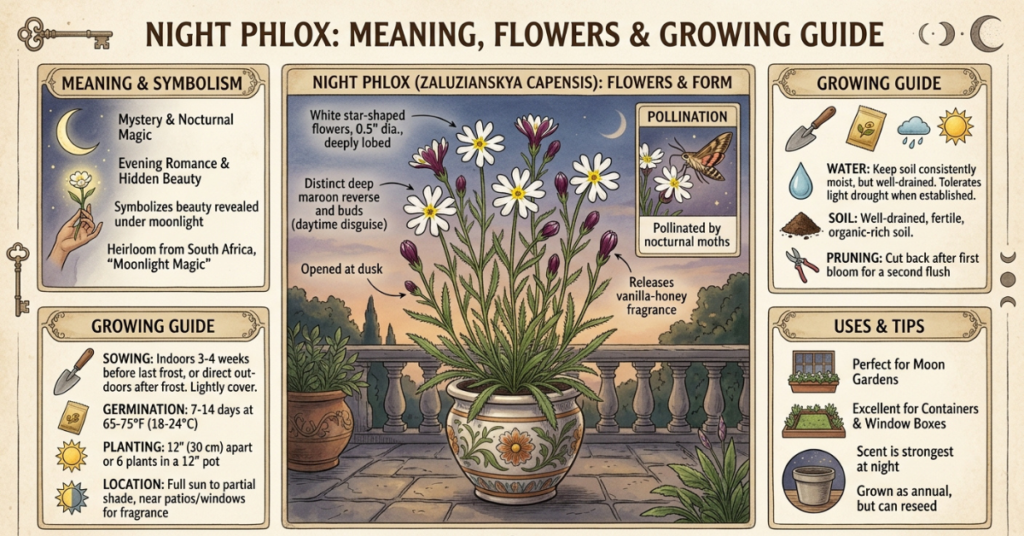

Imagine stepping into your garden after sunset and suddenly noticing a sweet fragrance that wasn’t there during the afternoon. That little evening surprise is one of the reasons night phlox has become such a fascinating plant for gardeners.
Known for its small white flowers, dark-colored flower backs, and powerful evening fragrance, night phlox is a compact ornamental plant that seems to come alive as the light fades. The name usually refers to species of Zaluzianskya, particularly Zaluzianskya capensis and Zaluzianskya ovata. Although it is commonly called phlox, it isn’t actually a member of the Phlox genus.
What makes it especially interesting is its unusual daily rhythm: the flowers stay tightly closed or curled during much of the day, then open toward evening and release their strongest scent at night.
In this guide, we’ll look at the night phlox flower, its meaning, popular varieties such as Midnight Candy night phlox, how to grow it from seeds, and the frequently searched question: is night phlox poisonous?
What Is Night Phlox?
Night phlox is a common name used for fragrant species in the genus Zaluzianskya, a group of flowering plants in the family Scrophulariaceae. Kew’s Plants of the World Online currently recognizes Zaluzianskya as an accepted genus with numerous species, with its native range extending from Uganda into southern Africa.
The two names you’ll most often encounter are:
- Zaluzianskya capensis – often grown as an annual or short-lived perennial.
- Zaluzianskya ovata – a compact, clump-forming evergreen perennial.
- Zaluzianskya capensis ‘Midnight Candy’ – a particularly fragrant cultivated form commonly sold as Midnight Candy night phlox.
The plants are generally small, making them suitable for containers, borders, patios, rock gardens, and other places where you can enjoy their evening fragrance.
One important point: despite the common name night phlox, these plants are not true phlox. True phlox belongs to the genus Phlox, while night phlox belongs to Zaluzianskya.
Night Phlox Flower: What Does It Look Like?
The night phlox flower is small but surprisingly distinctive.
Depending on the species or cultivar, flowers are generally white or white with darker coloring on the reverse of the petals. Zaluzianskya capensis produces fragrant white flowers with reddish or dark-colored backs, while Zaluzianskya ovata has white flowers with crimson-red backs.
During daylight, the flowers may look rather modest. Their real character appears later in the day.
As evening approaches, the petals uncurl and the flowers become much more noticeable. This day-to-night transformation is the feature that makes night phlox so appealing to gardeners who enjoy evening gardens.
Night Phlox at Night: Why Does It Smell So Strong?
This is where the plant really earns its name.
Night phlox at night can release a surprisingly strong fragrance. Descriptions vary from vanilla and honey to marzipan, sweet cake, heliotrope, or even freshly washed laundry. The exact impression depends on the individual plant and, of course, the person doing the smelling.
The fragrance isn’t just there for human enjoyment. Night-opening flowers are associated with attracting nocturnal pollinators, particularly moths and other night-active insects.
The plant’s timing makes sense from an ecological perspective: when the flowers open and become fragrant in the evening, they advertise their nectar to insects that are active after dark.
That’s also why planting night phlox near a patio, pathway, balcony, or bedroom window can make such a difference. You don’t necessarily need dozens of plants. A small container can be enough to bring its fragrance into an evening sitting area.
Is Night Phlox Really Glowing?
You may see people searching for night phlox glowing or describing these flowers as glowing at night.
Night phlox isn’t actually bioluminescent. It doesn’t produce its own light.
However, its white flowers can appear particularly bright against dark foliage or in moonlight. The contrast between the white petals and the darker backs of the flowers can also make the plant look almost luminous after sunset.
So, if someone describes night phlox as “glowing,” they’re generally talking about its visual appearance in low light rather than actual light production.
Night Phlox Meaning and Flower Meaning
There isn’t one universally accepted scientific or traditional definition for the night phlox meaning. Unlike some flowers with well-established Victorian-era symbolism, night phlox doesn’t have a single standardized flower-language interpretation.
Still, its unusual behavior naturally lends itself to symbolic associations such as:
- Mystery
- Evening beauty
- Hidden qualities
- Enchantment
- Quiet transformation
- Sweetness discovered after dark
The idea of hidden beauty fits particularly well. During the day, the plant can appear fairly understated, while after sunset it opens its flowers and releases its strongest fragrance.
For that reason, night phlox flower meaning is often interpreted creatively around the idea that something beautiful isn’t always immediately visible.
Night Phlox (Zaluzianskya capensis)
Zaluzianskya capensis is one of the species most closely associated with the common name night phlox.
The Royal Horticultural Society describes it as an annual or short-lived perennial that can reach around 40 cm in height. It has finely toothed, sticky linear leaves and produces spikes of highly fragrant flowers in summer.
Its flowers are particularly attractive because the petals are white on the front while the reverse has a darker red coloration.
Key features of Zaluzianskya capensis
- Height: up to about 40 cm
- Flowering: mainly summer
- Flowers: white with darker backs
- Fragrance: very strong in the evening
- Light: full sun
- Soil: moist but well-drained
- Uses: containers, borders, rock gardens and patios
The RHS recommends growing it in full sun in moist but sharply drained soil and notes that it can be propagated by seed in spring.
Night Phlox (Zaluzianskya ovata)
Night phlox (Zaluzianskya ovata) is another important species to know.
Unlike Z. capensis, which is often treated as an annual in cooler climates, Zaluzianskya ovata is a compact evergreen perennial. The RHS describes it as a clump-forming plant reaching around 25 cm, with sticky toothed leaves and white flowers with crimson-red backs.
It is native to South Africa and Lesotho and is particularly well suited to container growing.
The flowers are highly scented during the evening, making this species a good choice if fragrance is your main reason for growing night phlox.
Midnight Candy Night Phlox
One of the most popular names you’ll encounter when shopping for this plant is night phlox Midnight Candy.
Zaluzianskya capensis ‘Midnight Candy’ is listed by the RHS as an annual or biennial form that can reach approximately 40 cm. Its summer flowers are white with dark purple coloring on the reverse of the petals and are described as highly fragrant.
The cultivar is especially popular because of its combination of:
- Compact growth
- White flowers
- Dark maroon or purple flower backs
- Strong evening fragrance
- Suitability for containers
- Long summer interest
Some seed suppliers describe the fragrance of Midnight Candy night phlox using comparisons such as vanilla, marzipan, honey, or warm cake. These comparisons aren’t botanical measurements, but they give you a good idea of how sweet and distinctive the scent can be.
Why is it called Midnight Candy?
The name “Midnight Candy” is a descriptive cultivar name that reflects the plant’s sweet fragrance and its evening-opening flowers.
It isn’t a separate genus or species. When you see Midnight Candy night phlox, you’re generally looking at a named cultivar associated with Zaluzianskya capensis.
How to Grow Night Phlox
Growing night phlox plants isn’t particularly complicated if you give them the conditions they prefer.
The biggest things to get right are sunlight, drainage, moisture, and temperature.
1. Choose a sunny location
Night phlox generally performs best in full sun.
A sunny position encourages compact growth and good flowering. If you’re growing it in a container, choose a spot that receives plenty of direct light.
2. Use well-drained soil
Night phlox likes moisture but doesn’t appreciate sitting in waterlogged soil.
A good growing medium should hold enough moisture for healthy growth while allowing excess water to drain away.
For containers, make sure the pot has proper drainage holes.
3. Keep the soil reasonably moist
Don’t allow newly planted seedlings to become completely dry, particularly during hot weather.
At the same time, avoid constantly saturated soil. The goal is moist but well-drained conditions, which is also the growing recommendation given by the RHS for both commonly grown species.
4. Give the plant some shelter
Because some night phlox varieties are tender or half-hardy, protection from severe cold can be useful.
In climates with cold winters, growing the plant in a pot makes things easier because you can move it to a sheltered location when necessary.
How to Grow Night Phlox From Seeds
Night phlox seeds are one of the easiest ways to start Zaluzianskya capensis, especially if you’re growing the plant as an annual.
The exact sowing instructions vary by supplier and climate, but seeds are generally sown shallowly in spring.
A simple method
- Fill a seed tray or small pots with a quality, well-draining seed-starting mix.
- Scatter the seeds over the surface.
- Cover them only very lightly because the seeds are small.
- Keep the growing medium evenly moist.
- Place the tray somewhere warm and bright.
- Once seedlings are large enough to handle, transplant them carefully.
- Harden young plants off before moving them outdoors.
- Plant outside after the risk of damaging frost has passed.
Commercial growing guidance for Z. capensis commonly recommends shallow sowing, with germination potentially occurring within roughly one to two weeks under suitable conditions.
The RHS also recommends sowing seed in situ in spring for Z. capensis.
Caring for Night Phlox Plants
Once established, night phlox plants are fairly straightforward to maintain.
Watering
Water when the soil begins to dry, paying particular attention to plants growing in containers during hot weather.
Feeding
A balanced fertilizer can be useful during active growth, particularly when the plant is grown in a container with limited nutrients.
Avoid excessive feeding, however. Healthy flowers depend on overall growing conditions rather than fertilizer alone.
Pruning
Zaluzianskya ovata can be cut back after flowering to help maintain a compact, bushy appearance. The RHS specifically recommends hard pruning after flowering for this species.
Containers
Night phlox is an excellent container plant because of its relatively compact size and fragrance.
A pot placed near an outdoor seating area can be much more rewarding than putting the plant at the far end of a large garden. The closer you are to the flowers after sunset, the easier it is to appreciate their fragrance.
Where Should You Plant Night Phlox?
The best location is somewhere you’ll actually spend time in the evening.
Consider planting it:
- Beside a patio
- Near an outdoor dining area
- Along a garden pathway
- On a balcony
- Near a bedroom window
- Around a seating area
- In containers near an entrance
The RHS specifically lists patio and container planting among suitable uses for Zaluzianskya ovata.
This is one of those plants where placement matters almost as much as care. A beautifully fragrant flower isn’t very useful if you can’t smell it.
Is Night Phlox Poisonous?
One of the most common questions surrounding this plant is is night phlox poisonous?
The available information doesn’t indicate that Zaluzianskya ovata has known toxic effects. BBC Gardeners’ World lists no reported toxicity for people, dogs, cats, horses, livestock, or birds for Zaluzianskya ovata.
However, that should not be interpreted as proof that every species, cultivar, or plant part is safe to eat. Reliable toxicity information is not equally available for every Zaluzianskya species.
So the sensible approach is simple: treat night phlox as an ornamental plant and don’t intentionally consume it. Keep seeds and plant material away from young children and pets who might chew garden plants, and seek professional advice if accidental ingestion occurs.
Does Night Phlox Attract Pollinators?
Yes, night-blooming flowers can be especially valuable to nocturnal pollinators.
Zaluzianskya ovata is reported to attract butterflies and moths, with its flowers providing nectar and pollen.
Its evening flowering and strong fragrance are particularly interesting because they fit the behavior of night-active pollinators.
This makes night phlox a nice addition to a garden designed around not just daytime flowers, but also evening activity.
Night Phlox vs. Regular Phlox
Despite their similar common names, these plants shouldn’t be confused.
| Feature | Night Phlox | True Phlox |
| Botanical genus | Zaluzianskya | Phlox |
| Family | Scrophulariaceae | Polemoniaceae |
| Flowering behavior | Opens or becomes more fragrant toward evening | Generally daytime flowering |
| Main attraction | Evening fragrance | Flower color and garden display |
| Common species | Z. capensis, Z. ovata | Many Phlox species and cultivars |
The common name can therefore be misleading. If you’re shopping for the fragrant evening plant, check the botanical name rather than relying only on the word “phlox.”
Night Phlox Plants for Sale: What Should You Look For?
If you’re searching for night phlox plants for sale, you may find either young plants or seed packets.
When comparing options, look for the botanical name and cultivar rather than purchasing solely based on photographs.
For example, a listing for Zaluzianskya capensis ‘Midnight Candy’ is more specific than a listing that simply says “night phlox.”
Also check:
- Botanical name
- Cultivar name
- Annual or perennial status
- Plant size
- Growing zone or climate requirements
- Sun requirements
- Shipping season
- Whether you’re buying seeds or an established plant
This is particularly important because different Zaluzianskya species can have different growth habits and hardiness.
Common Problems With Night Phlox
Night phlox is generally regarded as relatively trouble-free. The RHS lists both Z. capensis and Z. ovata as generally pest- and disease-free.
Still, poor growing conditions can create problems.
Leggy growth
Usually associated with insufficient light. Move the plant to a brighter location.
Yellowing leaves
This can be related to excessive moisture, poor drainage, or other growing stresses. Check the soil before simply adding more fertilizer.
Few flowers
Insufficient sunlight, unsuitable temperatures, or general plant stress can reduce flowering.
Weak plants in winter
This is often a climate issue rather than a disease. Some varieties are tender and may not survive freezing conditions outdoors.
Is Night Phlox a Good Plant for Beginners?
Yes, particularly if you’re starting with Zaluzianskya capensis from seed and have a warm, sunny growing season.
Its compact size, interesting flower behavior, and intense fragrance make it rewarding even if you don’t have a large garden.
For beginners, growing it in a container can be especially convenient. You can control the soil, move the plant when necessary, and position it somewhere you’ll enjoy the fragrance.
Frequently Asked Questions About Night Phlox
What is night phlox?
Night phlox is a common name for fragrant Zaluzianskya plants, particularly Zaluzianskya capensis and Zaluzianskya ovata. They are known for flowers that open or become especially fragrant in the evening.
Is night phlox a true phlox?
No. Despite its common name, night phlox belongs to the genus Zaluzianskya, not Phlox. Kew recognizes Zaluzianskya as a separate accepted genus.
What does night phlox smell like?
Its fragrance is commonly described as sweet and intense, with comparisons including vanilla, honey, marzipan, fresh laundry, or warm cake. The exact scent varies by person and plant.
Does night phlox bloom at night?
Yes. The flowers are typically closed or less conspicuous during the day and open toward evening, when their fragrance becomes particularly noticeable.
What is Midnight Candy night phlox?
Midnight Candy is a cultivated form associated with Zaluzianskya capensis. It is valued for its white flowers, dark-colored flower backs, compact growth, and strong evening fragrance.
Can I grow night phlox from seeds?
Yes. Zaluzianskya capensis can be propagated from seed, and spring sowing is recommended by the RHS.
Does night phlox need full sun?
Generally, yes. Both Z. capensis and Z. ovata are recommended for sunny positions, with moist but well-drained soil.
Is night phlox poisonous to dogs or cats?
Zaluzianskya ovata has no reported toxic effects according to BBC Gardeners’ World. However, because toxicity data aren’t equally established for every species and cultivar, it’s best not to allow pets to eat ornamental plants.
Does night phlox really glow?
No. Night phlox isn’t a bioluminescent plant. Its white flowers can simply look bright or glowing against a dark garden after sunset.
What is the night phlox flower meaning?
There is no universally established botanical flower meaning for night phlox. Symbolically, its evening opening and powerful fragrance can suggest mystery, hidden beauty, enchantment, and transformation.
Where should I plant night phlox?
Plant it somewhere you’ll be able to enjoy its evening fragrance, such as beside a patio, walkway, balcony, outdoor seating area, or window.
Conclusion
Night phlox is a perfect example of why gardens shouldn’t be designed only for daytime beauty. During daylight, its small flowers and compact foliage may seem understated. Then evening arrives, the flowers open, and the fragrance becomes the star of the show.
Whether you’re interested in Zaluzianskya capensis, Zaluzianskya ovata, or the popular Midnight Candy night phlox, this plant offers something unusual: flowers that invite you to experience the garden after dark.
Give it plenty of sun, well-drained soil, consistent moisture, and a spot where its fragrance can actually be appreciated. If you’re new to the plant, starting with night phlox seeds in a container is a simple way to see whether this unusual evening bloomer belongs in your garden.
And if you’re creating a fragrant garden, don’t stop with night phlox. Explore other evening-scented flowers and combine different bloom times so your garden has something beautiful—and fragrant—to offer long after sunset.