
A hummingbird can turn an ordinary garden into something that feels almost magical. One moment the flowers are swaying quietly in the breeze, and the next, a tiny bird is hovering over them, sipping nectar with remarkable speed. If you want more of these colorful visitors in your yard, choosing the right perennial flowers for hummingbirds is one of the best places to start.
Perennial plants are especially useful because they return year after year, giving hummingbirds a dependable source of nectar while reducing the need to replant your garden every season. Many of these flowers also attract butterflies, bees, and other pollinators, making your garden more active and ecologically valuable.
In this guide, we’ll look at some of the best perennial flowers for hummingbirds, how to choose them, and simple ways to create a garden that provides food throughout the growing season.
Why Choose Perennial Flowers for Hummingbirds?
Perennials have a major advantage over annual flowers: once established, they can return for several years with the right growing conditions.
For hummingbirds, consistency matters. A garden containing several nectar-rich perennial species can provide food at different times throughout the growing season instead of offering blooms for only a few weeks.
Perennial flowers can also provide:
- Reliable nectar sources year after year
- Different flower shapes and colors for a variety of pollinators
- Longer-lasting garden interest
- Habitat for beneficial insects
- Less annual planting and maintenance
- Food sources for hummingbirds during migration
When possible, choose plants that are well suited to your local climate and soil. Native and regionally adapted plants are often particularly valuable because local wildlife has evolved alongside them.
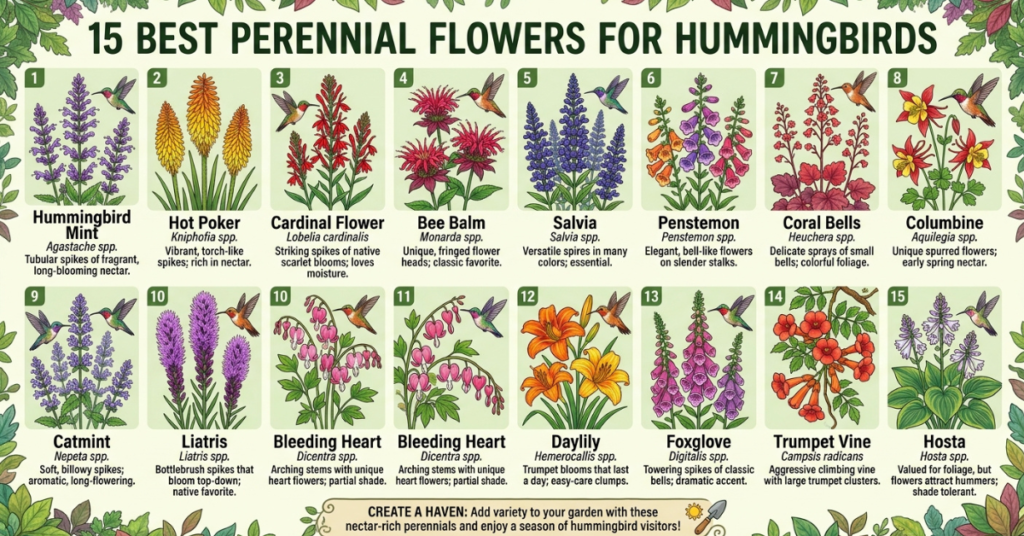
15 Best Perennial Flowers for Hummingbirds
Not every colorful flower is equally attractive to hummingbirds. These birds generally favor nectar-rich, tubular or trumpet-shaped flowers, particularly those growing on plants that offer convenient access to nectar.
Here are some excellent choices to consider.
1. Bee Balm
Bee balm (Monarda) is one of the classic perennial flowers for hummingbirds and butterflies. Its unusual, shaggy-looking flowers are usually available in shades of red, pink, purple, or white.
Red and pink varieties can be especially appealing to hummingbirds, while the open flower structure also makes the plant useful for other pollinators.
Bee balm prefers full sun to partial shade and reasonably fertile, well-drained soil. Good air circulation is important because crowded or damp conditions can encourage powdery mildew.
2. Cardinal Flower
Cardinal flower (Lobelia cardinalis) is almost impossible to overlook when it is in bloom. Its brilliant red flowers are particularly well suited to hummingbirds, which can reach nectar deep inside the tubular blossoms.
Unlike many drought-tolerant garden perennials, cardinal flower appreciates consistently moist soil. It can be an excellent choice for rain gardens, pond edges, or naturally damp areas.
3. Salvia
Perennial salvias are among the most versatile nectar plants for pollinator gardens. Depending on the species and variety, flowers may appear in red, purple, pink, blue, or other shades.
Many salvias have tubular flowers that hummingbirds can easily access. They also tend to attract bees and butterflies.
When shopping for salvia, check whether the particular variety is perennial in your growing zone because some salvias are grown as annuals in colder climates.
4. Coral Bells
Coral bells (Heuchera) are better known for their attractive foliage, but their delicate flower stalks can also provide nectar for hummingbirds.
The tiny bell-shaped flowers rise above the foliage and may appear in shades of pink, coral, cream, or red.
They are especially useful when you want a plant that contributes both foliage interest and flowers to a garden design.
5. Hummingbird Mint
Hummingbird mint, commonly associated with Agastache, practically announces its purpose with its name. The tall flower spikes produce clusters of small tubular blooms filled with nectar.
Depending on the variety, flowers may be orange, pink, purple, or red. Many agastache varieties also tolerate heat and relatively dry conditions once established, making them useful in sunny pollinator gardens.
6. Penstemon
Penstemons are another excellent choice for hummingbirds. Their tubular flowers are available in numerous colors, including red, pink, purple, and blue.
The genus contains many species with different growing requirements, so choose a variety suited to your soil, moisture level, and climate.
For a hummingbird garden, look for varieties with abundant tubular flowers and a bloom period that complements other nectar plants.
7. Columbine
Red columbine (Aquilegia canadensis) is particularly attractive to hummingbirds because of its distinctive nodding flowers and long nectar spurs.
It is also an excellent plant for woodland edges and partially shaded gardens.
Columbine is a useful reminder that a hummingbird garden does not need to consist entirely of plants growing in full sun. With the right species, you can provide nectar in different parts of the landscape.
8. Catmint
Catmint (Nepeta) produces masses of small flowers on upright stems and is valued by bees and butterflies as well as hummingbirds.
It is generally easy to grow and works well in sunny borders. Regularly trimming spent flower spikes can encourage additional flowering in many varieties.
9. Daylilies
Daylilies (Hemerocallis) are hardy garden perennials available in an enormous range of colors and forms.
Although individual flowers are short-lived, established plants can produce many blooms. Some varieties also have flower shapes that make them accessible to hummingbirds.
They are particularly useful for adding structure and dependable seasonal color to larger perennial beds.
10. Garden Phlox
Garden phlox (Phlox paniculata) produces clusters of fragrant flowers during summer. Depending on the cultivar, blooms may be pink, purple, white, red, or combinations of these colors.
The flat flower clusters are especially attractive to butterflies, while hummingbirds may visit suitable varieties for nectar.
Good air circulation and proper spacing can help reduce disease problems.
11. Blazing Star
Blazing star (Liatris) produces tall spikes covered with small purple or pink flowers.
It is a valuable pollinator plant and can add vertical interest to a flower border. Because the flower spikes bloom progressively, they can remain attractive for a considerable period.
Blazing star generally prefers sunny locations and well-drained soil.
12. Bleeding Heart
Bleeding heart (Dicentra or Lamprocapnos, depending on the species) is best known for its heart-shaped flowers and preference for cooler, partly shaded conditions.
Some varieties can provide an early-season nectar source before many summer perennials reach their peak.
Because bleeding hearts may go dormant during hot weather, pair them with later-blooming plants to keep your garden attractive throughout the season.
13. Foxglove
Foxgloves (Digitalis) produce tall stems lined with tubular flowers that can be highly attractive to hummingbirds.
However, foxgloves are toxic if eaten, so they should be planted carefully around children and pets. Always check the specific species and follow local gardening guidance before adding them to your landscape.
14. Butterfly Weed
Butterfly weed (Asclepias tuberosa) is famous for attracting monarch butterflies and other pollinators, but its bright orange flowers can also be visited by hummingbirds.
It is an excellent choice if your goal is to create a garden that supports multiple types of wildlife rather than hummingbirds alone.
Once established, butterfly weed generally prefers sunny, well-drained conditions.
15. Jacob’s Ladder
Jacob’s ladder (Polemonium) produces clusters of small flowers and can be useful in cooler, partially shaded garden areas.
While it may not attract hummingbirds as strongly as plants with large red tubular flowers, adding a range of flowering species can make a garden more useful throughout the season.
Best Perennial Flowers for Hummingbirds and Butterflies
If you want your garden to attract both hummingbirds and butterflies, diversity is more important than choosing a single “perfect” flower.
Hummingbirds tend to favor nectar-rich tubular flowers, while butterflies often prefer flowers that provide convenient landing surfaces. Planting several flower shapes can therefore benefit a wider range of pollinators.
Some strong choices include:
- Bee balm
- Salvia
- Butterfly weed
- Blazing star
- Garden phlox
- Hummingbird mint
- Cardinal flower
- Penstemon
- Catmint
- Columbine
A mixed planting also helps prevent your garden from becoming dependent on one plant species or one short flowering period.
What Flower Colors Attract Hummingbirds?
Hummingbirds are famously attracted to bright flowers, particularly red and warm-colored blooms. However, color is not the only factor that matters.
Flower shape, nectar availability, plant placement, and the overall abundance of blooms can all influence whether hummingbirds visit your garden.
Instead of filling the entire garden with red flowers, consider creating a mixture of:
- Red
- Orange
- Pink
- Purple
- Magenta
- Blue
A varied palette can make the garden more attractive to people while still providing excellent feeding opportunities for hummingbirds.
How to Create a Hummingbird-Friendly Perennial Garden
Planting a few flowers is a good beginning, but a thoughtfully designed garden can do much more for visiting hummingbirds.
1. Plan for Different Blooming Seasons
Try to include plants that flower in spring, summer, and fall.
A continuous sequence of blooms can provide nectar for hummingbirds as they move through the season, including during migration.
2. Plant in Groups
Instead of planting one of every flower, group several plants of the same species together.
Clusters of flowers are easier for pollinators to find and can also create a stronger visual impact in your garden.
3. Choose Sunny Locations
Many of the best perennial flowers for hummingbirds perform well in full sun.
Before planting, check the sunlight requirements for each species. A plant receiving the right amount of light is more likely to grow vigorously and produce abundant flowers.
4. Avoid Unnecessary Pesticides
Broad-spectrum pesticides can harm beneficial insects along with unwanted pests.
Whenever possible, use integrated pest management techniques, encourage natural predators, and choose plants suited to your growing conditions.
5. Add Water and Shelter
Hummingbirds need more than nectar. They also need places to rest and access to water.
A shallow water source, trees, shrubs, and dense vegetation can make your garden more welcoming. Avoid deep water features where small birds could struggle to escape.
What to Look for When Buying Perennial Flowers
If you’re ready to purchase plants, don’t simply choose the prettiest flower on the garden-center shelf.
Look for plants based on your actual growing conditions.
Consider:
- Hardiness: Is the perennial suitable for your climate?
- Sunlight: Does your garden provide full sun, partial shade, or shade?
- Soil: Does the plant need sandy, rich, acidic, or well-drained soil?
- Water: Can you provide the moisture it requires?
- Bloom time: Does it fill a gap in your garden’s flowering calendar?
- Pollinator value: Does it provide accessible nectar or pollen?
- Native status: Is there a native species or cultivar that performs well locally?
This approach can save money and reduce the disappointment of plants failing after a single season.
How to Shop Deals on Perennial Flowers for Hummingbirds
If you’re searching for ways to shop deals on perennial flowers for hummingbirds, compare more than the sticker price.
Garden centers, nurseries, and online plant retailers may offer discounts at different points in the growing season. Smaller plants can also cost less than established specimens and often catch up once planted in suitable conditions.
Before buying, check:
- Plant size and maturity
- Shipping costs
- Hardiness zone
- Sun and soil requirements
- Return or replacement policies
- Whether the plant is dormant or actively growing
- Expected bloom time
- Whether the listed variety is actually perennial in your climate
Buying healthy plants that suit your garden is usually a better deal than buying inexpensive plants that are poorly matched to your conditions.
Common Mistakes to Avoid in a Hummingbird Garden
Even a garden filled with nectar-producing flowers can underperform if the plants aren’t matched to the site.
Planting Only One Type of Flower
A single flowering species may provide plenty of nectar for a short time, but its usefulness can drop dramatically when it finishes blooming.
Ignoring Bloom Times
Choose early-, mid-, and late-season plants so your garden does not have long periods without flowers.
Overcrowding Plants
Plants packed too closely together may have poor air circulation and compete for water and nutrients.
Choosing Plants Without Checking Your Climate
A perennial may be perfectly hardy in one region and struggle to survive winter somewhere else.
Using Too Many Chemicals
A pollinator garden should support insects and birds, not simply provide decorative flowers. Minimize pesticide use whenever practical.
Do Hummingbirds Only Like Red Flowers?
No. Red flowers are strongly associated with hummingbirds, but they visit flowers in many colors.
Nectar availability, flower shape, bloom abundance, and location can all influence their behavior. Purple, pink, orange, and even some blue flowers can attract hummingbirds when they provide suitable nectar.
Do Hummingbirds Come Back to the Same Flowers Every Year?
They can return to reliable feeding locations, particularly when gardens consistently provide nectar.
However, hummingbird movement varies by species, season, weather, food availability, and geographic location. Planting a dependable succession of flowers can make your yard a more useful stop along their route.
Are Native Perennials Better for Hummingbirds?
Native plants can be an excellent choice because they are adapted to local environmental conditions and often support a broader range of native wildlife.
That does not mean every non-native perennial is useless. The most important factors include whether the plant is suitable for your climate, provides nectar, grows without becoming invasive, and fits into a diverse garden.
What Is the Best Perennial Flower for Hummingbirds?
There isn’t one universal winner. Bee balm, cardinal flower, salvia, penstemon, hummingbird mint, and other nectar-rich perennials can all be excellent choices.
The best plant for your garden is the one that combines strong nectar value with the right growing conditions for your region.
Can I Attract Hummingbirds Without a Feeder?
Absolutely. A garden filled with nectar-producing flowers can provide a natural food source without requiring a feeder.
In fact, planting a diverse selection of perennial flowers for hummingbirds has benefits beyond feeding birds because it can also support butterflies, bees, and other pollinators.
Frequently Asked Questions
What are the best perennial flowers for hummingbirds?
Some of the best choices include bee balm, cardinal flower, salvia, hummingbird mint, penstemon, columbine, butterfly weed, and blazing star. Choose species suited to your local growing conditions.
What perennial flowers attract both hummingbirds and butterflies?
Bee balm, salvia, butterfly weed, blazing star, garden phlox, hummingbird mint, and penstemon can attract both hummingbirds and butterflies.
What color flowers attract hummingbirds the most?
Hummingbirds are particularly responsive to bright red flowers, but they also visit orange, pink, purple, and other colorful blooms. Nectar availability and flower shape are important as well.
How many flowers do I need to attract hummingbirds?
There is no fixed number. A larger grouping of nectar-rich flowers generally provides more opportunities for feeding than a single plant. Combining multiple species with different bloom periods is even better.
Should hummingbird flowers be planted in sun or shade?
Many popular hummingbird perennials prefer full sun, although some species tolerate or prefer partial shade. Always match the plant to the amount of sunlight available in your garden.
Do hummingbirds prefer tubular flowers?
Many hummingbird-favorite plants have tubular or trumpet-shaped flowers. These structures can hold nectar that hummingbirds are well equipped to reach with their long bills and tongues.
When should I plant perennial flowers for hummingbirds?
The ideal planting time depends on your climate and the individual plant. In many regions, planting during a suitable spring or fall window allows perennials to establish before facing extreme summer or winter conditions.
Final Thoughts
The best perennial flowers for hummingbirds do more than add color to a garden. They create a reliable source of nectar while turning an ordinary outdoor space into a lively habitat for hummingbirds, butterflies, bees, and other beneficial wildlife.
Start with a few dependable choices such as bee balm, salvia, cardinal flower, hummingbird mint, or penstemon. Then add plants with different bloom times, colors, heights, and growing requirements to keep your garden productive throughout the season.
If you’re ready to transform your yard, explore local nurseries and reputable plant sellers, compare varieties carefully, and look for opportunities to shop deals on perennial flowers for hummingbirds that are genuinely suited to your growing conditions. A little planning now can give you years of beautiful blooms—and plenty of tiny visitors to enjoy.