
A garden can change completely with the right plant—one that adds color, texture, and interest even when most flowers have disappeared. The dogwood shrub is one of those special plants that brings beauty through every season, from bright stems in winter to fresh foliage and delicate blooms in spring.
Unlike dogwood trees, which are often grown for their flowers, dogwood shrubs are valued for their colorful branches, adaptable nature, and ability to create structure in landscapes. Popular choices like the red twig dogwood shrub, ivory halo dogwood shrub, and red osier dogwood shrub are especially loved by gardeners because they provide year-round appeal.
In this guide, we’ll explore different dogwood shrub varieties, how to grow and care for them, and which types work best for different garden styles.
What Is a Dogwood Shrub?
A dogwood shrub is a woody ornamental plant belonging to the Cornus genus. While many people associate dogwoods with flowering trees, shrub varieties are smaller, more versatile, and often grown for their colorful bark and attractive foliage.
Many dogwood shrubs are deciduous, meaning they lose their leaves in winter. However, their bare stems become a major feature during colder months, especially varieties with bright red, orange, or yellow branches.
These shrubs are commonly used for:
- Garden borders
- Privacy screens
- Wildlife-friendly landscapes
- Rain gardens
- Naturalized areas
- Winter interest gardens
Their ability to tolerate different growing conditions makes them a favorite among both beginner and experienced gardeners.
Popular Dogwood Shrub Varieties to Grow
There are many beautiful types of dogwood shrubs available, each offering unique colors, sizes, and growing habits. Choosing the right variety depends on your garden space, climate, and design goals.
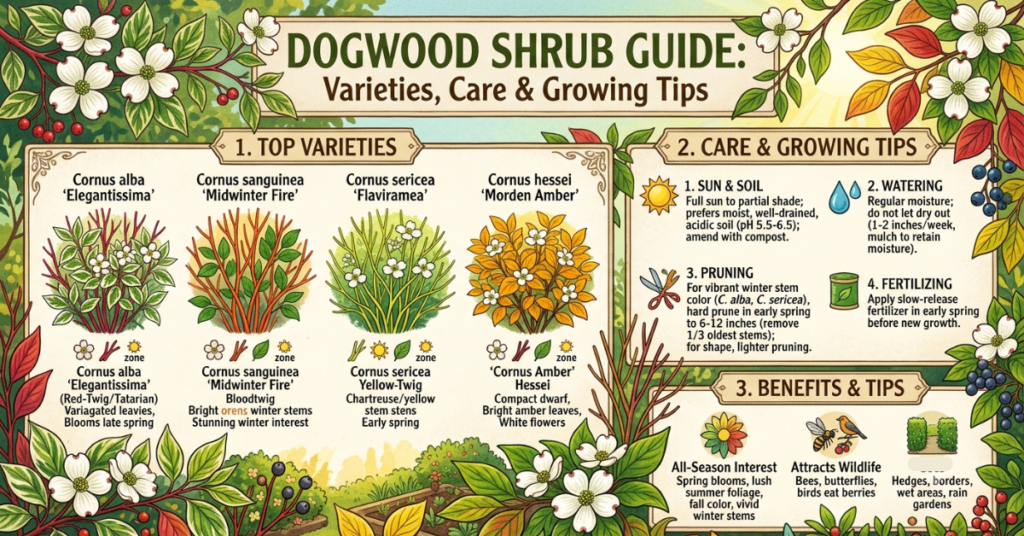
1. Red Twig Dogwood Shrub
The red twig dogwood shrub is one of the most popular varieties because of its striking bright red stems that stand out during winter.
Also known as red osier dogwood, this shrub creates a dramatic contrast against snow, evergreen plants, or dark garden backgrounds.
Features of red twig dogwood:
- Bright red winter branches
- White flower clusters in spring
- White or bluish berries in late summer
- Attractive fall foliage
- Fast-growing habit
Regular pruning helps maintain its vibrant stem color because younger branches usually display the strongest red tones.
2. Ivory Halo Dogwood Shrub
The ivory halo dogwood shrub is a compact and decorative variety known for its beautiful variegated leaves.
Its green leaves feature creamy white edges, creating a bright appearance throughout the growing season.
Why gardeners love Ivory Halo dogwood:
- Smaller size than many dogwood shrubs
- Perfect for small gardens
- Attractive white-edged foliage
- Red stems for winter interest
- Easy maintenance
The halo dogwood shrub family is especially useful for adding color and texture to mixed borders.
3. Red Osier Dogwood Shrub
The red osier dogwood shrub is a classic native shrub commonly found near wetlands, streams, and moist woodland areas.
It is highly valued for its environmental benefits and ability to support wildlife.
Benefits of red osier dogwood:
- Provides shelter for birds
- Helps prevent soil erosion
- Handles wet soil conditions well
- Produces berries that attract wildlife
- Offers colorful winter stems
This variety is an excellent choice for natural landscapes and eco-friendly gardens.
4. Silky Dogwood Shrub
The silky dogwood shrub is another native species known for its smooth branches, white spring flowers, and blue berries.
It thrives in moist soil and is often planted near ponds, rain gardens, and low areas where other shrubs may struggle.
Silky dogwood characteristics:
- Rounded growth habit
- White flower clusters
- Dark blue berries
- Attractive fall colors
- Wildlife-friendly
It is a great option for gardeners looking for a low-maintenance native plant.
5. Variegated Dogwood Shrub
A variegated dogwood shrub is grown mainly for its colorful leaves rather than flowers.
The combination of green foliage with cream, yellow, or white patterns creates a bright focal point in gardens.
Best uses for variegated dogwood:
- Shade gardens
- Decorative borders
- Cottage-style landscapes
- Container planting
Variegated varieties often grow more slowly than traditional green-leaved types but provide exceptional visual interest.
Choosing the Right Dogwood Shrub for Your Garden
With so many dogwood shrub varieties, selecting the right one can feel confusing. Consider these factors before planting:
Garden Size
For smaller spaces, choose compact varieties such as the ivory halo dogwood shrub or a dwarf dogwood shrub.
Larger landscapes may benefit from taller varieties like red osier or silky dogwood.
Soil Conditions
Most dogwood shrubs prefer:
- Moist, well-draining soil
- Slightly acidic to neutral soil
- Organic-rich planting areas
Some varieties tolerate wet soil better than others.
Sunlight Requirements
Dogwood shrubs generally grow best in:
- Full sun
- Partial shade
More sunlight usually produces stronger stem colors, especially in red twig varieties.
How to Plant a Dogwood Shrub
Planting a dogwood shrub correctly helps establish strong roots and healthy growth.
Follow these simple steps:
- Choose a location with suitable sunlight and soil.
- Dig a hole about twice as wide as the root ball.
- Place the shrub at the same depth it was growing in its container.
- Fill the hole with soil and gently press down.
- Water deeply after planting.
- Add mulch around the base to retain moisture.
The best planting time is usually spring or fall when temperatures are cooler and rainfall is more consistent.
Dogwood Shrub Care Guide
A healthy dogwood shrub does not require complicated maintenance, but proper care improves growth and appearance.
Watering
Dogwood shrubs prefer consistently moist soil, especially during their first growing season.
Water regularly during dry periods, but avoid leaving roots in standing water unless you are growing a moisture-loving variety.
Pruning
Pruning is especially important for varieties grown for colorful stems.
For the best winter display:
- Remove older branches every few years
- Cut weak or damaged stems
- Prune after flowering if needed
- Encourage new colorful growth
A red dogwood shrub usually shows the brightest color on younger branches.
Fertilizing
Most dogwood shrubs grow well with:
- Compost added to the soil
- Slow-release shrub fertilizer
- Organic mulch
Avoid excessive fertilizer because it can encourage weak growth.
Dwarf Dogwood Shrub: A Good Choice for Small Gardens
A dwarf dogwood shrub is ideal for homeowners who love the appearance of dogwoods but have limited planting space.
These smaller varieties work well in:
- Small yards
- Front garden beds
- Containers
- Rock gardens
- Decorative borders
They provide the same seasonal beauty as larger shrubs while staying easier to manage.
Common Problems With Dogwood Shrubs
Although dogwood shrubs are generally hardy, they can experience a few issues.
Common concerns include:
Powdery mildew
A white coating on leaves may appear in humid conditions. Improving airflow and avoiding overcrowding can help.
Leaf spots
Fungal diseases can cause dark marks on foliage. Remove affected leaves and maintain good garden hygiene.
Poor stem color
If red twig varieties lose their bright color, the plant may need more sunlight or pruning to encourage young stems.
Pests
Occasionally, insects such as aphids or scale may appear. Regular inspection helps catch problems early.
Benefits of Growing a Dogwood Shrub
Adding a dogwood shrub to your landscape offers several advantages:
- Provides four-season beauty
- Supports birds and pollinators
- Adds winter garden color
- Works well in natural landscapes
- Requires relatively low maintenance
- Available in many sizes and colors
Whether you choose a red twig dogwood shrub, ivory halo dogwood shrub, or silky dogwood shrub, these plants can become a long-lasting feature in your outdoor space.
Frequently Asked Questions About Dogwood Shrubs
How fast does a dogwood shrub grow?
Most dogwood shrubs grow at a moderate rate, often adding around 1 to 2 feet of growth per year depending on the variety, soil, and growing conditions.
How tall does a dogwood shrub get?
The size depends on the type. Some compact varieties stay around 3 to 5 feet tall, while larger varieties can reach 8 to 10 feet or more.
Does a dogwood shrub need full sun?
Dogwood shrubs can grow in full sun or partial shade. However, varieties grown for colorful stems usually develop brighter colors with more sunlight.
When should I prune a red twig dogwood shrub?
Late winter or early spring is usually the best time to prune red twig dogwood shrubs because it encourages fresh, colorful stems.
Are dogwood shrubs good for wildlife?
Yes. Many varieties produce berries that attract birds, and their dense branches provide shelter for small animals.
What is the best dogwood shrub for winter color?
The red twig dogwood shrub and red osier dogwood shrub are among the best choices because their bright stems create strong winter interest.
Final Thoughts on Growing a Dogwood Shrub
A dogwood shrub is more than just an attractive garden plant—it is a reliable, versatile addition that offers beauty throughout the year. From the vibrant branches of the red twig dogwood shrub to the elegant foliage of the ivory halo dogwood shrub, there is a variety for nearly every landscape.
Before choosing your shrub, consider your garden size, sunlight, and soil conditions. With proper planting, watering, and occasional pruning, a dogwood shrub can reward you with colorful stems, seasonal flowers, and a healthier outdoor environment for many years.