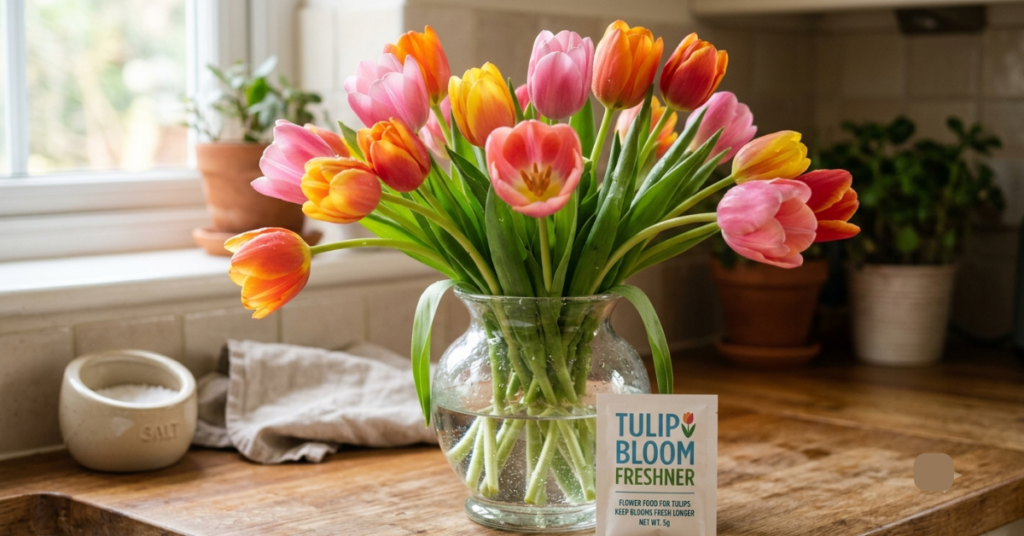

Have you ever brought home a beautiful bouquet of tulips only to see them droop within a few days? The secret to keeping these elegant flowers fresh is often proper care and the right flower food for tulips. While tulips are naturally delicate, the correct nutrients, clean water, and a few simple maintenance steps can help your blooms stay vibrant for much longer.
Unlike some cut flowers, tulips continue growing after being placed in a vase. They can stretch several inches, bend toward light, and absorb water quickly. Using suitable flower food can support hydration, slow down wilting, and help maintain stronger stems and brighter petals.
In this guide, we’ll explore what tulip flower food contains, whether commercial or homemade options work better, how to prepare vase water correctly, and expert tips for extending the life of your tulip arrangement.
What Is Flower Food for Tulips and Why Does It Matter?
Flower food for tulips is a mixture of ingredients designed to nourish cut flowers and keep vase water healthier. Most commercial flower foods contain three main components:
- Sugar: Provides energy that helps flowers stay fresh.
- Acidifiers: Balance the water’s pH and improve water absorption.
- Antibacterial agents: Reduce the growth of bacteria that block stems from taking in water.
When tulips are cut from the plant, they no longer receive nutrients from roots and soil. Flower food helps replace some of the support they lose after harvesting.
However, tulips have unique needs compared to roses, lilies, or carnations. They are naturally sensitive to excess nutrients, so using the right amount is important.
Do Tulips Need Flower Food in a Vase?
Yes, tulips can benefit from flower food, but they do not require heavy feeding.
Fresh tulips mainly need:
- Clean, cool water
- Proper stem trimming
- A clean vase
- Moderate amounts of flower food
Many florists recommend using flower food made specifically for bulb flowers or using a general cut-flower preservative in a diluted amount.
Too much flower food can actually harm tulips by creating an overly concentrated solution that makes it harder for stems to absorb water.
Best Types of Flower Food for Tulips
1. Commercial Flower Food Packets
The small packets included with many bouquets are usually the easiest and most reliable option. They are professionally balanced to provide nutrients without damaging delicate stems.
Look for flower foods containing:
- Sucrose (sugar)
- Citric acid
- Water-cleaning ingredients
- Antibacterial compounds
Always follow the mixing instructions on the packet because stronger is not always better.
2. Homemade Flower Food for Tulips
If you don’t have commercial flower food, you can make a simple homemade solution.
A basic recipe includes:
- 1 liter of clean water
- 1 teaspoon of sugar
- 1 teaspoon of lemon juice or white vinegar
Mix well before adding tulips.
The sugar provides energy, while the acidic ingredient helps improve water quality. However, homemade mixtures do not contain the same antibacterial protection as professional flower preservatives, so changing the water regularly becomes even more important.
How to Make Tulips Last Longer With Flower Food
Using flower food is only one part of tulip care. Follow these steps to maximize vase life:
1. Choose Fresh Tulips
When buying tulips, look for:
- Firm green stems
- Closed or slightly colored buds
- Fresh-looking leaves
- No yellowing or damaged petals
Tulips that are already fully open may have a shorter lifespan.
2. Prepare the Vase Properly
A clean vase prevents bacteria from multiplying.
Before arranging tulips:
- Wash the vase with warm water and soap.
- Rinse it thoroughly.
- Fill it with fresh, cool water.
- Add the recommended amount of flower food.
Avoid using dirty containers because bacteria can quickly clog tulip stems.
3. Trim Tulip Stems Correctly
Before placing tulips in water:
- Cut about 1–2 centimeters from the stems.
- Use a sharp knife or clean scissors.
- Cut at a slight angle to increase water absorption.
Avoid crushing the stems, as damaged tissue makes it harder for tulips to drink water.
4. Change the Water Regularly
Tulips drink a lot of water, and their vase water can become cloudy quickly.
For healthier flowers:
- Replace water every 1–2 days.
- Add fresh flower food when changing the water.
- Remove any fallen leaves from the vase.
Clean water is one of the biggest factors affecting tulip longevity.
Common Mistakes When Using Flower Food for Tulips
Even with the right flower food, some mistakes can shorten your tulips’ lifespan.
Using Too Much Flower Food
More does not mean better. A highly concentrated solution can damage flower cells and reduce water uptake.
Placing Tulips in Warm Areas
Tulips prefer cooler environments. Avoid placing them near:
- Direct sunlight
- Heating vents
- Kitchen appliances
- Drafty windows
Keeping Leaves Underwater
Submerged leaves encourage bacterial growth. Remove any leaves that sit below the water line.
Mixing Different Flower Foods
Combining different preservatives can change the chemical balance and may reduce effectiveness.
How Long Do Tulips Last With Flower Food?
With proper care, tulips usually last:
- Without flower food: Around 3–5 days
- With proper flower food and care: Around 7–10 days
Some varieties may last even longer depending on freshness, room temperature, and growing conditions.
Remember that tulips naturally have a graceful drooping habit as they mature, which does not always mean they are unhealthy.
Can You Revive Drooping Tulips?
Yes, sometimes drooping tulips can recover.
Try these steps:
- Remove tulips from the vase.
- Trim the stems again.
- Wrap them loosely in paper.
- Place them upright in fresh cold water for a few hours.
- Return them to a clean vase with flower food.
Tulips often become firmer after rehydration.
Natural Alternatives to Store-Bought Tulip Flower Food
If you prefer simple household solutions, some alternatives include:
Sugar Water
Sugar provides energy, but it should always be combined with clean water changes because sugar alone can encourage bacteria.
Lemon Juice Solution
A small amount of lemon juice can help maintain acidity in the water.
Fresh Water Only
Sometimes the best choice is simply fresh, cool water changed frequently. Tulips can survive well with excellent basic care.
Tips for Arranging Tulips Like a Florist
To create a beautiful tulip display:
- Use a tall vase to support flexible stems.
- Arrange tulips loosely because they continue growing.
- Rotate the vase daily for even growth.
- Keep tulips away from fruit bowls because ripening fruit releases ethylene gas, which can shorten flower life.
FAQs About Flower Food for Tulips
Can I use regular flower food for tulips?
Yes, most general cut-flower foods work well for tulips. However, always use the recommended amount because tulips are sensitive to strong solutions.
What is the best homemade flower food for tulips?
A simple mixture of water, a small amount of sugar, and lemon juice or vinegar can help. However, commercial flower food usually provides better antibacterial protection.
How often should I add flower food to tulips?
Add flower food whenever you replace the vase water, usually every one to two days.
Does sugar water keep tulips alive longer?
Sugar can provide energy for cut tulips, but sugar alone is not enough. Without antibacterial ingredients, bacteria may grow faster and reduce flower life.
Why are my tulips drooping even with flower food?
Drooping can happen because tulips naturally bend as they grow. Other causes include old flowers, warm temperatures, dirty water, or blocked stems.
Should tulips be placed in warm or cold water?
Tulips generally perform best in cool water. Cold water helps slow bacterial growth and keeps stems firm.
Final Thoughts: Choosing the Right Flower Food for Tulips
The right flower food for tulips can make a noticeable difference in how long your bouquet stays fresh and attractive. While tulips are naturally short-lived flowers, proper hydration, clean water, and balanced nutrients can help them remain beautiful for a week or more.
Whether you choose a professional flower preservative or a simple homemade solution, remember that consistent care matters most. Trim the stems, refresh the water, keep them cool, and your tulips will reward you with longer-lasting color and elegance.
For anyone who loves fresh flowers at home, learning proper tulip care is a simple way to enjoy beautiful arrangements for much longer.