
Few colors make a garden or bouquet feel as cheerful and inviting as pink flowers. From barely-there blush petals to bold fuchsia blooms, this versatile color can look romantic, elegant, playful, or dramatic depending on the variety.
Roses, peonies, tulips, carnations, and cherry blossoms are some of the best-known choices, but there are dozens of other varieties worth discovering. The shade itself can also influence the mood, while the individual flower may carry its own symbolism.
In this guide, you’ll discover popular pink flowers names, different types and shades, their meanings, flowering trees, bouquet combinations, seasonal ideas, and ways to use floral designs in your home or creative projects.
Types of Pink Flowers
Pink comes in an impressive range of tones, from pale blush and dusty rose to coral, magenta, and vivid fuchsia. This variety makes it easy to find a bloom that suits almost any garden, occasion, or decorating style.
Some popular varieties include:
- Rose
- Peony
- Tulip
- Carnation
- Cherry blossom
- Dahlia
- Gerbera daisy
- Hydrangea
- Camellia
- Zinnia
- Cosmos
- Azalea
- Snapdragon
- Sweet pea
- Hibiscus
- Lisianthus
- Begonia
- Cyclamen
- Ranunculus
- Phlox
Each has a different flower shape, growing season, care requirement, and symbolism.
Light Pink Flowers
Light pink flowers are associated with softness, affection, grace, and tenderness. Their muted appearance works particularly well when you want an arrangement or garden to feel calm and elegant.
Some lovely choices include:
- Blush roses
- Pale peonies
- Soft pink tulips
- Cherry blossoms
- Pink sweet peas
- Blush carnations
- Pale ranunculus
These gentle shades are especially popular for weddings, baby showers, romantic bouquets, and pastel interiors.
Hot Pink Flowers
For a stronger visual statement, hot pink flowers are hard to overlook. Their saturated color adds energy and can instantly become the focal point of a garden bed, vase, or floral arrangement.
Good options include:
- Hot pink dahlias
- Fuchsia petunias
- Bright zinnias
- Gerbera daisies
- Hibiscus
- Bougainvillea
Vivid pink works especially well with white, orange, purple, and rich green foliage.
Dark Pink Flowers
Dark pink flowers offer more depth than pale blush varieties while remaining softer than many red blooms. They can make a floral arrangement feel sophisticated and visually rich.
Deep pink roses, carnations, dahlias, peonies, and chrysanthemums are useful choices when you want stronger color without making the arrangement overwhelmingly bright.
Small Pink Flowers
Small blooms can add just as much character as large statement flowers. Small pink flowers are particularly useful as fillers, ground covers, border plants, and delicate additions to larger arrangements.
Examples include:
- Pink baby’s breath
- Creeping phlox
- Pink alyssum
- Waxflower
- Small cosmos varieties
- Pink forget-me-nots
Their delicate scale also makes them useful for softening larger blooms such as roses and lilies.
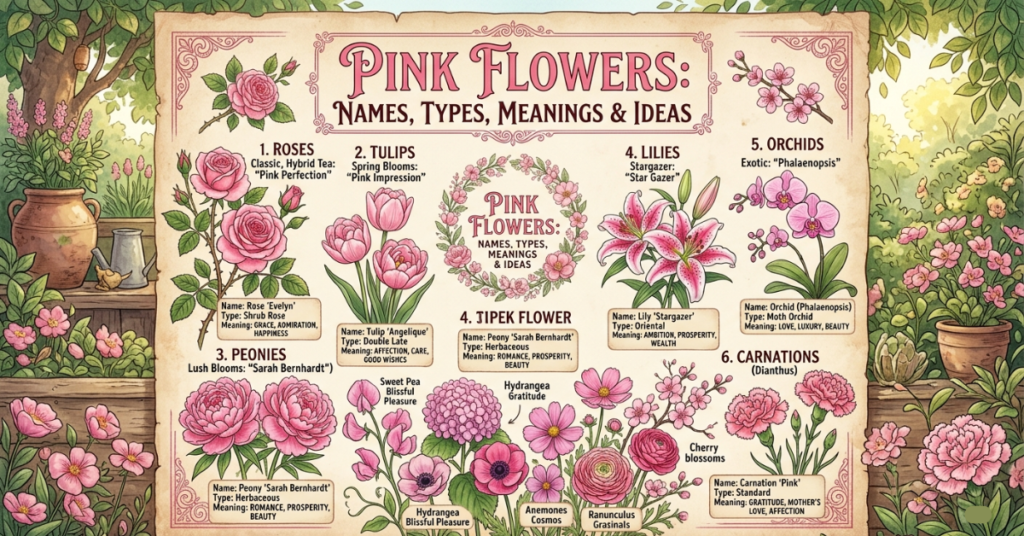
Pink Flowers Names and What Makes Them Special
If you’re searching for pink flowers names, these popular varieties are a good place to begin.
1. Pink Roses
Roses are among the most recognizable garden and cut flowers. Pink cultivars can range from extremely pale blush to vibrant shades, with differences in fragrance, petal shape, and bloom size.
They are commonly associated with appreciation, admiration, affection, and gratitude.
2. Pink Peonies
Peonies are known for their large, layered blooms and lush appearance. They are especially popular during the spring and frequently appear in wedding bouquets.
Their full flower heads make them excellent focal blooms in an arrangement.
3. Pink Tulips
Tulips have a simple, structured form that gives them a fresh and contemporary appearance. Soft pink varieties work beautifully on their own or alongside white tulips and greenery.
They are a popular choice for spring displays.
4. Pink Carnations
Carnations have ruffled petals and are valued for their durability as cut flowers. Pink varieties are traditionally connected with affection, admiration, and appreciation.
Their long vase life also makes them practical for bouquets.
5. Pink Cherry Blossoms
Cherry blossoms are instantly recognizable for their delicate flowers and springtime appearance. Depending on the species and cultivar, their blooms may range from white to different shades of pink.
They are strongly associated with spring, renewal, beauty, and the fleeting nature of life, particularly within Japanese cultural traditions.
6. Pink Dahlias
Dahlias are available in an extraordinary range of sizes, colors, and forms. Some have tightly packed petals, while others feature pointed or decorative shapes.
They are especially useful in late-summer and autumn arrangements.
7. Pink Gerbera Daisies
Gerbera daisies have large flower heads and a cheerful appearance. Their vivid colors make them particularly suitable for birthday arrangements, summer bouquets, and colorful interiors.
8. Pink Hydrangeas
Hydrangeas produce rounded clusters made up of many small individual flowers. In certain species, particularly bigleaf hydrangeas, soil chemistry can influence whether blooms develop toward pink or blue.
Their large flower heads make them popular for gardens, wedding arrangements, and statement displays.
Pink Flowers Meaning
What do pink flowers mean? In general, the color is often connected with affection, admiration, gratitude, tenderness, grace, and happiness.
However, symbolism isn’t universal. The meaning can vary according to the specific variety, shade, culture, and occasion.
Common Pink Flower Symbolism
| Shade or combination | Common associations |
| Light pink | Tenderness, grace, gentleness |
| Medium pink | Appreciation, admiration, happiness |
| Dark pink | Gratitude, recognition, confidence |
| Hot pink | Energy, enthusiasm, playfulness |
| Pink and white | Innocence, elegance, affection |
| Pink and purple | Creativity, charm, romance |
Because of this versatility, pink blooms can suit birthdays, anniversaries, weddings, thank-you gifts, and many other occasions.
White and Pink Flowers for a Soft Look
White and pink flowers create one of the easiest color combinations to work with. White tones balance the warmth of pink and give an arrangement a clean, elegant appearance.
Try combinations such as:
- Pink roses with white baby’s breath
- Pink peonies with white roses
- Pink tulips with white tulips
- Pink hydrangeas with white lisianthus
- Pink carnations with white chrysanthemums
This pairing works particularly well for weddings, elegant table settings, romantic interiors, and spring celebrations.
Purple and Pink Flowers for a Richer Palette
For a more colorful arrangement, try combining purple and pink flowers. Purple introduces a cooler tone that contrasts beautifully with warmer shades.
Consider pairings such as:
- Pink roses with purple lisianthus
- Pink peonies with lavender
- Pink tulips with purple irises
- Pink dahlias with violet blooms
- Pink hydrangeas with lavender-toned flowers
The result can feel romantic and sophisticated without relying entirely on pastel colors.
Trees With Pink Flowers
Flowers aren’t limited to garden beds and bouquets. Several ornamental trees are valued for their colorful spring displays.
If you’re looking for a tree with pink flowers, consider these options.
Cherry Blossom Trees
Cherry trees are among the most famous flowering trees associated with spring. Depending on the species and cultivar, their blooms can range from white to various shades of pink.
Magnolia Trees
Certain magnolia cultivars produce large pink or pink-and-white blossoms. Their sculptural flowers can make a striking feature in a landscape.
Eastern Redbud
Eastern redbuds produce clusters of pink to rosy-purple flowers in spring. An interesting feature is that blooms can appear directly on older branches and even the trunk.
Ornamental Crabapple Trees
Some crabapple cultivars produce pink blossoms before developing small fruits later in the growing season.
When selecting among trees with pink flowers, don’t focus on color alone. Consider mature size, climate, sunlight, soil conditions, maintenance, and available space.
Pretty Pink Flowers for Bouquets
A pink flowers bouquet can look romantic, cheerful, modern, or sophisticated depending on the varieties and shades you combine.
For a Romantic Bouquet
Try:
- Pink roses
- Peonies
- Ranunculus
- Soft greenery
For a Fresh Spring Bouquet
Combine:
- Pink tulips
- Cherry blossom branches
- White blooms
- Light green foliage
For a Bright Summer Bouquet
Use:
- Hot pink gerberas
- Dahlias
- Zinnias
- Green foliage
For an Elegant Bouquet
Choose:
- Blush roses
- Pink lisianthus
- White flowers
- Eucalyptus or delicate greenery
Using several shades rather than one exact tone can make an arrangement feel more natural and dimensional.
Autumn Pink Flowers for Arrangements
Pink doesn’t have to be limited to spring and summer. There are several options for autumn pink flowers for arrangements.
Dahlias are especially useful because many varieties continue flowering into autumn. Chrysanthemums, asters, sedums, and some roses can also add rosy tones to seasonal displays.
For a fall arrangement, combine these blooms with:
- Burgundy flowers
- Cream or ivory blooms
- Dried grasses
- Seed pods
- Warm-toned foliage
- Decorative branches
These combinations make pink feel more seasonal while adding texture and depth.
Pink Flowers Wallpaper and Background Ideas
Floral imagery isn’t limited to physical gardens and vases. Flower photography, illustrations, and patterns are also popular in digital design and home decor.
A pink flowers wallpaper can create a soft and romantic atmosphere in a bedroom, workspace, phone screen, or social media design.
Consider the scale and style of the pattern:
- Tiny floral prints: delicate and traditional
- Large blooms: bold and dramatic
- Watercolor flowers: artistic and gentle
- Minimal line drawings: modern and understated
- Dense floral patterns: romantic and maximalist
A pink flowers background can also work well for invitations, moodboards, Pinterest graphics, website banners, and social media posts.
For an aesthetic pink flowers look, try combining blush tones with natural lighting, soft shadows, subtle textures, and uncluttered compositions.
Paintings of Pink Flowers
Paintings of pink flowers have remained popular because floral subjects give artists endless opportunities to explore color, texture, light, and emotion.
A floral painting can range from highly realistic botanical art to loose watercolor or impressionist work.
Popular subjects include:
- Roses in a vase
- Peonies on a table
- Cherry blossoms in a landscape
- Abstract petals
- Botanical illustrations
- Watercolor flower studies
For interior decor, consider matching a small accent color from the artwork with cushions, ceramics, curtains, or other decorative elements rather than repeating the exact shade throughout the room.
Castorland Pup in Pink Flowers Jigsaw Puzzle
The Castorland Pup in Pink Flowers jigsaw puzzle combines a playful puppy scene with a colorful floral setting. It can be an enjoyable choice for people who like detailed nature imagery but want something more characterful than a traditional botanical puzzle.
When choosing a flower-themed jigsaw puzzle, consider:
- Number of pieces
- Finished dimensions
- Image complexity
- Piece quality
- Overall design
A more detailed image can provide a longer and more challenging puzzle experience.
How to Choose the Right Variety
With so many options available, choosing the right bloom can feel surprisingly difficult. Start with the purpose rather than the color alone.
1. Consider the Occasion
For weddings, soft roses, peonies, ranunculus, and white blooms create an elegant combination.
For birthdays, brighter gerberas, tulips, and dahlias can feel cheerful and energetic.
2. Think About the Season
Some varieties are strongly seasonal, while others are available through florists for much of the year.
Seasonality can affect both availability and price.
3. Choose Your Shade
Decide whether you prefer:
- Pale blush
- Dusty rose
- Classic pink
- Coral
- Hot pink
- Deep pink
4. Consider Longevity
If you’re creating an arrangement that needs to stay attractive for several days, choose varieties known for good vase performance and follow their specific care requirements.
5. Mix Textures
A bouquet becomes more interesting when it combines different shapes. Use large focal blooms with smaller filler flowers and foliage for contrast.
How to Keep Cut Blooms Fresh
Once you’ve chosen your favorite varieties, proper care can help extend their vase life.
- Start with a clean vase.
- Remove leaves that would sit below the water.
- Cut the stems with a clean, sharp tool.
- Add fresh water and suitable commercial flower food.
- Keep the arrangement away from direct heat and strong sunlight.
- Change the water regularly and recut stems when necessary.
- Remove fading blooms to keep the arrangement looking fresh.
Different species have different care requirements, so check the recommendations for the particular flowers you’re using.
Why Is Pink So Popular in Floral Design?
Part of its appeal comes from versatility. The color can feel youthful and playful, but it can also look sophisticated, vintage, modern, dramatic, or romantic.
There is also an enormous variety of plants available in this color family. You can create a monochromatic arrangement using several tones or introduce white, purple, green, burgundy, or orange for contrast.
That flexibility makes this palette useful for gardens, weddings, gifts, photography, artwork, interior design, and everyday decorating.
Frequently Asked Questions
What are the most popular pink flowers?
Popular choices include roses, peonies, tulips, carnations, cherry blossoms, dahlias, gerbera daisies, hydrangeas, lilies, and chrysanthemums.
What is the prettiest pink flower?
Beauty is subjective, but peonies are admired for their full layered petals, roses for their classic form, cherry blossoms for their delicate appearance, and dahlias for their unusual shapes.
What do pink flowers symbolize?
They commonly represent affection, admiration, gratitude, grace, tenderness, and happiness. The exact symbolism can change according to the variety, shade, culture, and occasion.
What are some light pink flowers?
Popular light pink flowers include blush roses, pale peonies, pink tulips, cherry blossoms, sweet peas, carnations, and ranunculus.
What tree has pink flowers?
Cherry trees, eastern redbuds, certain magnolias, and ornamental crabapples can produce pink blooms.
What are good choices for a pink bouquet?
Roses, peonies, ranunculus, tulips, carnations, lisianthus, and dahlias are excellent choices. Combining different shades and flower shapes can create a fuller, more interesting arrangement.
Are pink and white flowers a good combination?
Yes. This pairing creates a balanced and elegant palette and is especially popular for weddings, romantic arrangements, and sophisticated home decor.
What flowers come in hot pink?
Dahlias, gerbera daisies, zinnias, hibiscus, petunias, and certain roses and carnations are available in vivid hot pink shades.
What are small pink flowers called?
There isn’t one specific name for all small blooms. Examples include pink alyssum, creeping phlox, waxflower, small cosmos, and pink baby’s breath.
Conclusion
From delicate cherry blossoms to dramatic dahlias, pink flowers offer an incredible range of colors, forms, sizes, and meanings. Pale blush varieties can create a calm and romantic atmosphere, while vivid and deep shades add energy and visual depth.
Whether you’re researching pink flowers names, looking for a tree with pink blooms, planning a bouquet, choosing seasonal varieties, decorating with floral wallpaper, or searching for inspiration for floral artwork, there are plenty of possibilities to explore.
Start by deciding what mood you want to create, then choose your shade, variety, and supporting colors accordingly. With the right combination, these versatile blooms can bring warmth, personality, and beauty to almost any setting.