
Some flowers are admired purely for their beauty, while others become unforgettable because of the stories attached to them. Wolfsbane firmly belongs to the second category. With its striking hood-shaped blooms and dark reputation, this fascinating plant has inspired stories about wolves, witches, magic, and death for centuries.
The wolfsbane flower meaning is commonly connected with danger, protection, caution, mystery, strength, and transformation. Much of its symbolism comes from the plant’s poisonous nature and its long-standing place in folklore and mythology. However, despite its dangerous reputation, wolfsbane also represents the intriguing connection between beauty and danger.
So, what does wolfsbane really symbolize, and why has this mysterious flower appeared in so many legends? Let’s take a closer look.
What Is Wolfsbane?
Wolfsbane is a common name for several plants in the Aconitum genus, particularly Aconitum napellus. People also know this striking plant by several other names, including:
- Monkshood
- Aconite
- Wolf’s bane
- Blue rocket
- Helmet flower
Its unusual flowers often bloom in shades of blue, purple, or violet, although some varieties produce white flowers. Because the upper petal resembles a hood or helmet, the plant earned the name monkshood.
Wolfsbane grows naturally in parts of Europe and Asia, and gardeners have cultivated it as an ornamental plant because of its dramatic appearance. However, the plant is highly poisonous, so its toxic compounds can cause serious harm if someone ingests or handles it improperly.
Because of this striking contrast between visual beauty and serious danger, the wolfsbane flower meaning carries such dark and powerful symbolism.
Wolfsbane Flower Meaning and Symbolism
Although the meaning of wolfsbane can change depending on the cultural context, several symbolic themes appear repeatedly throughout its history.
1. Danger and Warning
Perhaps the most widely recognized wolfsbane symbolism is danger.
Since the plant is toxic, people naturally connected it with warning, risk, and situations that require caution. In the language of flowers, wolfsbane can represent something beautiful that hides serious consequences.
Symbolically, the flower may suggest:
- Be careful what you trust.
- Appearances can be deceiving.
- Beauty does not always mean safety.
- Some boundaries exist for a reason.
As a result, wolfsbane works particularly well as a symbol in stories, artwork, and tattoos that explore danger or forbidden attraction.
2. Protection and Defense
Despite its frightening reputation, wolfsbane also carries strong associations with protection.
Throughout folklore, people sometimes believed that poisonous and powerful plants could ward off threats. Therefore, wolfsbane became linked with defending oneself against dangerous creatures, evil forces, and supernatural beings.
In symbolic terms, the flower can represent:
- Personal protection
- Strong boundaries
- Defense against danger
- Inner strength
This interpretation gives wolfsbane a deeper and more complex meaning. Rather than symbolizing only death or danger, it can also represent the power to protect yourself from whatever threatens you.
3. Mystery and the Unknown
Few flowers carry quite as much mystery as wolfsbane.
Ancient myths, magical traditions, and supernatural stories have surrounded the plant with an aura of secrecy. In addition, its unusual hood-shaped bloom adds to its mysterious appearance.
For this reason, wolfsbane can symbolize:
- Hidden knowledge
- Secrets
- The unknown
- Mystery and intrigue
- Things that exist beneath the surface
Therefore, someone drawn to wolfsbane imagery may appreciate its darker and more mysterious aesthetic rather than its literal connection with poison.
The Meaning Behind the Name “Wolfsbane”
The name wolfsbane has a close connection to the plant’s historical association with wolves.
Traditionally, the word “bane” refers to something that causes harm or destruction. Historical accounts linked aconite preparations with poisoning or repelling wolves and other animals, which contributed to the name wolf’s bane.
Over time, however, the name grew beyond the plant’s practical history. Mythology and popular storytelling transformed wolfsbane into a symbol of something capable of confronting a powerful threat.
Because of this association, the wolfsbane flower often represents:
- Confronting fear
- Survival
- Protection from predators
- Strength during dangerous situations
Wolfsbane in Greek Mythology
Greek mythology gave wolfsbane another layer of dark symbolism.
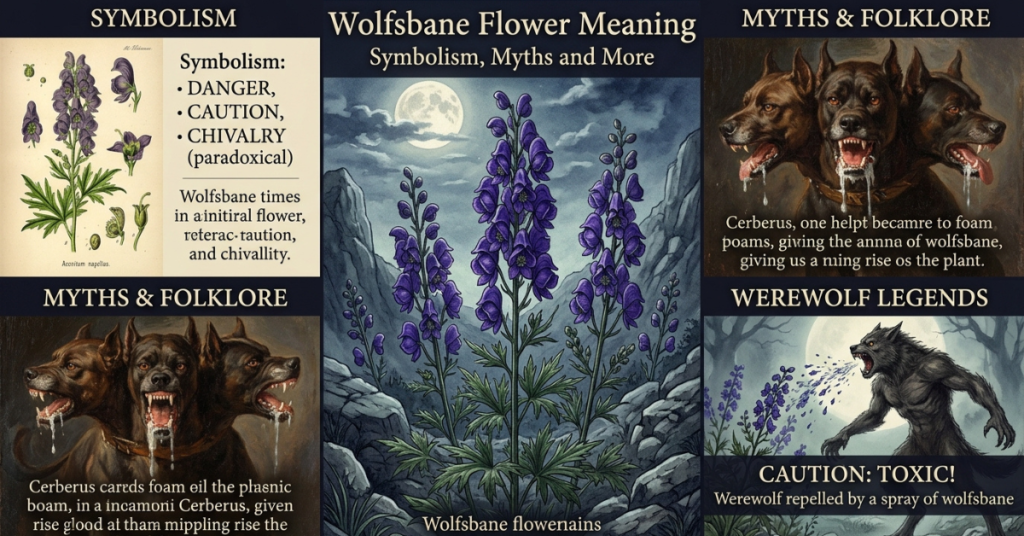
According to one well-known legend, aconite had a connection with Cerberus, the multi-headed dog that guarded the entrance to the underworld. The story says that the plant grew where Cerberus’s poisonous saliva touched the earth after Hercules brought the creature from the underworld.
As a result, wolfsbane became strongly connected with:
- Death
- The underworld
- Dangerous journeys
- Supernatural forces
This myth strengthened aconite’s reputation as a mysterious and dangerous plant. Even today, references to wolfsbane often create a dark, mythological atmosphere.
Wolfsbane Meaning in Folklore and Supernatural Legends
European folklore helped turn wolfsbane into one of the most recognizable plants in supernatural storytelling.
Wolfsbane and Werewolves
Perhaps its most famous modern association involves werewolves.
Later folklore and modern fantasy often portray wolfsbane as a plant that can harm, repel, or protect people from werewolves. The connection probably developed from the plant’s name and its historical relationship with wolves.
As a result, wolfsbane became a familiar symbol in supernatural fiction. It often represents:
- Protection from werewolves
- The conflict between human and animal instincts
- Fear of transformation
- Supernatural danger
Modern books, television series, films, and games have strengthened this association. Consequently, many people now immediately connect wolfsbane with werewolf mythology.
Wolfsbane and Witchcraft
Wolfsbane also has strong connections with witches and magical traditions.
Historically, people often surrounded toxic plants with stories about spells, potions, and supernatural rituals. Because aconite has powerful toxic properties, it eventually gained a reputation as a dangerous ingredient connected with dark magic.
Today, artists and storytellers often use this symbolism aesthetically rather than literally. Depending on the context, wolfsbane may represent:
- Magic
- Forbidden knowledge
- Independence
- Dark feminine energy
- Mystery
However, it is important to separate folklore from real-life use. Wolfsbane is toxic and should never be casually added to homemade remedies, drinks, or experimental preparations.
What Does a Wolfsbane Flower Symbolize?
In simple terms, the wolfsbane flower meaning combines beauty, danger, mystery, and protection.
| Symbol | Meaning |
| Danger | A warning about hidden risks |
| Protection | Defense against threats or negative forces |
| Mystery | Secrets, the unknown, and hidden knowledge |
| Strength | The ability to survive or face difficult situations |
| Transformation | Change, especially through struggle or fear |
| Death and darkness | Connections to mythology and the underworld |
| Beauty with danger | Something attractive that should not be underestimated |
Ultimately, wolfsbane does not carry one simple message. Instead, its symbolism depends heavily on the situation and the way someone chooses to interpret it.
Wolfsbane Flower Meaning in the Language of Flowers
During the Victorian era, people often used flowers to communicate messages they did not say directly. This symbolic system became known as the language of flowers, or floriography.
Unlike cheerful flowers such as daisies or sunflowers, poisonous plants naturally carried darker associations. People generally connected wolfsbane with caution, danger, and situations that required careful thought.
In a symbolic context, wolfsbane imagery could suggest:
“Be cautious.”
At the same time, it could warn someone about a relationship, situation, or person that seems attractive but may involve hidden risks.
However, flower meanings were not always completely standardized. Different books and cultures sometimes gave the same plant slightly different interpretations.
What Does Wolfsbane Mean Spiritually?
The spiritual meaning of wolfsbane is generally symbolic rather than connected to one specific religious tradition.
Because the flower combines beauty with toxicity, it can represent the need to recognize both the light and difficult sides of life. At the same time, its symbolism may encourage people to respect their own power while understanding their limits.
Modern interpretations often connect wolfsbane with:
- Setting strong personal boundaries
- Protecting your energy
- Facing hidden fears
- Accepting personal transformation
- Recognizing danger before it causes harm
Therefore, the flower’s spiritual message does not have to be entirely negative. Instead, wolfsbane can represent awareness, wisdom, and the ability to protect yourself.
Wolfsbane Flower Tattoo Meaning
A wolfsbane tattoo can carry several meanings, depending on the design and the person’s personal story.
Some people choose it because they love mythology, fantasy, or supernatural stories. Others use the flower to symbolize surviving a difficult experience or learning how to protect themselves.
Common wolfsbane tattoo meanings include:
- Strength after hardship
- Protection and personal boundaries
- Mystery and independence
- A connection to werewolf mythology
- Transformation and change
- Beauty mixed with danger
For example, a tattoo that combines wolfsbane with a wolf may highlight its connection with werewolf folklore. Meanwhile, designs featuring skulls, moons, snakes, or dark botanical imagery can create an even more mysterious interpretation.
Wolfsbane Meaning in Love and Relationships
Wolfsbane is not a traditional romantic flower like a rose or tulip. Nevertheless, its symbolism can still apply to love and relationships.
In a romantic context, wolfsbane may represent dangerous attraction, forbidden love, or emotional caution. It can describe a relationship that feels intense and irresistible while also carrying potential risks.
Possible interpretations include:
- A love that is intense but complicated
- Attraction to someone mysterious
- The need for emotional boundaries
- A warning against ignoring red flags
- Loving someone without losing your sense of self
Because of these associations, writers and artists often use wolfsbane imagery in dark romance and fantasy-inspired work.
Is Wolfsbane a Symbol of Death?
Wolfsbane can symbolize death, but death is only one part of its meaning.
Its toxicity and connection with the underworld in Greek mythology have contributed to its darker reputation. However, calling wolfsbane simply a “death flower” overlooks its equally strong associations with protection, caution, strength, and transformation.
A more complete interpretation sees wolfsbane as representing the dangerous edge between attraction and destruction.
That contrast is precisely what makes the flower so fascinating.
The Beauty and Danger of Wolfsbane
One of the most interesting things about wolfsbane is that its symbolism closely reflects its real-life nature.
The flowers may look delicate and beautiful, especially when gardeners grow them as ornamental plants. However, the plant contains potent toxins and requires careful handling.
If you encounter wolfsbane, follow these basic precautions:
- Avoid tasting or consuming any part of the plant.
- Keep children and pets away from it.
- Follow reliable gardening and safety guidance when handling or growing it.
- Avoid using it in homemade herbal preparations.
Because of its toxicity, wolfsbane has developed a powerful symbolic identity over the centuries.
Why Is Wolfsbane Still Popular Today?
Wolfsbane continues to appear in modern culture because its symbolism fits many themes that people find fascinating.
Today, it is especially popular in:
- Fantasy literature
- Gothic art
- Dark floral designs
- Mythology-inspired tattoos
- Witchy aesthetics
- Supernatural television and films
- Botanical illustrations
Unlike flowers with one universally positive meaning, wolfsbane allows for several interpretations. For example, it can represent beauty, danger, protection, mystery, or transformation, depending on the context.
As a result, its symbolism remains relevant in modern art and storytelling.
FAQs About Wolfsbane Flower Meaning
What is the main wolfsbane flower meaning?
The main wolfsbane flower meaning includes danger, caution, protection, mystery, and hidden power. Its poisonous nature and long history in mythology strongly influenced these symbolic associations.
What does wolfsbane symbolize spiritually?
Spiritually, wolfsbane can symbolize protection, strong boundaries, transformation, and awareness of hidden dangers. In modern interpretations, it often represents facing fears while protecting your personal energy.
Does wolfsbane symbolize werewolves?
Yes. Folklore and modern fantasy strongly connect wolfsbane with werewolves. Many stories portray the plant as something that can repel or harm werewolves, although later storytelling traditions popularized many versions of this idea.
Is wolfsbane the same as monkshood?
Yes. Wolfsbane and monkshood are common names for plants in the Aconitum genus, including Aconitum napellus. The plant received the name monkshood because of the hood-like shape of its flower.
Is wolfsbane poisonous?
Yes, wolfsbane is highly toxic. For this reason, the plant has long symbolized danger, caution, and hidden risk.
What does wolfsbane mean in love?
In love and relationships, wolfsbane can symbolize dangerous attraction, forbidden romance, emotional complexity, or the importance of recognizing warning signs and maintaining healthy boundaries.
Is wolfsbane a good tattoo symbol?
Yes, it can be a meaningful tattoo symbol, particularly for someone interested in mythology, supernatural folklore, protection, transformation, or dark botanical imagery. Ultimately, the meaning depends on the personal story and symbolism behind the design.
Conclusion
The wolfsbane flower meaning goes far beyond its reputation as a poisonous plant. Across mythology, folklore, and modern culture, wolfsbane has come to represent danger, protection, mystery, strength, and transformation.
Most importantly, its symbolism comes from a fascinating contradiction: the flower looks beautiful, yet it demands respect. Therefore, wolfsbane can serve as a powerful reminder of hidden danger, personal boundaries, and the strength needed to face the unknown.
Whether you discovered wolfsbane through Greek mythology, werewolf legends, tattoo symbolism, or a love of unusual flowers, its story offers plenty to explore. If you enjoy learning about flower symbolism, consider exploring the meanings behind monkshood, black roses, lavender, daphne flowers, and other plants with rich mythological histories.